 Tiếng Việt

The patient had a long-standing history of uterine fibroids and had been monitored and treated at several medical facilities over the years. Recently, the tumor grew rapidly, accompanied by lower abdominal pain and prolonged heavy menstrual bleeding, leading to worsening anemia and significantly affecting her daily activities.
Following a recommendation from a friend, she sought consultation at HFH.
Clinical and Paraclinical Assessment
Through clinical examination combined with diagnostic imaging and laboratory tests, the HFH medical team identified a markedly enlarged uterus caused by a fibroid measuring 210 x 180 x 100 mm. Imaging revealed abundant vascularization supplying the tumor, indicating a high risk of intraoperative bleeding. The tumour’s large size also caused compression of adjacent pelvic organs, including the bladder, ureters, and rectum.
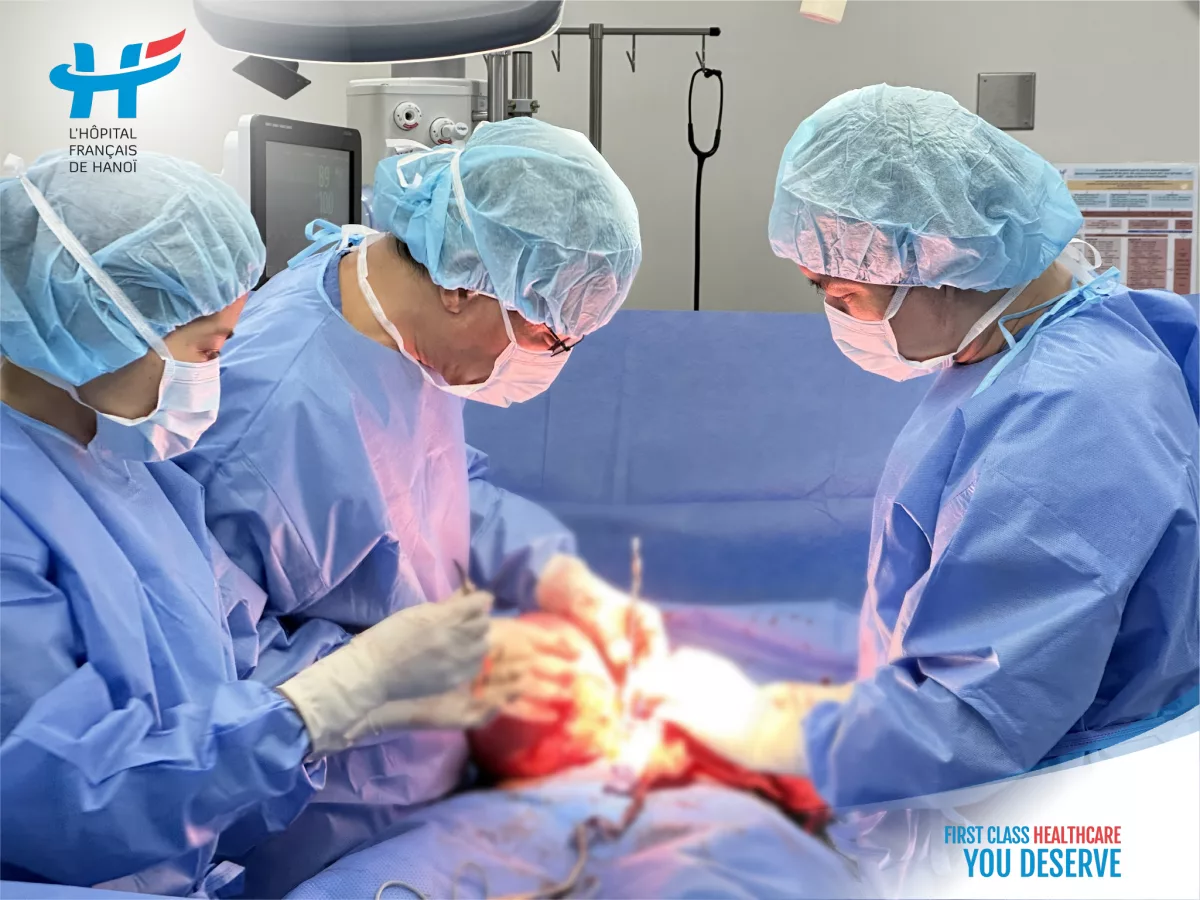
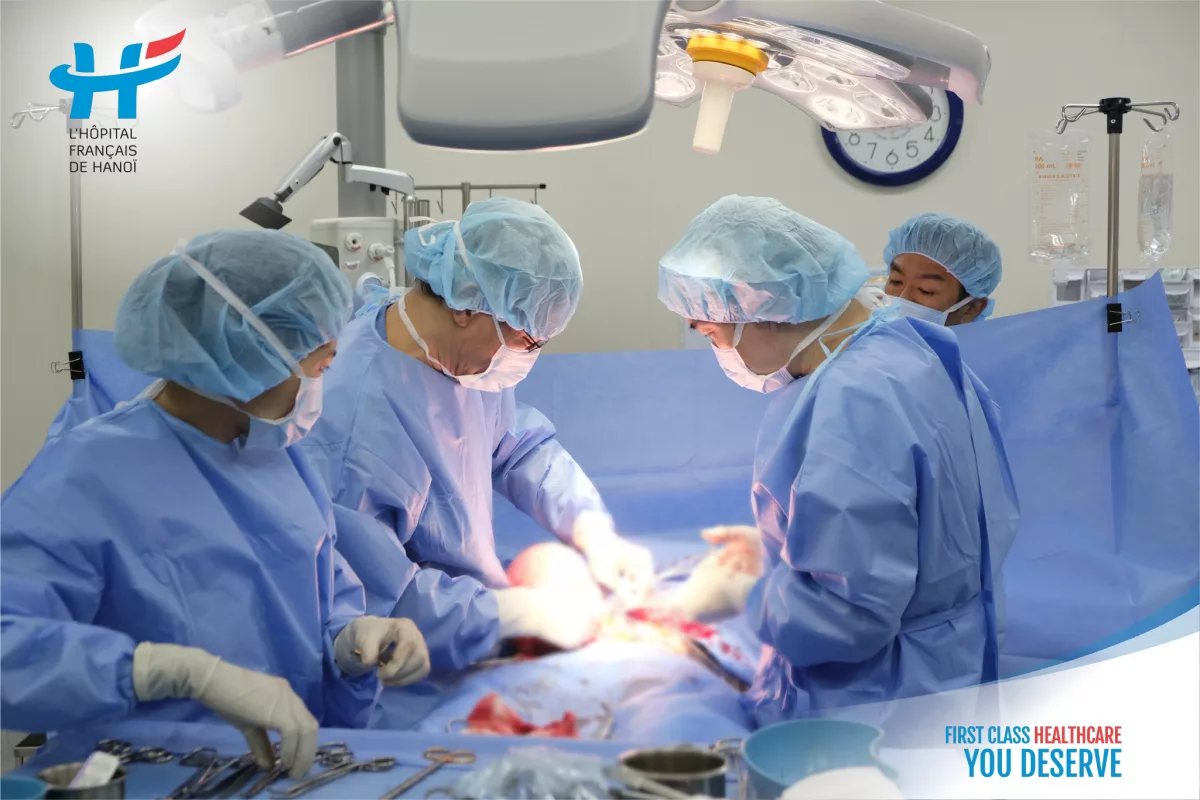
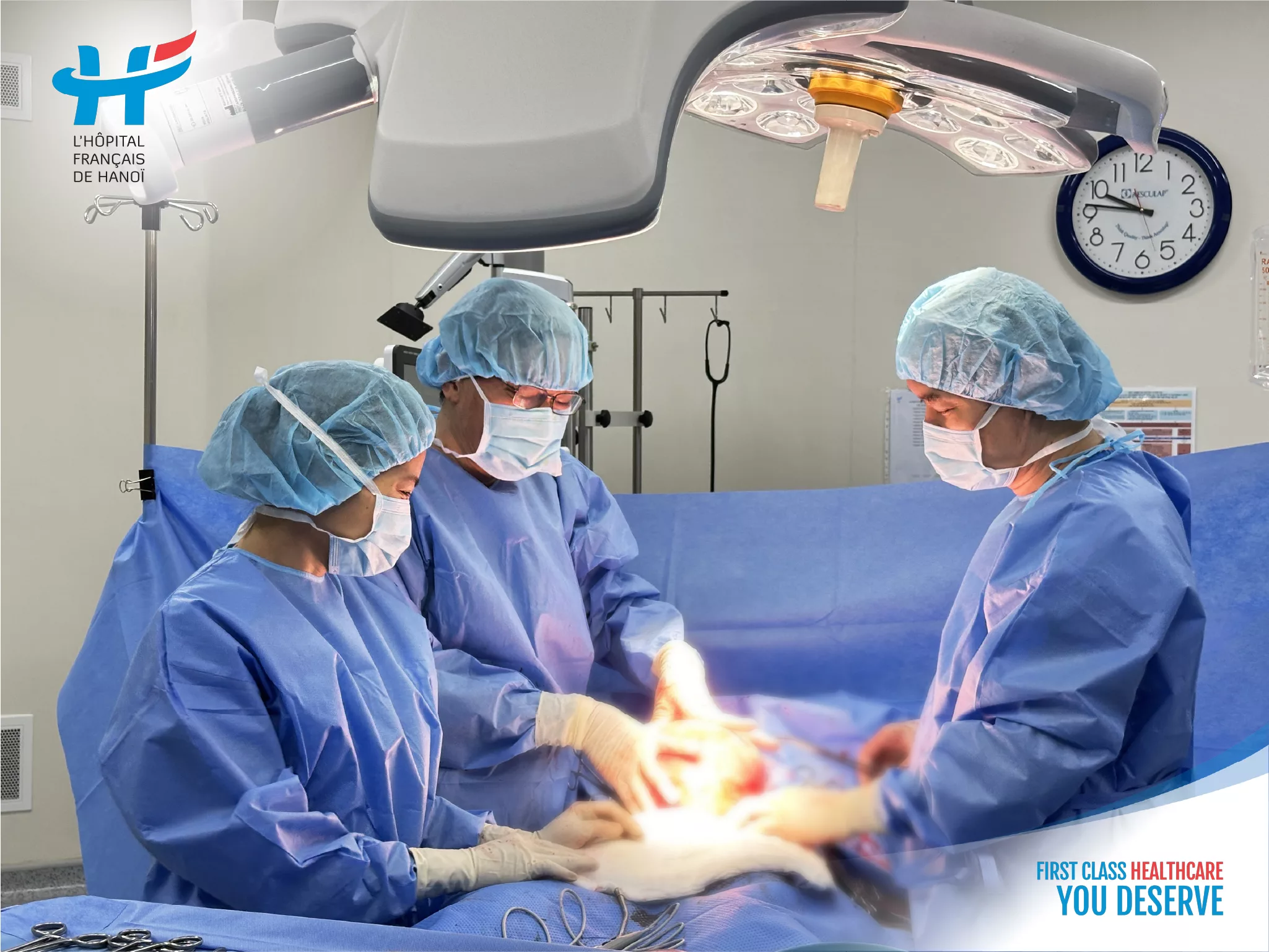
After a multidisciplinary consultation, the patient and her family received detailed counseling and decided to proceed with a subtotal hysterectomy to remove the tumour. Despite its large size, the surgery proceeded smoothly. The fibroid-containing uterus was successfully removed without any unexpected complications, and blood loss was minimal. Postoperatively, the tumor was confirmed to weigh approximately 3.4kg.
Surgical Challenges
The procedure was performed directly by Dr. Hồ Văn Thu, Head of the Obstetrics & Gynecology Department, together with Dr. Ngô Ngọc Loát.
Due to the tumour’s considerable size, the surgery presented several challenges:
- Risk of adhesions and compression of adjacent organs such as the bladder, ureters, and rectum
- Increased vascular supply to the fibroid, elevating the risk of intraoperative bleeding
- Preoperative anemia, requiring meticulous blood loss control
During the operation, the surgical team carefully dissected each anatomical layer, effectively controlled the tumor’s blood supply, and preserved surrounding structures to the greatest extent possible. Thanks to an effective blood management strategy, total blood loss was limited to approximately 150 ml. The surgery lasted about 60 minutes, was completed safely, and no intraoperative complications were recorded.
Postoperatively, the patient recovered well, remained hemodynamically stable, experienced only mild pain, and was able to mobilize as early as the following day.
Dr. Thu emphasized: “Uterine fibroids are common benign tumors in middle-aged women. However, when a fibroid grows rapidly or causes prolonged heavy bleeding, anemia, or significant pain, patients should seek specialist evaluation promptly. Regular monitoring and timely intervention help prevent complications and reduce surgical complexity.”
With a patient-centered approach focused on safety, Hanoi French Hospital prioritizes comprehensive preoperative assessment, strict intraoperative risk control, and optimized postoperative recovery. Close collaboration among experienced specialists, modern equipment, and standardized protocols ensures that even complex cases are managed effectively and safely.