 Tiếng Việt
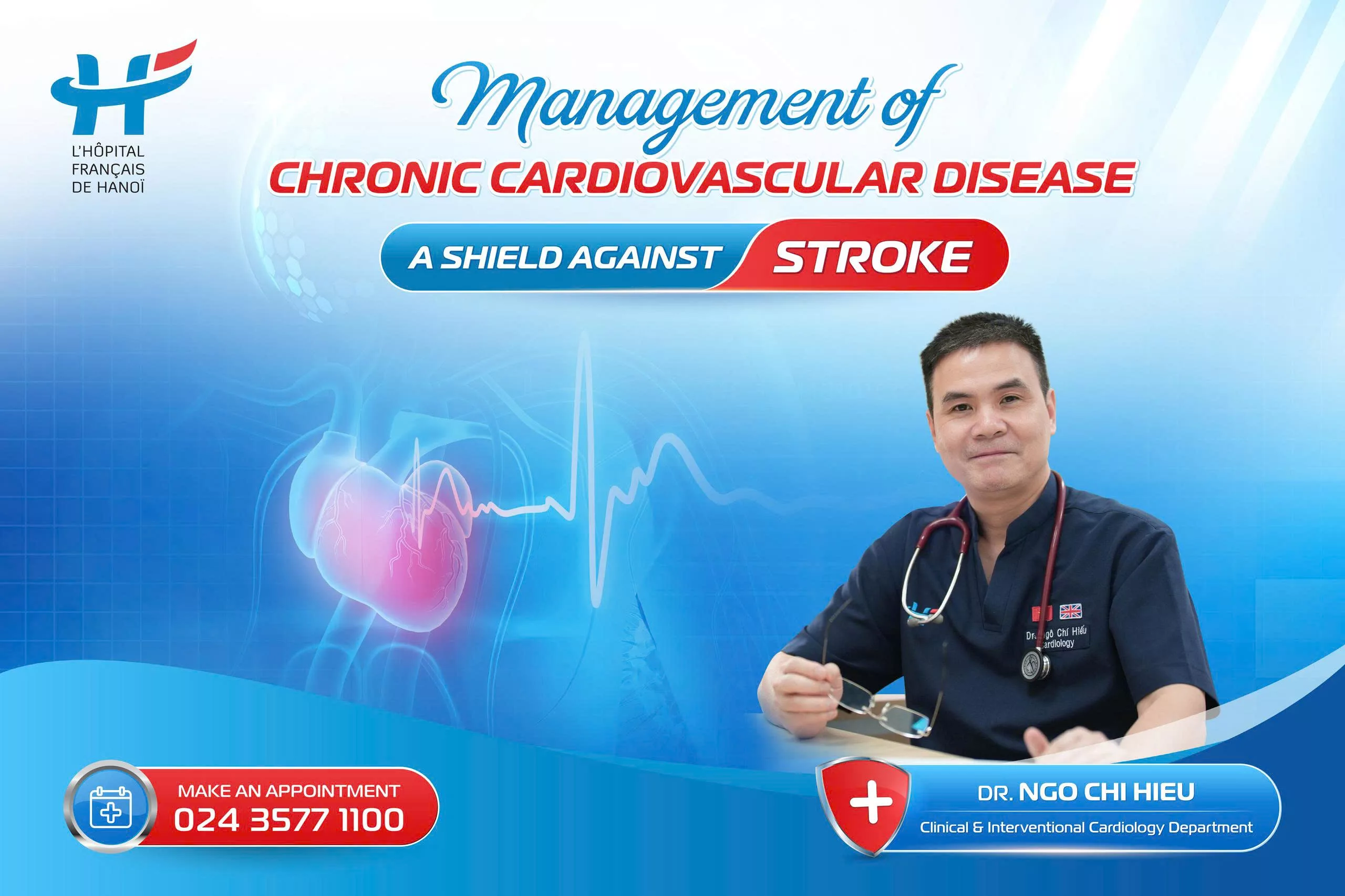
Dr. Ngo Chi Hieu, Clinical and Interventional Cardiology Department, Hanoi French Hospital, explains:
“The heart and the brain are closely connected through the vascular system. When cardiovascular risk factors are not consistently controlled, the blood vessels supplying the brain can gradually become damaged. Adhering to treatment and maintaining regular follow-up is the way to preserve the ‘shield’ that protects the brain from stroke.”
The three mechanisms below help explain why long-term treatment and monitoring are essential.
Blood pressure variability – a factor associated with small cerebral vessel damage
In addition to the impact of average blood pressure levels, fluctuations in blood pressure (blood pressure variability) are also associated with the risk of damage to the brain’s vascular system. When blood pressure changes continuously, the force exerted by blood flow on vessel walls increases. Over time, this may contribute to endothelial dysfunction and make the small vessels in the brain more vulnerable to injury.
Atherosclerosis – the origin of many ischemic strokes
Atherosclerosis does not only narrow the vessel lumen. In many cases, the greatest risk comes from unstable atherosclerotic plaques. These plaques often have a thin fibrous cap and are prone to rupture. When rupture occurs, it can trigger thrombus formation. Fragments of these clots may then travel through the bloodstream to the brain and cause acute cerebral artery occlusion.
AFib (atrial fibrillation) – a leading cause of stroke due to cardiac embolism
Atrial fibrillation is one of the most common cardiac arrhythmias and is strongly associated with an increased risk of stroke. This condition increases stroke risk by approximately five times compared with the general population. During atrial fibrillation, blood flow in the atria may become stagnant, allowing blood clots to form. These clots can then leave the heart, travel through the bloodstream to the brain, and cause acute cerebral artery blockage.
At Hanoi French Hospital, you are not only treated for symptoms but also undergo comprehensive cardiovascular risk assessment. Key health indicators are monitored over time, and treatment plans are adjusted when necessary.
This approach helps stabilize risk factors, limit the progression of vascular damage, and reduce the likelihood of serious complications such as stroke.
To schedule a consultation with HFH cardiology specialists, please contact the hotline 024.35771100 or message the fanpage “Hanoi French Hospital”, or Zalo OA: zalo.me/2008009049335817955.
