 Tiếng Việt
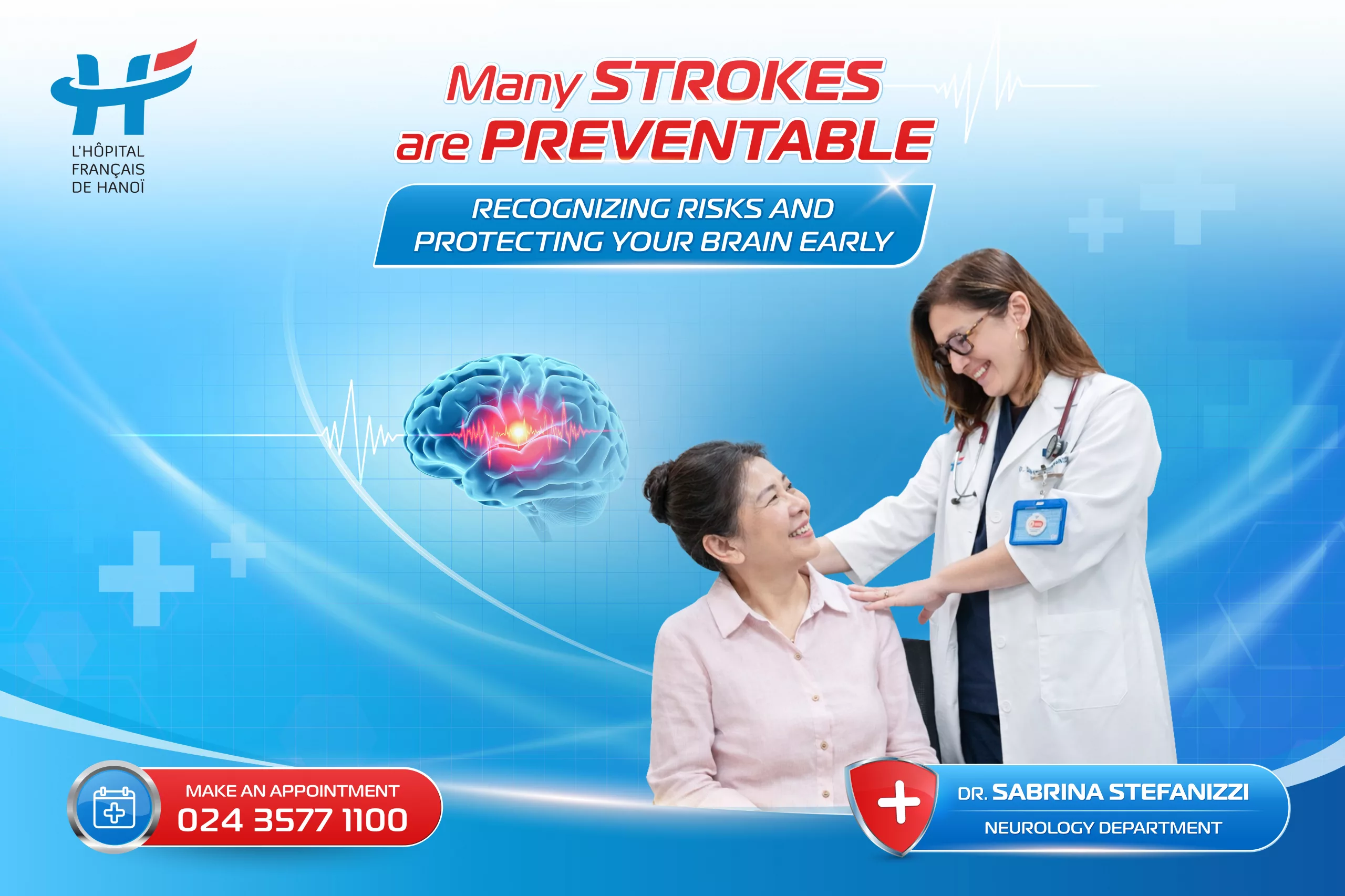
Dr. Sabrina Stefanizzi – Neurology Department and Coordinator of the Centre for Prevention, Diagnosis and Management of Vascular Diseases at Hanoi French Hospital – explains:
“Rather than focusing only on the moment when a stroke occurs, early identification of risk factors, recognition of warning signs, and maintaining a healthy lifestyle can significantly reduce the risk of stroke while protecting long-term brain health.”
One of the key mechanisms leading to stroke is the gradual and silent damage to the brain’s blood vessels. Common risk factors such as hypertension, high cholesterol, diabetes, smoking, overweight, and a sedentary lifestyle can progressively impair the function of the vascular wall over time. As a result, blood vessels become less elastic, more prone to inflammation, and more likely to form blood clots.
At the same time, the small blood vessels supplying deep regions of the brain may also be affected, gradually reducing blood flow to brain tissue. On MRI scans, neurologists sometimes detect small lesions known as silent brain infarcts, areas of damage that patients may never have noticed. As these lesions accumulate over time, they may reflect chronic cerebrovascular injury and are associated with an increased risk of future stroke and cognitive decline. In some older adults, subtle changes in memory, attention, or processing speed may be associated with cerebral small vessel disease and can easily be mistaken for normal aging.
Therefore, Dr. Sabrina Stefanizzi notes that patients with chronic conditions should strictly follow their treatment plans, monitor their blood pressure regularly, control cholesterol and blood glucose levels, and maintain a healthy lifestyle. These measures help protect the brain’s blood vessels and reduce the risk of complications related to these conditions.
In addition, you should pay attention to transient ischemic attacks (TIAs) with temporary symptoms such as weakness in the arm or leg, difficulty speaking, or temporary vision loss that resolve within minutes. The management of TIA is as urgent as stroke, and require immediate investigations.
——-
The Centre for Prevention, Diagnosis and Management of Vascular Diseases – Hanoi French Hospital is a leading and trusted center for stroke screening, prevention, and comprehensive treatment. The Centre provides international-standard medical services with:
- An experienced international medical team, combining expertise from France and Vietnam in stroke diagnosis, emergency care, and post-stroke rehabilitation.
- Comprehensive care – from prevention and early detection to acute treatment and rehabilitation.
- Multidisciplinary collaboration between Neurology, Cardiology, Respiratory Medicine, Endocrinology, and Internal Medicine to develop personalized treatment plans for each patient.
- State-of-the-art equipment from GE, Siemens, Abbott and other leading manufacturers, enabling comprehensive assessment of brain structure, function, and blood vessels, and early detection of abnormalities even before symptoms appear.
For more information, please contact our HOTLINE: 024 3577 1100, or send us a message via the Hanoi French Hospital Facebook page or Zalo OA: zalo.me/2008009049335817955
