
 Tiếng Việt
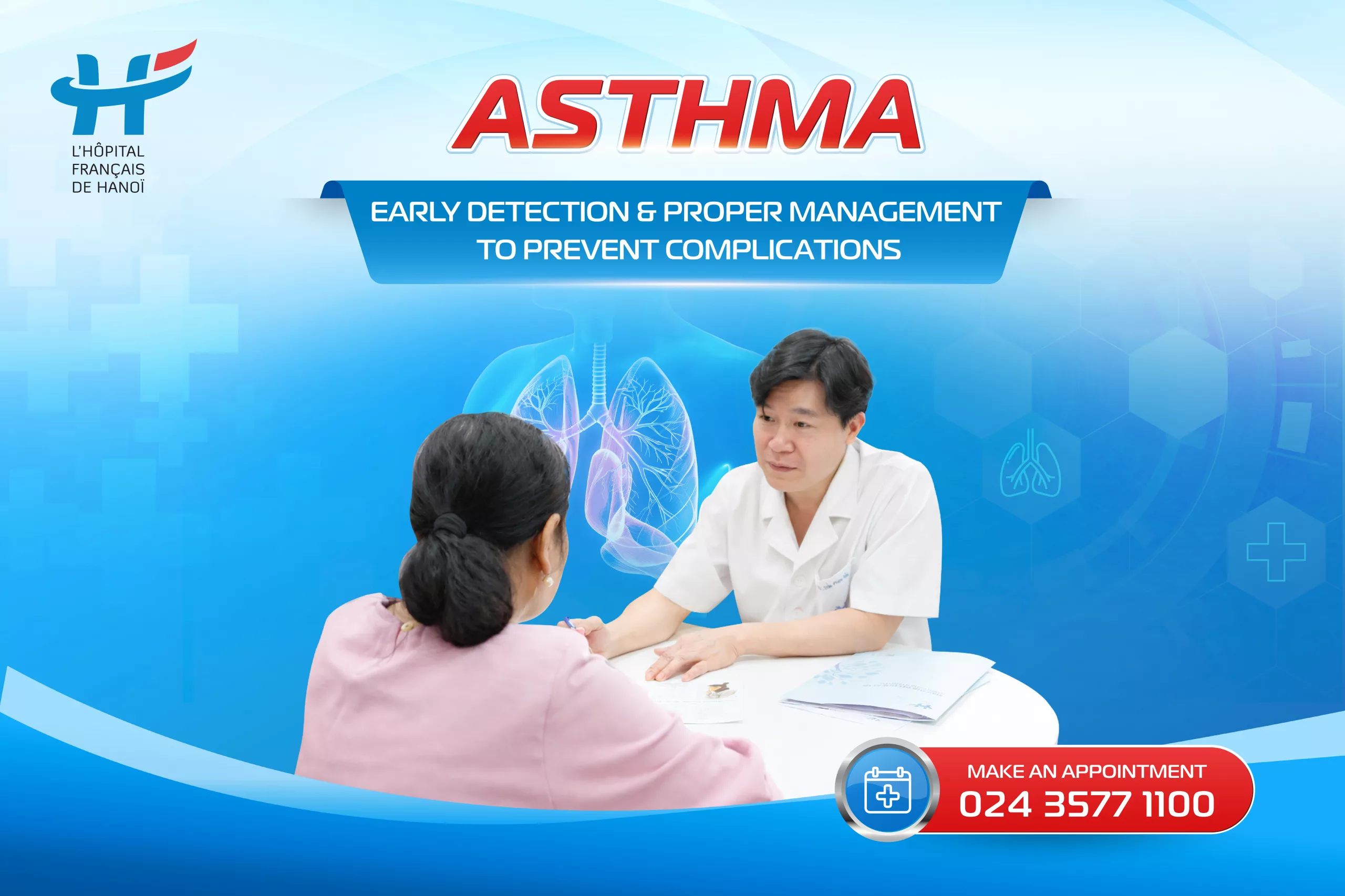
Asthma is a chronic inflammatory disease of the airways that occurs when the bronchi become inflamed and constricted, narrowing the airways and causing recurrent breathing difficulties. Symptoms may be mild or severe and can appear and subside over time. When symptoms flare up suddenly and progress rapidly, it is known as an acute asthma attack – a potentially life-threatening condition if not treated promptly.
The disease can occur at any age and often has a genetic component within families.
Common symptoms
According to Dr. Trần Phạm Hải, Pneumology Specialist at Hanoi French Hospital, people with asthma may experience one or more of the following symptoms:
- Persistent cough, often occurring at night or in the early morning
- Wheezing or whistling sounds when breathing
- Chest tightness or heaviness
- Shortness of breath
Symptoms may occur daily, weekly, or only occasionally. Their severity can also vary widely – from mild and temporary to severe.
How is asthma treated?
Asthma is controlled with medication, with two main goals:
- Relax the airways to quickly relieve symptoms
- Reduce airway inflammation to prevent long-term recurrence
Depending on the severity of the disease, doctors may prescribe medications in inhaled, oral, or injectable forms, and the treatment plan may be adjusted over time. Adhering to treatment and using inhalers with the correct technique play a crucial role in maintaining stable disease control.
Preventing asthma attacks
1. Avoid triggers:
Tobacco smoke, air pollution, dust, mold, pollen, chemicals, strong odors, cold and dry air, animal dander, and stress.
2. Maintain appropriate physical activity:
Regular exercise helps improve physical fitness and asthma control. In some cases, medication may be needed before exercise according to a doctor’s guidance.
3. Be cautious with certain medications:
Some adults may be sensitive to aspirin or non-steroidal anti-inflammatory drugs (NSAIDs). Consult a doctor before using these medications.
4. Reduce the risk of infections:
Colds, influenza, and COVID-19 can worsen asthma. Annual flu vaccination and other recommended vaccines help protect patients.
5. Regular follow-up visits:
Patients using daily medication should be monitored at least every three months to assess lung function and adjust treatment if necessary.
When should you call emergency services?
Call emergency services immediately if:
- Shortness of breath is so severe that the person cannot speak
- Lips or fingernails turn blue or gray
Contact a doctor if symptoms do not improve after using reliever medication, if medication is needed several times a week, or if asthma interferes with daily activities.
At Hanoi French Hospital, asthma patients are examined and monitored by an experienced team of respiratory specialists. Modern pulmonary function testing systems and a comprehensive evaluation process help accurately determine disease severity and create personalized treatment plans.
The goal is not only to treat asthma attacks when they occur, but also to control airway inflammation long-term, minimize the risk of complications, and help patients maintain a stable and healthy quality of life.
For more information or to schedule an appointment with Dr. Trần Phạm Hải or other HFH specialists, please contact HOTLINE 024 3577 1100, message the “Hanoi French Hospital” Fanpage, or reach us via Zalo OA: zalo.me/2008009049335817955.
