 Tiếng Việt
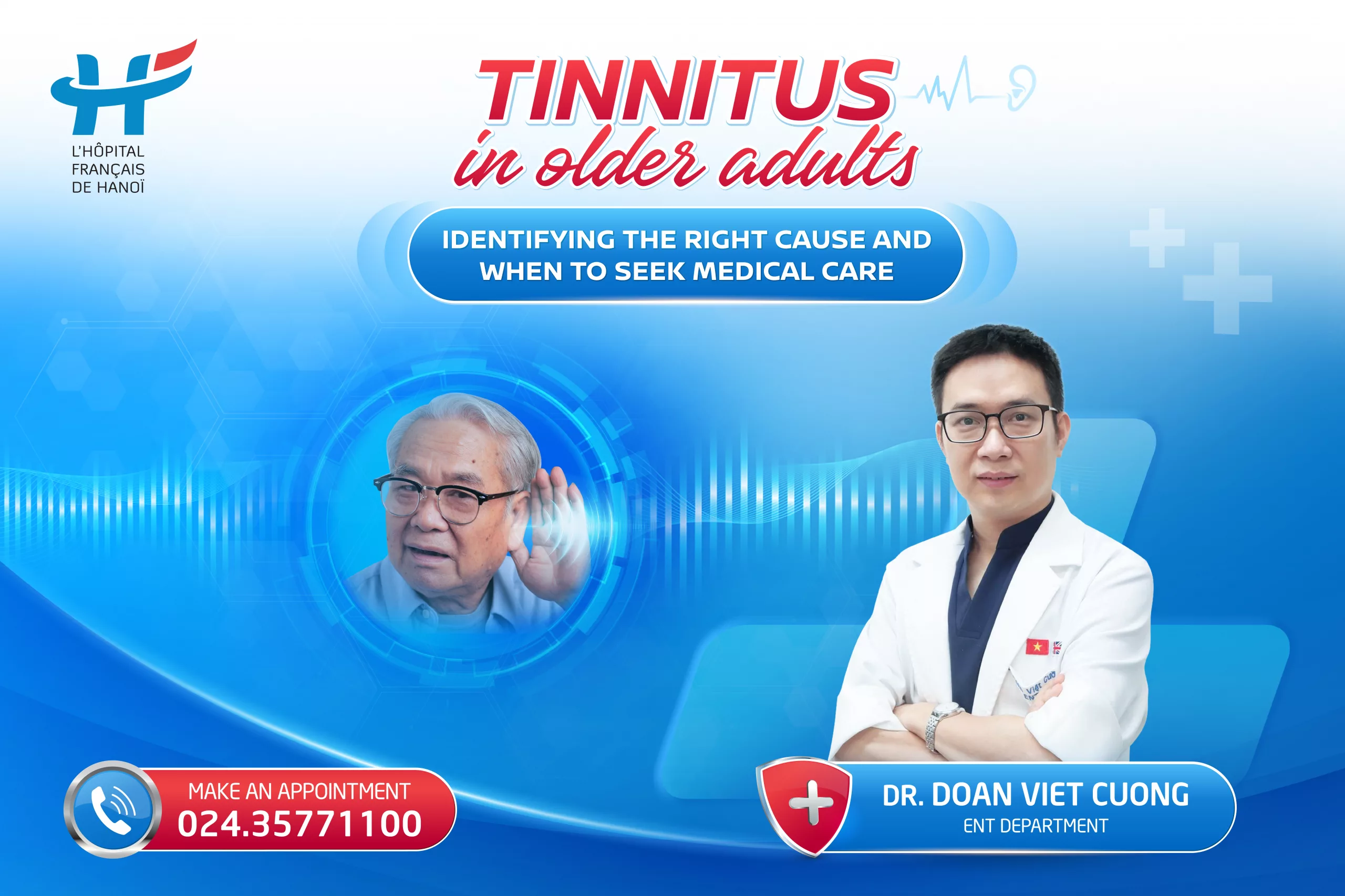
In older adults, tinnitus is often dismissed as a normal part of aging. In reality, it requires proper evaluation to distinguish age-related hearing loss (presbycusis) from other conditions that may require early intervention.
Dr. Doan Viet Cuong, ENT specialist at Hanoi French Hospital, explains:
“In older adults, the most common cause of tinnitus is hearing dysfunction or hearing loss. When auditory function is impaired, it can lead to the perception of tinnitus, often accompanied by reduced hearing. However, delaying medical evaluation may result in permanent hearing loss or missed underlying conditions.”
Beyond age-related hearing loss, tinnitus may be associated with various causes, including:
- Vascular disorders, particularly in pulsatile tinnitus
- Inner ear conditions such as cochlear damage or Ménière’s disease
- Ototoxic medications, including aminoglycosides, high-dose diuretics, or certain analgesics
- Long-term noise exposure (noise-induced hearing loss)
- Neurological conditions such as acoustic neuroma or cerebellopontine angle tumors
- Earwax impaction causing obstruction of sound conduction
You should seek evaluation by an ENT specialist if experience:
- Tinnitus lasting more than 3 days or progressively worsening
- High-pitched or insect-like sounds (e.g., buzzing, cricket-like noises)
- Tinnitus associated with hearing loss
- Unilateral or asymmetrical tinnitus
- Pulsatile tinnitus
- Tinnitus accompanied by dizziness or balance disturbances
- Significant impact on sleep or psychological well-being
Urgent evaluation is required if tinnitus is associated with sudden hearing loss or acute neurological symptoms such as weakness, speech difficulty, or balance disorders. Delayed care in these cases may affect recovery outcomes.
Depending on the clinical situation, investigations may include:
- ENT endoscopy to assess the ear canal and tympanic membrane
- Tympanometry to evaluate middle ear function
- Pure-tone audiometry (PTA)
- Imaging studies such as CT scan or brain MRI (if clinically indicated)
Clinical assessment helps determine the exact cause and severity, guiding appropriate management:
- If tinnitus is related to hearing loss, hearing support devices may improve symptoms, particularly by reducing awareness of tinnitus
- If associated with vascular, inner ear, or medication-related causes, early detection allows timely adjustment of treatment
- Additional supportive measures such as hyperbaric oxygen therapy, intratympanic injections, sound therapy, or lifestyle modifications (reducing caffeine and alcohol intake, improving sleep) may help alleviate symptoms in some patients
In many cases, the goal of treatment is not complete elimination of tinnitus, but helping patients adapt and improve their quality of life.
For more information or to book an appointment with HFH specialists, please contact the hotline at 024.35771100, message the “Hanoi French Hospital” Fanpage, or reach us via Zalo OA: zalo.me/2008009049335817955
