 Tiếng Việt
A 15-Year Journey Toward Parenthood
Patient N.T.H began her fertility journey very early, at the age of just 23–24. Before IVF, she underwent 5 intrauterine insemination (IUI) cycles, all unsuccessful. Between 2014 and 2022, she proceeded with 11 frozen embryo transfers (IVF), using 21 day-5 embryos assessed as high quality.
For many years, she was treated at several major fertility centers and tried nearly every advanced technique available at the time, yet still could not achieve an ongoing pregnancy.
In 2020, she experienced an ectopic pregnancy requiring surgical removal of her right fallopian tube, an event that brought a glimmer of hope but also left long-term risks for her reproductive health.
A Turning Point: A New Treatment Strategy
In November 2023, she was received and treated directly by Dr. Nguyễn Đình Đông. Instead of continuing to focus solely on embryo quality, the treatment approach shifted fundamentally: the entire medical history was reviewed with one critical question in mind, why did good-quality embryos repeatedly fail to implant?
A full analysis revealed that she had started IVF at a very young age (24–29), her embryos had good morphology, both partners had normal chromosomes, and she had previously recorded positive β-hCG. These factors suggested that the embryos were unlikely to be the problem. The focus shifted to assessing endometrial receptivity.
In December 2023, the doctor performed a second diagnostic laparoscopy, which revealed globally congested endometrium, stromal edema, and a friable, unhealthy lining. She then underwent more than 12 months of treatment—not with the goal of completely “curing” the condition, but of controlling inflammation, improving the uterine environment, and optimizing conditions for the next embryo transfer.
The 12th Embryo Transfer: A Decisive Moment
For the 12th transfer, a fully individualized protocol was designed: endometrial preparation tailored to real-time response, early inflammation control, and intrauterine platelet-rich plasma (PRP) infusion. On day 9 after transfer, her blood test showed a β-hCG level of 336 IU, indicating successful implantation and marking a turning point after more than a decade of treatment.
A High-Risk Pregnancy and the Critical Moment in the Operating Room
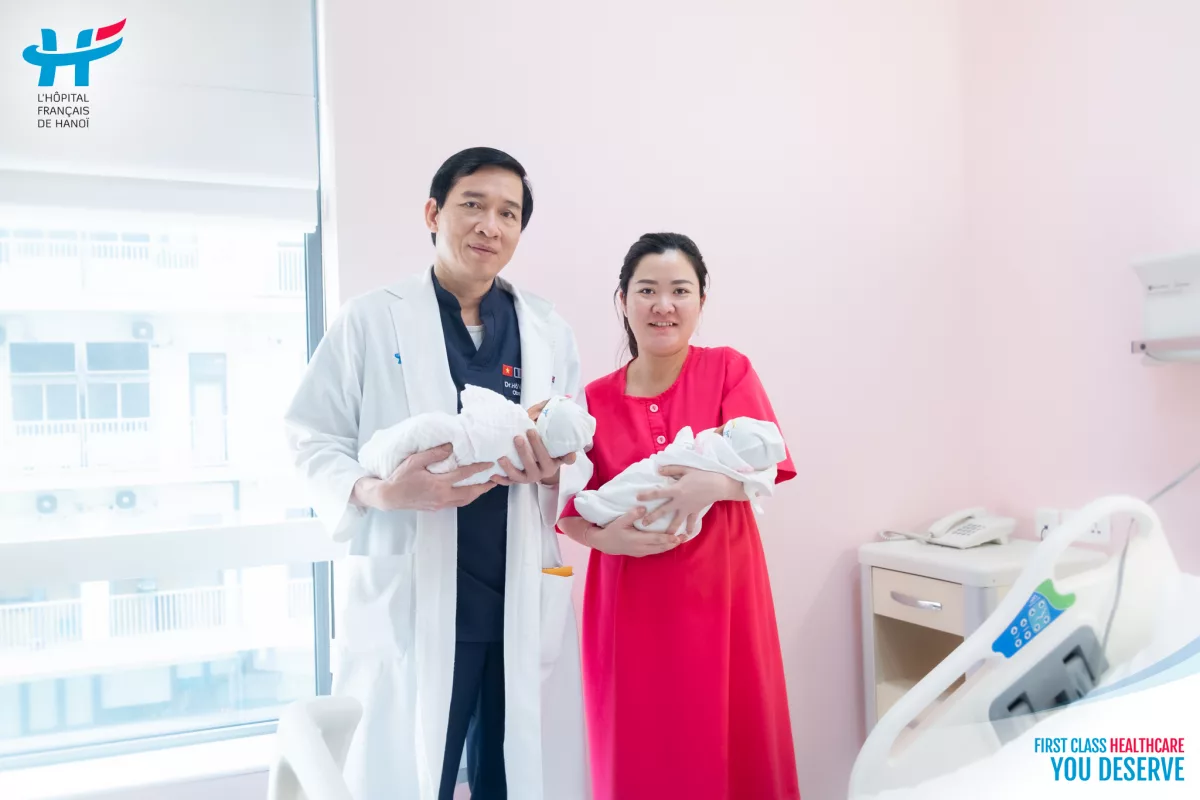
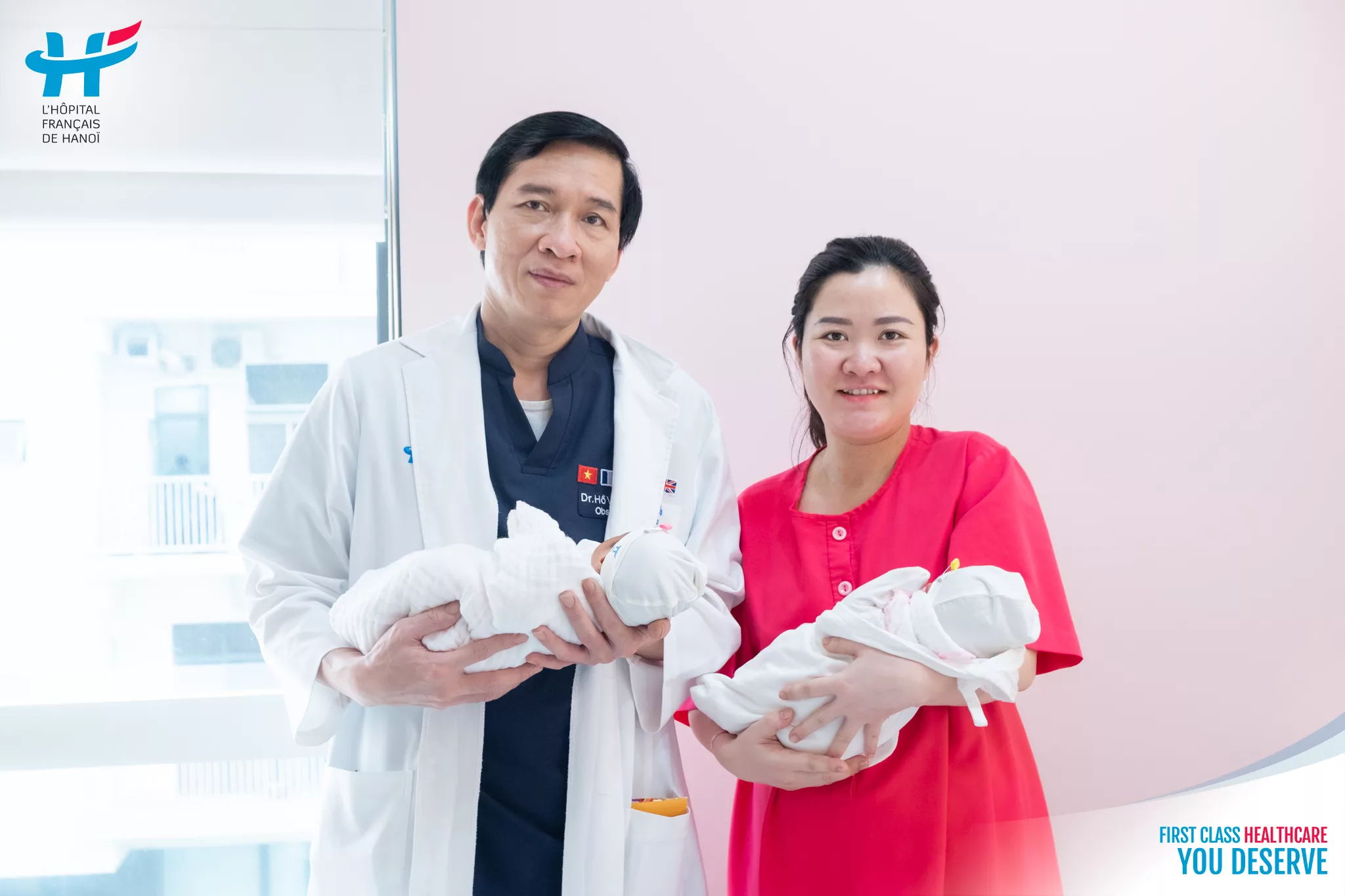
Her pregnancy was closely monitored at Hanoi French Hospital by Dr. Hồ Văn Thu, Head of the Department of Obstetrics & Gynecology, and was classified as high-risk due to her complex reproductive history.
At the time of delivery, she developed uterine atony leading to postpartum hemorrhage, a serious obstetric complication. The surgical team promptly performed a B-Lynch uterine compression suture, successfully controlling the bleeding and preserving the uterus.
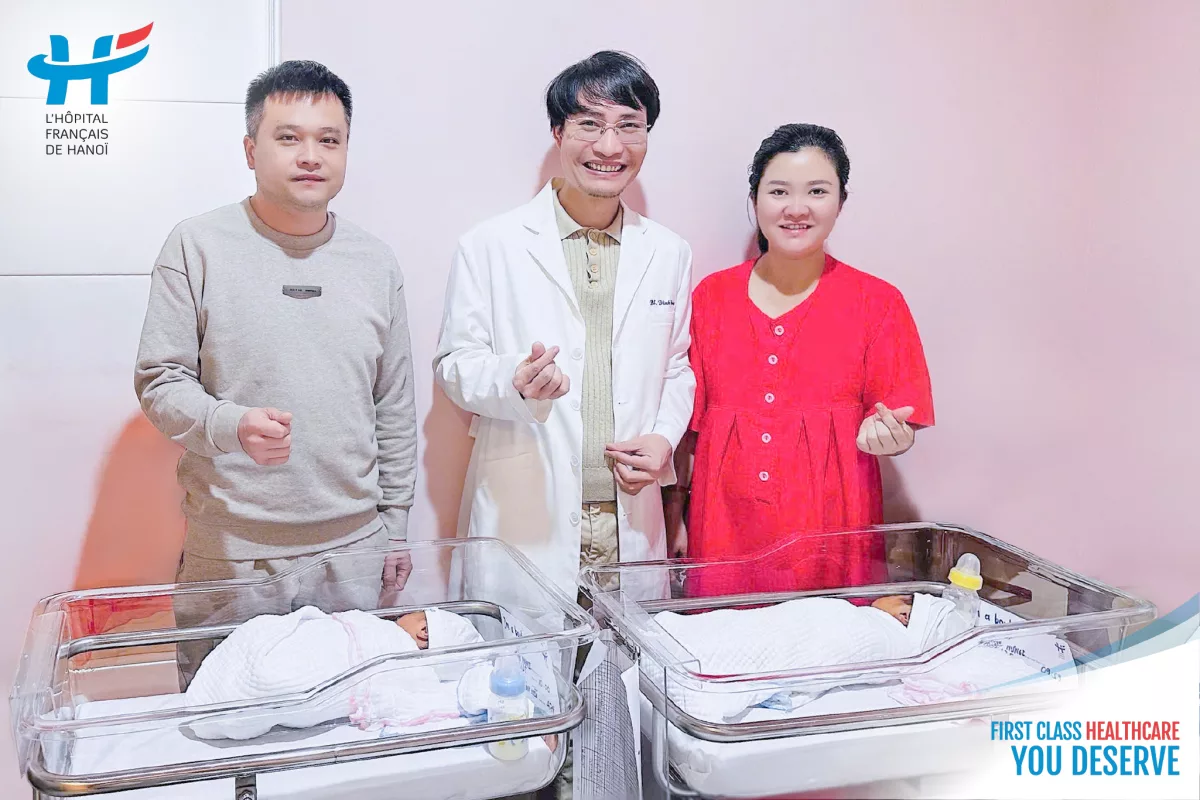
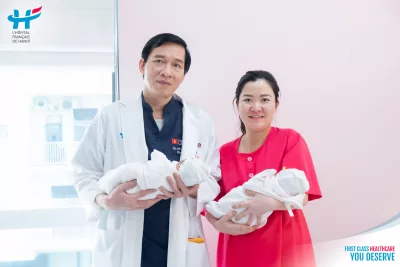
Both babies were delivered safely, and the mother recovered well.
The moment the twins cried their first cries marked the end of 15 years of tears, worry, and waiting.
At Hanoi French Hospital, complex obstetric cases are managed through a multidisciplinary model, ensuring close cooperation among Obstetrics, Anesthesiology – Intensive Care, and an international-standard operating theatre system. Safety protocols for high-risk situations are always prioritized, ensuring the highest level of protection for both mother and babies.