
 Tiếng Việt
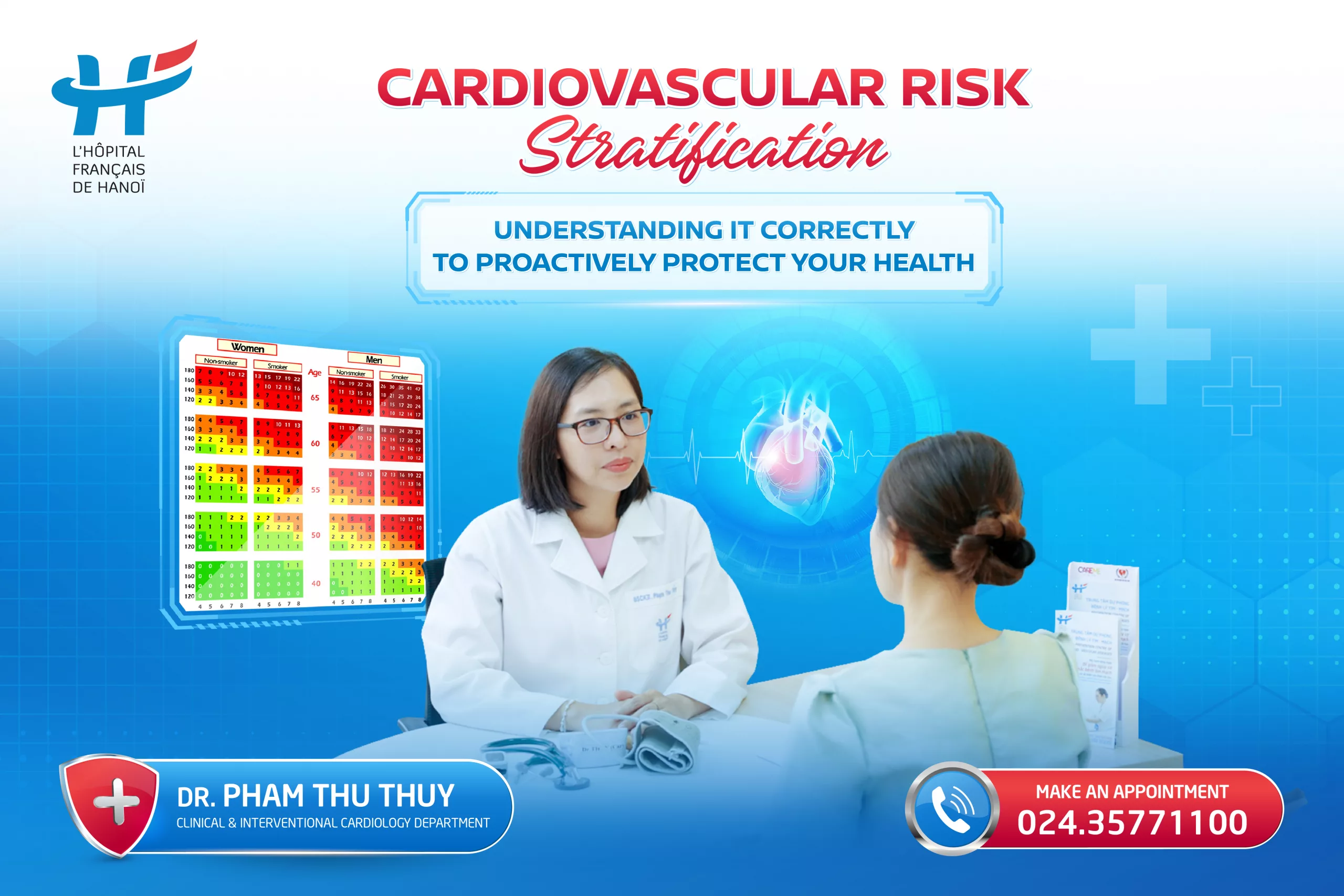

According to Dr. Pham Thu Thuy, Department of Cardiology & Interventional Cardiology, Hanoi French Hospital:
“Most patients rarely have a single isolated risk factor. More commonly, they present with multiple coexisting risk factors that accumulate over time. Risk stratification integrates these data points to estimate an individual’s overall cumulative risk. Simply put, the more risk factors you have, and the longer the exposure, the higher your probability of developing cardiovascular disease.”
Currently, several cardiovascular risk prediction models are used worldwide. In Vietnam, the European Society of Cardiology (ESC) risk scores – SCORE2 (Systematic COronary Risk Estimation-2) and SCORE2-OP (SCORE2 for Older Persons) – are widely applied to estimate the 10-year risk of fatal and non-fatal cardiovascular events in adults with no prior history of cardiovascular disease.
These scoring systems are based on five core factors:
- Age: Cardiovascular risk increases with age, even when other parameters remain relatively stable.
- Gender: Men and women have different cardiovascular risk profiles, particularly in middle age.
- Systolic blood pressure: Differentiates risk across blood pressure levels; the higher and more prolonged the blood pressure, the greater the cardiovascular risk.
- Cholesterol (non-HDL-C): “Bad” cholesterol directly involved in the development of atherosclerosis.
- Smoking status: Smoking independently increases cardiovascular risk, even when other indicators are not markedly elevated.
In addition to risk scoring, physicians also assess other individual factors during clinical evaluation such as overweight or obesity, diabetes, family history, lifestyle habits and treatment adherence to form an appropriate, patient-specific clinical judgment.
Based on this comprehensive assessment, cardiovascular risk is generally categorized into different levels, serving as the basis for personalized monitoring and prevention strategies:
- Low risk: Maintain a healthy lifestyle with regular follow-up.
- Moderate risk: Tighter control of health indicators and routine follow-up are recommended.
- High or very high risk: Early medical intervention and long-term monitoring are often required to prevent cardiovascular events.
Understanding your personal cardiovascular risk is the first crucial step toward proactively protecting your heart before serious events occur. For more information or to schedule an appointment with a cardiology specialist at Hanoi French Hospital, please contact Hotline: 024 3577 1100, inbox the Fanpage “Hanoi French Hospital”, or via Zalo OA: zalo.me/2008009049335817955
