 Tiếng Việt
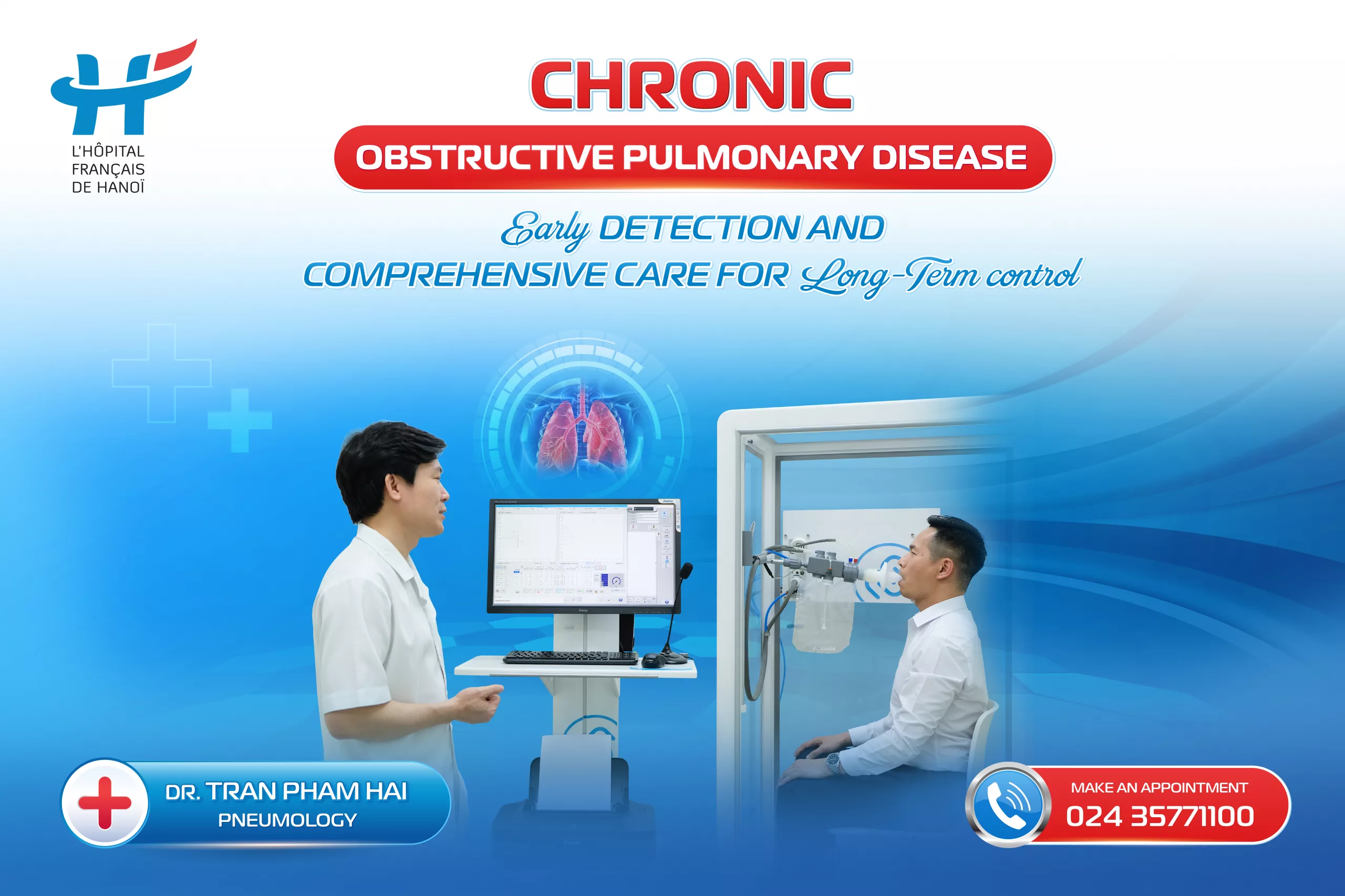
Over time, the airways become narrowed, the alveoli are damaged and lose elasticity, leading to reduced oxygen exchange. As a result, patients gradually experience increasing shortness of breath and fatigue. Although COPD cannot be completely cured, it can be well controlled if detected early and treated appropriately.
According to Dr. Trần Phạm Hải, Pneumology Specialist at Hanoi French Hospital (HFH), smoking is the most common cause; approximately 80% of COPD patients have a history of smoking. Other risk factors include secondhand smoke, air pollution, smoke from charcoal or wood-burning stoves, occupational dust and chemicals, and genetic factors.
Common symptoms of COPD
In the early stages, symptoms may be mild or barely noticeable. As the disease progresses, patients often experience:
- Persistent cough with sputum
- Wheezing
- Shortness of breath (initially during exertion, later even at rest)
- Fatigue
Seek emergency care immediately if severe shortness of breath occurs at rest, if coughing up blood, or if there are signs suggestive of a heart attack (such as chest pain, sweating, or dizziness).
Contact a doctor if you develop a fever ≥ 38°C, worsening shortness of breath compared with usual levels, or increased/change in sputum.
COPD diagnosis at Hanoi French Hospital
At Hanoi French Hospital, patients receive a comprehensive evaluation including:
1. Pulmonary function testing (spirometry)
This is the most important test, measuring the amount and speed of air exhaled. After using a bronchodilator medication, lung function values often return close to normal in patients with asthma, whereas in COPD they usually improve only partially.
2. Additional tests (when necessary):
- Total lung capacity measurement
- Diffusing capacity testing
- Oxygen saturation measurement
- Arterial blood gas analysis
- Six-minute walk test
- Screening test for alpha-1 antitrypsin deficiency
- Chest imaging such as X-ray or CT scan (including low-dose CT for lung cancer screening in high-risk individuals)
COPD treatment and management
COPD treatment may include:
- Smoking cessation (the most important step)
- Inhaled bronchodilators and anti-inflammatory medications
- Oxygen therapy when needed
- Pulmonary rehabilitation
- Specialized interventions in certain rare cases
Patients are advised to completely stop smoking, avoid dust and air pollution, receive vaccinations for influenza, pneumonia, and COVID-19, maintain proper nutrition, stay physically active at an appropriate level, and attend regular follow-up visits.
Early detection and adherence to treatment are key to helping people with COPD maintain their quality of life and reduce the risk of severe exacerbations.
For more information or to schedule an appointment with Dr. Trần Phạm Hải or other HFH specialists, please contact HOTLINE 024 3577 1100, message the “Hanoi French Hospital” Fanpage, or reach us via Zalo OA: zalo.me/2008009049335817955.
