 Tiếng Việt
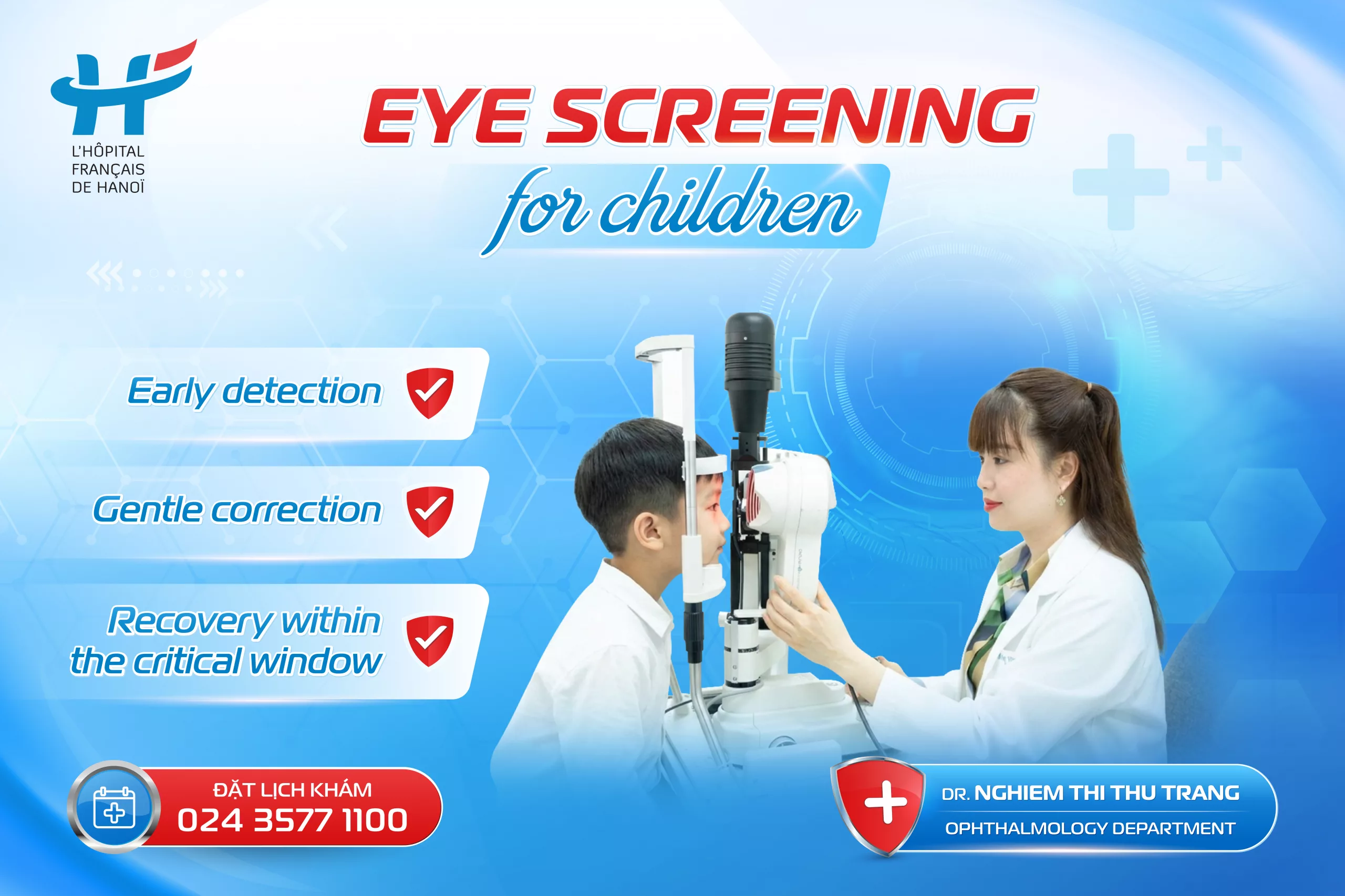
A child’s visual system needs continuous development to reach full functionality. This process is most active during the first 6-8 years of life, particularly within the first 3-5 years. During this period, the brain must receive clear and balanced images from both eyes in order to learn how to process and coordinate vision effectively.
At Hanoi French Hospital, eye examinations with an ophthalmologist are included in all four pediatric health check-up packages. This helps detect potential visual disorders early and allows doctors to establish appropriate monitoring and intervention plans according to each child’s stage of development.
Dr. Nghiem Thi Thu Trang, Ophthalmology Department, Hanoi French Hospital, explains:
“Children can develop eye conditions at a very early age, including refractive errors, strabismus (crossed eyes), amblyopia (“lazy” eye), and congenital abnormalities affecting the visual axis. These conditions often do not present obvious symptoms, especially in their early stages. Children also have strong accommodative abilities, which may mask hyperopia (blurriness) or differences in refractive power between the two eyes.
If cases are detected early, while the visual brain still retains its adaptability, a child’s vision can be recovered or preserved close to normal levels. When detected late, treatment effectiveness decreases significantly, particularly for functional visual disorders such as amblyopia.”
Eye examinations for children should be performed at specific developmental milestones:
- Newborn – 6 months: screening for congenital abnormalities such as cataracts, strabismus, ptosis, or eyelid hemangioma. This is particularly important for premature babies, low-birth-weight infants, or children with a family history of eye diseases.
- 3-4 years old: age-appropriate visual acuity assessment to detect refractive errors (myopia, hyperopia, astigmatism), strabismus, or amblyopia.
- 5-6 years old: binocular vision and eye coordination evaluation to ensure children are ready for learning activities such as reading and writing.
- Throughout schooling: annual eye examinations to monitor refractive development, especially for children who study intensively or frequently use digital devices.
Dr. Trang emphasizes that you should take your child for an eye examination immediately if you notice:
- Frequent squinting, head tilting, or excessive eye rubbing
- Eyes that appear misaligned or not looking straight
- Complaints of eye strain, headaches, or blurred vision
You can feel at ease bringing your child for an ophthalmology consultation at Hanoi French Hospital:
- Direct examination and consultation with Dr. Nghiem Thi Thu Trang, an experienced ophthalmologist who continuously updates the latest medical advances and provides gentle, child-friendly care
- Advanced diagnostic equipment, including next-generation refraction systems and modern corneal topography, enabling precise visual assessment and safe monitoring or intervention plans
- Western-standard examination protocols, with multidisciplinary collaboration when screening and supporting treatment.
For further information, please contact HOTLINE: 024 3577 1100, INBOX the fanpage “Hanoi French Hospital”, or Zalo OA: zalo.me/2008009049335817955
