
 Tiếng Việt
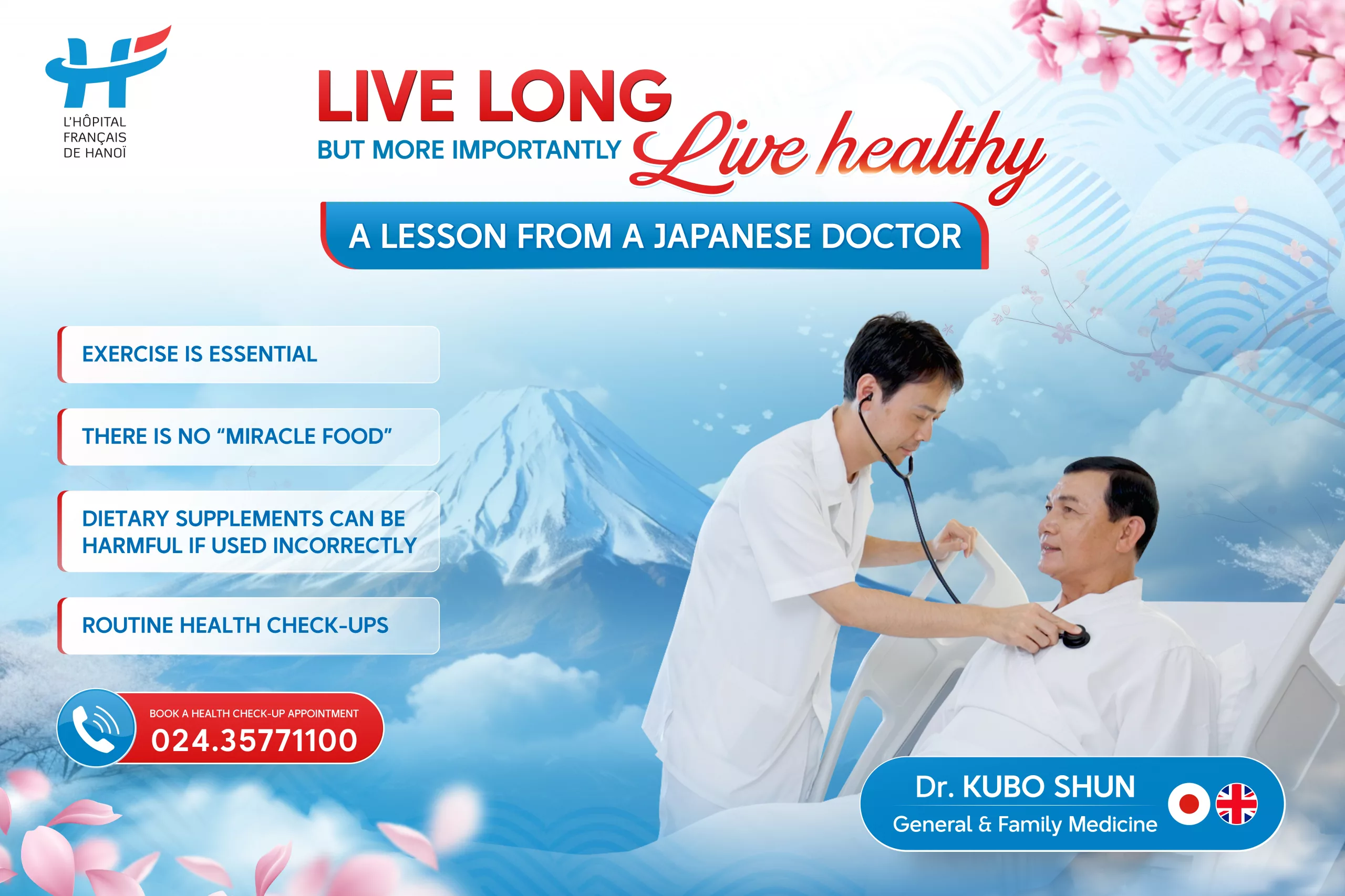
Exercise is essential
Exercise helps maintain muscle and bone strength, reducing the risks of falls, fractures, and muscle weakness in the elderly. Activities such as walking, stretching, or chair-based exercises are effective. For cardiovascular health, walking, cycling, or light jogging support stronger heart and blood vessels, better blood circulation, and prevention of hypertension, diabetes, and stroke.
“In Vietnam, these chronic diseases are increasing rapidly, so physical activity is the most affordable and effective preventive medicine,” shared Dr. Kubo.
Research also shows that regular exercise keeps the brain agile, improves cerebral blood flow, reduces the risk of dementia, boosts emotional wellbeing, and enhances memory.
“The most important thing is consistency. You don’t need to exercise intensely or for too long — just move regularly and within your capacity,” Dr. Kubo added.
The WHO recommends at least 150 minutes of moderate-intensity or 75 minutes of high-intensity activity per week. For optimal benefits, Dr. Kubo suggests adding muscle-strengthening exercises twice per week.
There is no “miracle food” — Balanced and moderate eating is the real key
As we age, metabolism slows down; overeating increases the risk of obesity, high blood pressure, and diabetes.
“Vietnam has a rich culinary culture and family meals are very important, but the key is moderation,” Dr. Kubo noted, reflecting his understanding of Vietnamese lifestyle habits.
He emphasizes that there is no single “superfood” that guarantees health or longevity. Consuming too much of even a “healthy” food can still cause nutritional imbalance. The secret lies in:
- Balanced nutrition
- A diverse, varied diet
- Proper portion control
- Reduced salt intake
- Adequate hydration — small amounts, multiple times per day
Dietary supplements can be harmful if used incorrectly
“Supplements are not medicines,” Dr. Kubo stressed. “They should only be used when a deficiency has been confirmed — and under medical guidance.”
Potential risks of supplement overuse include:
- Excess Vitamin A → Bone and liver damage
- Excess Vitamin E → Higher bleeding risk
- Excess calcium → Kidney stones and cardiovascular complications
When should supplements be used?
Only after medical examination and laboratory tests confirm a deficiency, and supplementation is prescribed by a doctor.
Routine health check-ups — Why are they so important?
“No symptoms do not mean no disease. Early detection makes treatment easier and more effective. Especially in older adults, silent medical conditions are very common,” explained Dr. Kubo.
“Make routine check-ups a habit,” he encouraged.
At Hanoi French Hospital, we provide comprehensive health check-up packages to help detect diseases early, prevent complications, and protect long-term health.
With a team of internationally trained physicians, state-of-the-art equipment (GE, Abbott, Siemens, Roche, etc.), and multi-disciplinary collaboration between Internal Medicine and other specialties, we offer personalized assessment and expert guidance to help you safeguard your health and your family’s wellbeing. Learn more about HFH general health check-up packages: https://www.hfh.com.vn/en/health-check/
