
 Tiếng Việt
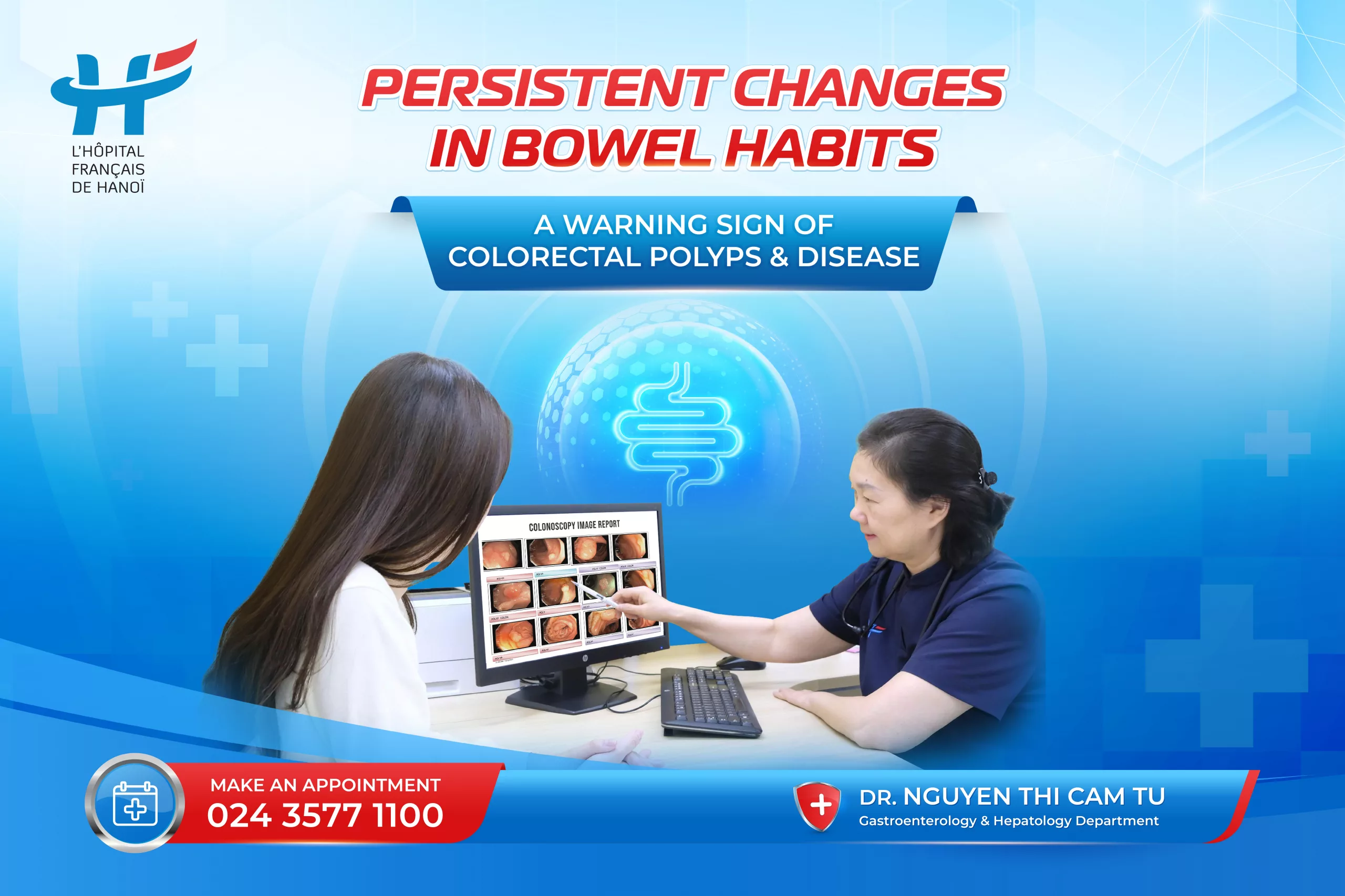
Recently, a 67-year-old male patient with a history of hypertension and diabetes presented to Hanoi French Hospital with complaints of bowel movements occurring 3–4 times per day over several days. Following a thorough medical history review and clinical examination, Dr. Nguyen Thi Cam Tu recommended a colonoscopy with NBI (Narrow Band Imaging) along with additional tests to identify the underlying cause.
Colonoscopy results revealed 12 colorectal polyps, ranging in size from 4 mm to 2 cm. All polyps were removed during the procedure and sent for histopathological examination. Fortunately, all were benign. The patient’s bowel symptoms improved significantly after the intervention.
Commenting on this case, Dr. Tu noted that most small colorectal polyps are asymptomatic. However, clinical symptoms are more likely to occur when:
- Polyps are large in size
- There are multiple polyps
- The polyps are adenomatous or villous in nature
- They remain undetected over a long period
In this case, a notable factor was the high number of polyps with varying sizes, including one as large as 2 cm, which helps explain the patient’s symptoms.
From a pathophysiological perspective, multiple polyps can cause mechanical irritation and increased fluid secretion, particularly in villous adenomas. The presence of multiple polyps may also alter the gut microbiota, leading to localized inflammation, impaired absorption, and increased mucus secretion. Additionally, microscopic bleeding may occur, contributing to changes in stool consistency and bowel habits. Colorectal polyps can also induce colonic spasms or dilation, resulting in abdominal pain.
Dr. Tu emphasized that persistent bowel habit changes should not be considered merely functional disorders, especially in:
- Individuals over 45 years old, or from 40 years old in high-risk groups
- Patients with chronic diseases
- Those who have not undergone colonoscopy screening
Colonoscopy not only enables detection of lesions but also allows for immediate intervention, such as polyp removal. This helps improve symptoms and reduces the risk of progression to colorectal cancer.
NBI endoscopy technology enhances the visualization of subtle mucosal changes in the gastrointestinal tract, enabling early detection and prompt management of abnormalities.
Hanoi French Hospital is a trusted provider for screening and treatment of gastrointestinal and hepatobiliary diseases, offering:
- An internationally trained team of gastroenterologists and hepatologists who accompany patients throughout their treatment journey
- Advanced medical equipment (Olympus EVIS EXERA III CV-190 HQ endoscopy system with magnification and NBI capabilities; PAS and HE staining for biopsy analysis; 1.5 Tesla MRI system; and laboratory tests aligned with WHO recommendations)
- Endoscopy and treatment protocols in accordance with the latest recommendations from the WHO, the World Gastroenterology Organization, and the Vietnam Association of Gastrointestinal Endoscopy
- Endoscopy suites designed to meet the highest standards of infection control
- Dedicated monitoring areas ensuring maximum safety and comfort before, during, and after the procedure
To schedule a consultation with HFH gastroenterology specialists or learn more about gastroscopy services, please contact the hotline 024.35771100 or message the fanpage “Hanoi French Hospital”, or WhatsApp: +84 903 497 078
