 Tiếng Việt

Dr. Nguyen Van Khanh, Department of Radiology, Hanoi French Hospital, explains:
“Each breast lesion is a unique case and must be evaluated within the specific clinical context of each patient. Searching for information independently or comparing results with others may lead to unnecessary anxiety or, conversely, underestimation of the situation. Therefore, when receiving a BI-RADS result, it is essential to consult directly with a physician to clearly understand its meaning and the appropriate next steps.”
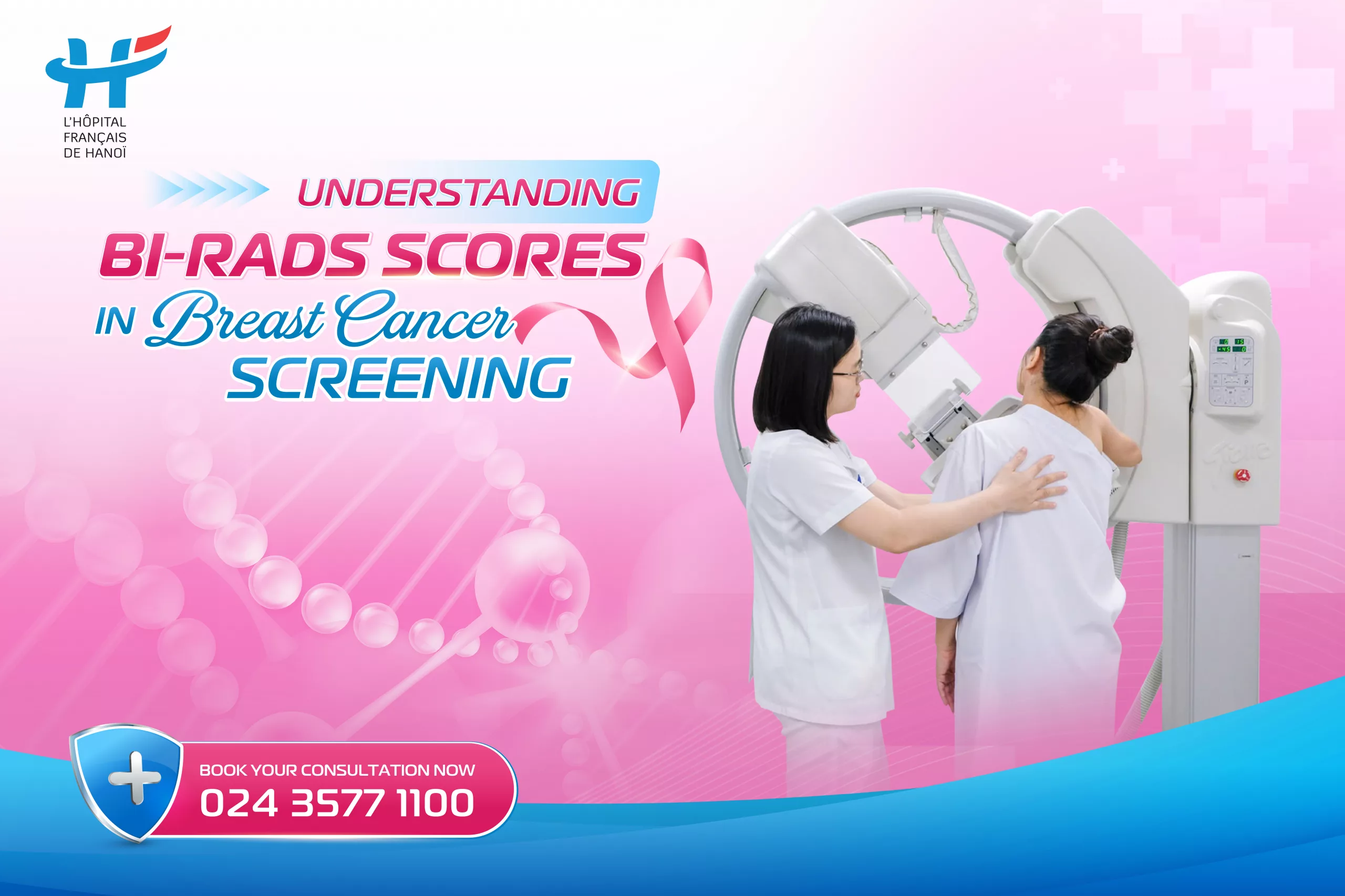
BI-RADS (Breast Imaging Reporting and Data System) is a standardized classification and reporting system for breast lesions detected through imaging modalities such as ultrasound, mammography, and magnetic resonance imaging (MRI).
This system was developed to:
- Standardize imaging reports
- Minimize misinterpretation and guide appropriate management
In clinical practice, BI-RADS is categorized into several levels:
- BI-RADS 0: Incomplete, additional imaging evaluation is required.
- BI-RADS 1 – Negative: No abnormal findings. Continue routine screening as recommended.
- BI-RADS 2 – Benign: Benign findings. No intervention required; continue routine follow-up.
- BI-RADS 3 – Probably benign: The lesion is not entirely characteristic but has a malignancy probability of less than 2%. Imaging follow-up at 6, 12, and 24 months is recommended to confirm stability over time, helping to avoid unnecessary biopsy or intervention.
- BI-RADS 4 – Suspicious abnormality: Biopsy is recommended for definitive diagnosis. This category is further subdivided into:
+ 4A: Low suspicion of malignancy (>2% to ≤10%)
4B: Moderate suspicion of malignancy (>10% to ≤50%)
4C: High suspicion of malignancy (>50% to <95%)
- BI-RADS 5 – Highly suggestive of malignancy: ≥95% probability of malignancy. Imaging findings are highly typical. Biopsy, histopathological confirmation, and treatment planning are required.
- BI-RADS 6 – Known biopsy-proven malignancy: Applies to cases with a prior histopathological diagnosis of breast cancer.
At Hanoi French Hospital, any abnormal findings detected during breast screening are discussed in a multidisciplinary setting. This includes careful review and correlation of imaging results, consideration of follow-up versus biopsy, and personalized consultation regarding the appropriate management pathway.
Multidisciplinary collaboration among oncologists, gynecologists, and diagnostic imaging specialists ensures that patients clearly understand their condition, avoid unnecessary distress, and make informed decisions based on solid medical evidence.
For consultation, examination, or breast cancer treatment at HFH, please contact our hotline at 024.35771100 or send a message via the official fanpage “Hanoi French Hospital” or Zalo OA: zalo.me/2008009049335817955.
