 Tiếng Việt
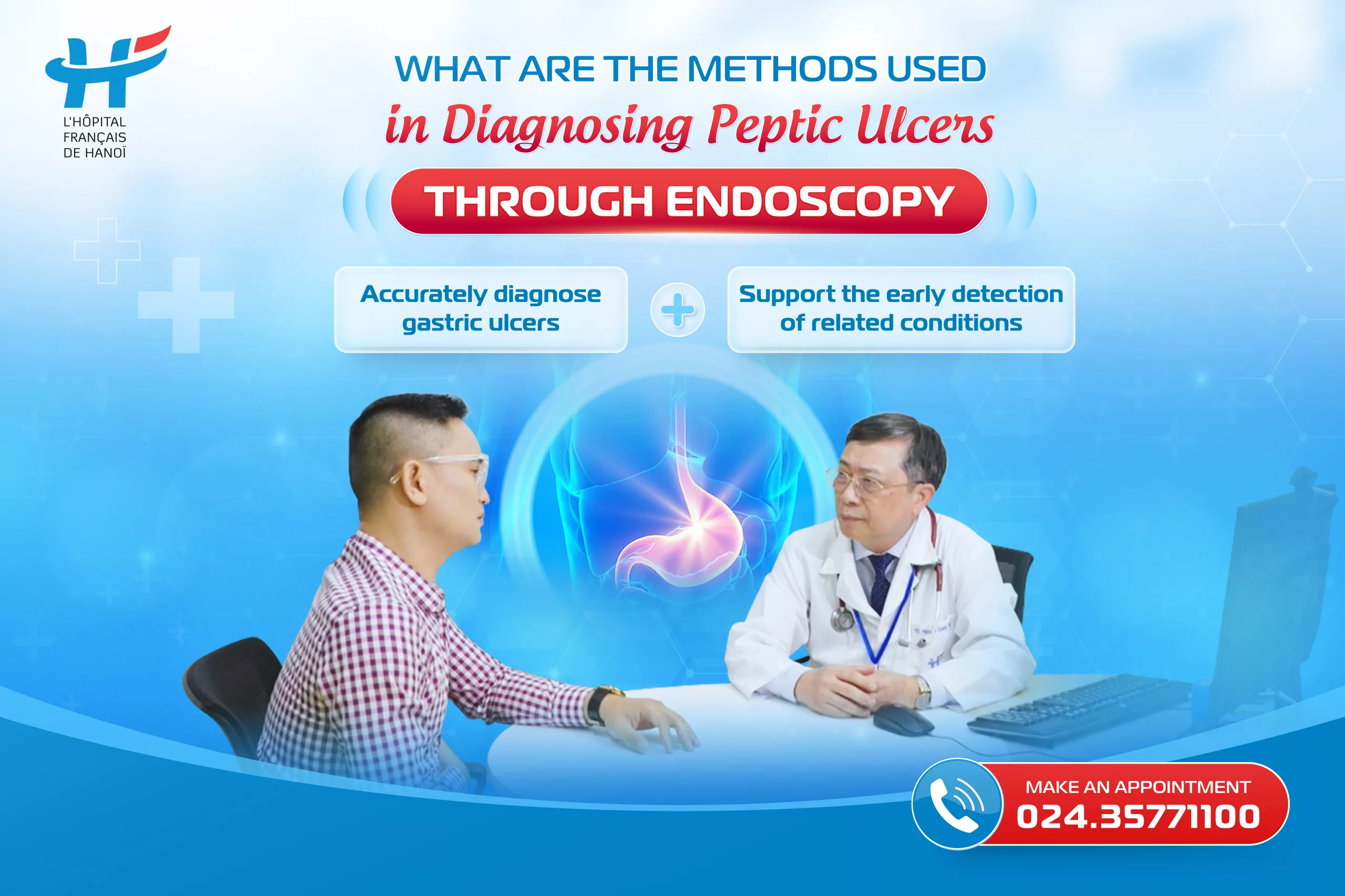
Key benefits of endoscopy include:
- Early and accurate detection: Endoscopy enables direct visualization of the stomach lining, allowing doctors to determine the location, size, and severity of ulcers. This method can detect even the smallest lesions that ultrasound or X-rays may miss, ensuring timely treatment.
- Assessment of complications: Endoscopy helps identify serious complications such as gastrointestinal bleeding (ulcer bleeding), stomach perforation (ulcer penetrating the stomach wall), or pyloric stenosis (narrowing of the stomach outlet). Early detection significantly reduces the risk of severe, life-threatening complications.
- Biopsy and H. pylori testing: During endoscopy, doctors can collect tissue samples from the ulcer site to test for Helicobacter pylori – the bacterium responsible for peptic ulcers, chronic gastritis, and classified by WHO as a Group I carcinogen for stomach cancer. Biopsy also helps rule out malignancy, especially in ulcers that are slow to heal or appear abnormal.
- Foreign body removal in the esophagus, stomach, or duodenum.
- Gastrostomy for feeding when necessary.
- Treatment follow-up: After therapy, patients may undergo repeat endoscopy to evaluate mucosal healing and ensure that the ulcer has completely resolved – an important step in preventing recurrence or complications.
- Detection of precancerous lesions: Some ulcers can develop into dysplasia or gastric cancer if not detected early. Endoscopy enables identification of these changes for timely management.
Common Methods of Endoscopy for Diagnosing Peptic Ulcers
There are several endoscopic techniques currently used to diagnose stomach ulcers, differing in invasiveness and patient comfort levels. The most common methods include:
- Oral Gastroscopy: The traditional and most widely used method. A flexible endoscope is inserted through the mouth, down the esophagus, into the stomach to observe and assess mucosal lesions. This method may cause discomfort or nausea if sedation or anesthesia is not applied.
- Transnasal Gastroscopy:
- A thinner endoscope is inserted through the nose instead of the mouth, reducing gag reflex.
- Suitable for patients sensitive to oral endoscopy.
- The drawback is slightly lower image resolution due to the smaller scope diameter.
- Capsule Endoscopy:
- The patient swallows a capsule equipped with a miniature camera, which records images of the entire digestive tract.
- Ideal for patients unable to undergo conventional endoscopy or those requiring a full small intestine evaluation.
- However, this method does not allow immediate therapeutic intervention (e.g., biopsy or bleeding control) and requires thorough bowel preparation.
At Hanoi French Hospital, patients have access to all advanced endoscopic techniques for diagnosing peptic ulcers. Procedures are performed by a team of internationally trained Gastroenterology & Hepatology specialists, using state-of-the-art European-standard equipment to ensure early detection, accurate diagnosis, and the safest, most comfortable experience possible.
For more information or to schedule an appointment with our specialists, please contact us via HOTLINE 024.35771100, message our Fanpage “Hanoi French Hospital,” or connect with us on Zalo OA at zalo.me/2008009049335817955
