
 Tiếng Việt
According to the Global Burden of Disease study published in 2026, an estimated 13.2 million new stroke cases occurred worldwide in 2023. Around 104.8 million people were living with the consequences of stroke, and 6.8 million deaths were attributed to the condition. Notably, approximately 83% of the global stroke burden is linked to risk factors that can be modified or managed.
Stroke can happen suddenly, but recognizing the warning signs early and seeking emergency medical care without delay can make a significant difference to survival and recovery. Understanding stroke helps us protect our own health and may even save the life of someone close to us in an emergency.
Recognizing stroke: Know the warning signs
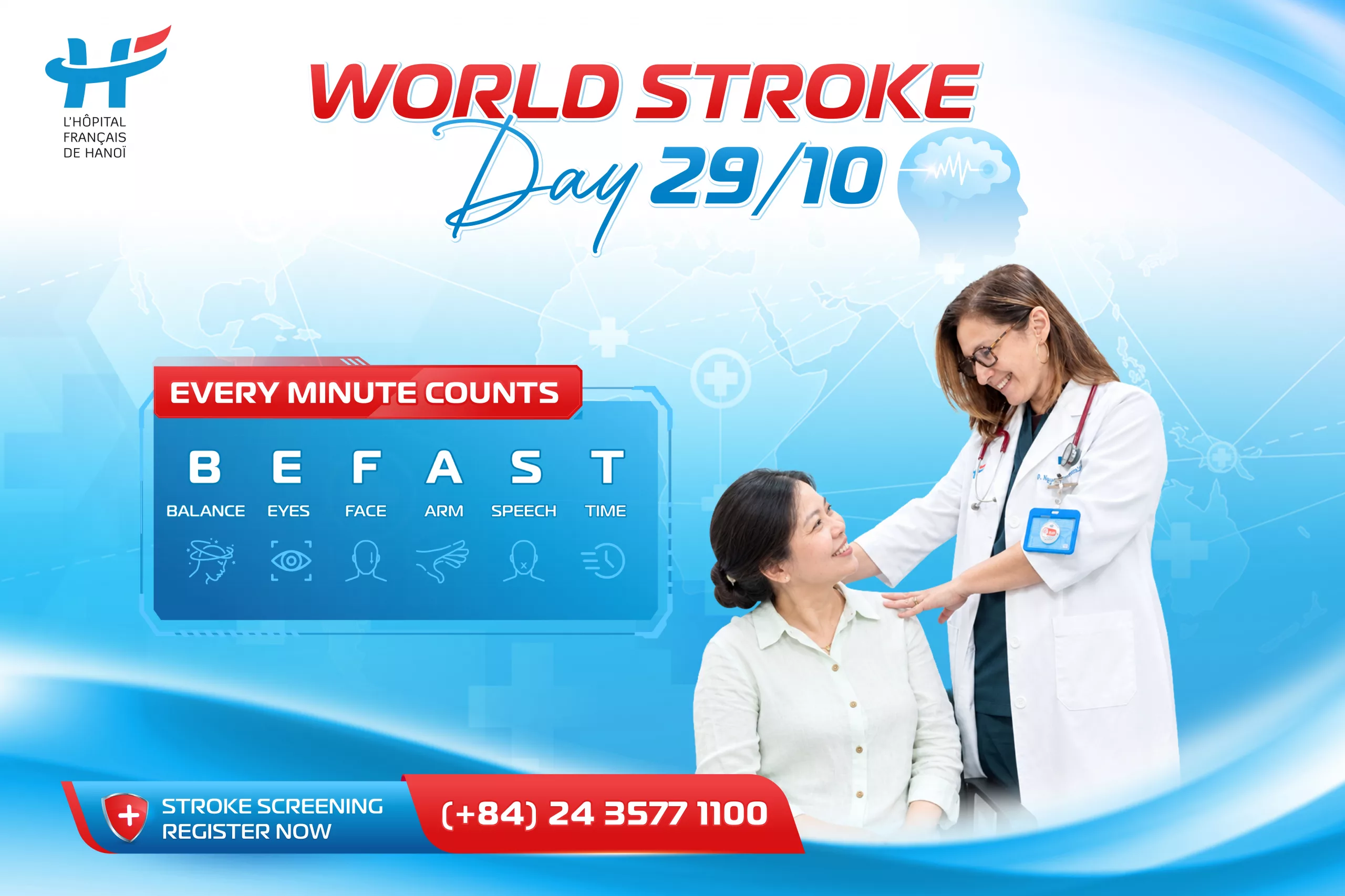
The 2026 World Stroke Day campaign highlights the message “Every Minute Counts,” reminding everyone of the importance of recognizing stroke symptoms and seeking emergency medical care immediately.
Remember B.E. F.A.S.T. to recognize the warning signs:
- B – Balance: Sudden dizziness, loss of balance, or difficulty coordinating movements or walking steadily.
- E – Eyes: Sudden blurred or double vision, or loss of vision in one or both eyes.
- F – Face: Facial drooping or an uneven smile.
- A – Arms: Sudden weakness or numbness in one arm, or difficulty raising both arms equally.
- S – Speech: Slurred speech, difficulty speaking clearly, or trouble understanding others.
- T – Time: Call emergency services immediately if you notice any signs of a possible stroke.
Even if symptoms disappear after a few minutes, urgent medical assessment is still essential, as they may indicate a transient ischemic attack (TIA), which can be a warning sign of a future stroke.
Take steps to prevent stroke today
Managing risk factors is an important part of stroke prevention. Here are some practical steps you can take:
- Check your blood pressure regularly and keep it under control.
- Monitor and manage conditions such as diabetes, high cholesterol, and atrial fibrillation.
- Avoid smoking and limit alcohol consumption.
- Maintain a balanced diet, reduce salt intake, and exercise regularly.
- Follow your doctor’s advice and attend regular check-ups.
———————-
As a trusted destination for comprehensive stroke prevention, diagnosis, treatment, and rehabilitation, Hanoi French Hospital’s Vascular Prevention Center delivers care in line with Western standards:
- A team of highly experienced international doctors, combining French and Vietnamese expertise in the diagnosis, emergency care, and rehabilitation of stroke patients.
- Comprehensive care at every stage, from prevention to acute treatment and recovery:
- Early detection and prevention of stroke risk factors.
- Advanced acute stroke management, including thrombolysis and thrombectomy.
- Dedicated rehabilitation programs to help patients regain function and quality of life.
- Multidisciplinary collaboration among Neurology, Cardiology, Respiratory Medicine, Endocrinology, and Internal Medicine to develop personalized treatment pathways for each patient.
- State-of-the-art diagnostic technology from GE, Siemens, and Abbott enables detailed assessment of brain structures, function, and blood vessels – detecting even subtle abnormalities before symptoms appear.
To book an appointment with an HFH neurologist, please call (+84)24 3577 1100, message the Hanoi French Hospital Facebook page, or contact us via WhatsApp: +84 903 497 078.
