 Tiếng Việt
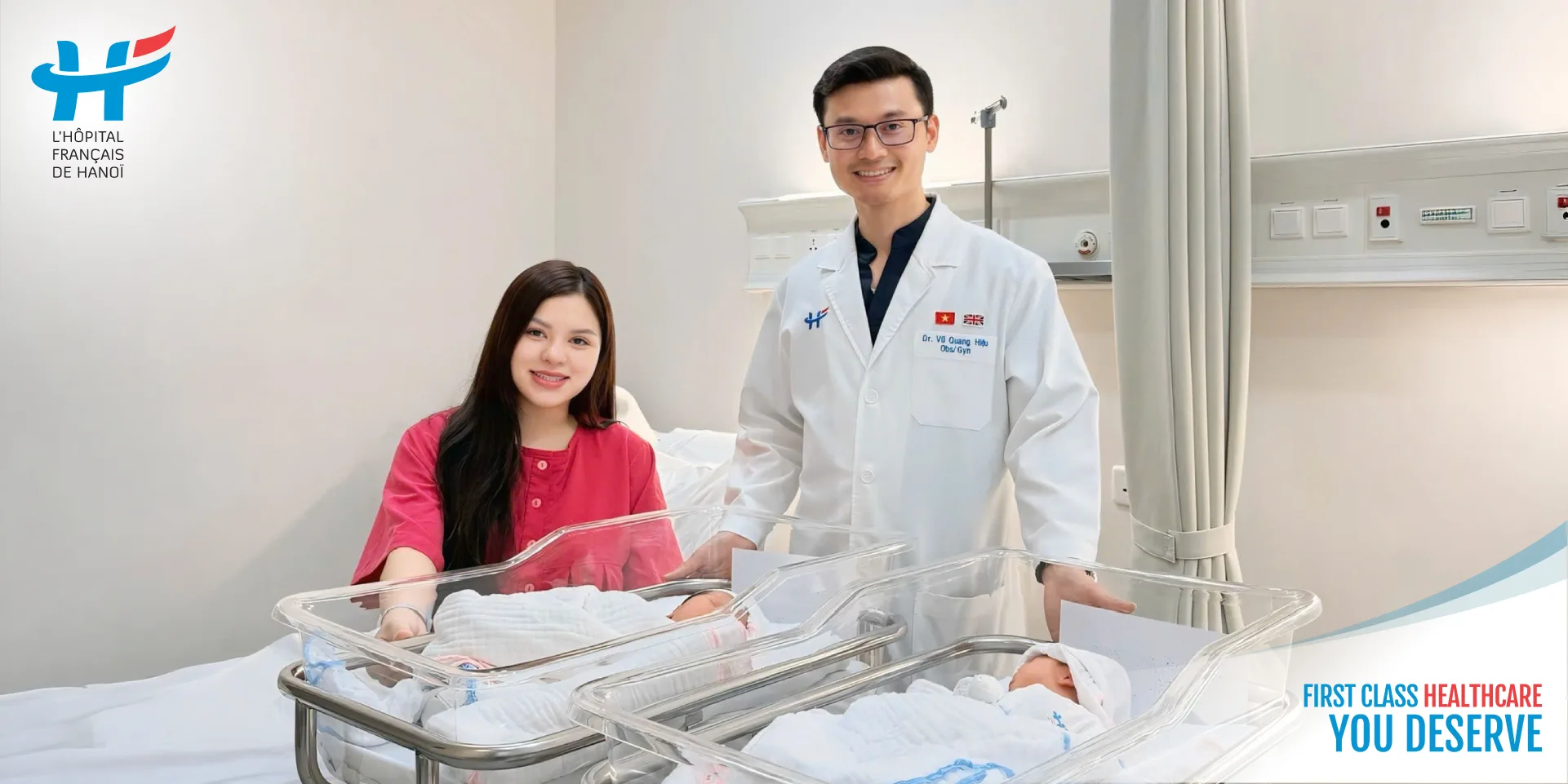

Mrs. N.N.H., 32, had previously undergone two cesarean sections. During her third pregnancy, she first visited HFH at 24 weeks of gestation, when an ultrasound revealed that she was carrying twins. What made this case particularly unusual was that both babies shared a single placenta and a single amniotic sac.
This is an extremely rare type of twin pregnancy, estimated in medical literature to occur in approximately 1 in 20,000 pregnancies and account for around 1% of twin pregnancies. As both babies develop within the same amniotic sac, without a separating membrane, their umbilical cords can become entangled or knotted. This may compromise blood flow, potentially leading to restricted fetal growth, fetal distress or sudden fetal death. Other risks include preterm birth and twin-to-twin transfusion syndrome.
Close monitoring throughout a high-risk pregnancy
Dr. Vu Quang Hieu, from HFH’s Department of Obstetrics and Gynecology, who took charge of Mrs. H’s care, explained:
“This was a rare monoamniotic-monochorionic twin pregnancy. The mother had also undergone two previous cesarean sections, making this a high-risk pregnancy for both her and the babies. Therefore, close monitoring and careful management in accordance with clinical guidelines were essential. The growth and development of both babies, as well as the health of the mother, were assessed on a weekly basis.”
At 33 weeks of pregnancy, Mrs. H was given antenatal corticosteroids to help accelerate the babies’ lung maturation in preparation for delivery. One week later, at 34 weeks, a planned cesarean section was performed.
The timing of delivery was in line with clinical recommendations from the American College of Obstetricians and Gynecologists (ACOG) and the Society for Maternal-Fetal Medicine (SMFM) for monoamniotic-monochorionic twin pregnancies. Planned delivery at this stage helps reduce the risk of serious complications, particularly umbilical cord-related events that may lead to sudden fetal death in the final weeks of pregnancy.
Two healthy babies safely delivered
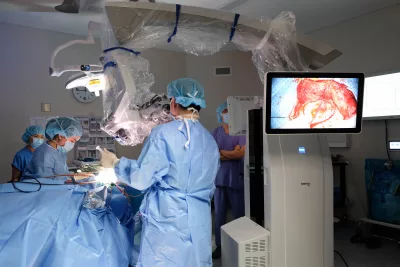
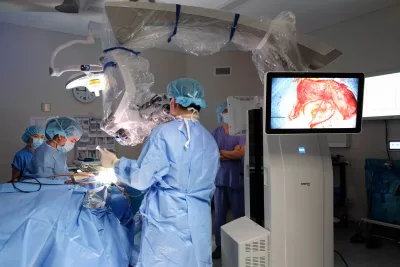
The cesarean section, performed by Dr. Hieu, was successful. The two babies were delivered weighing 2.2 kg and 2.3 kg respectively, both crying strongly immediately after birth. The mother also remained in stable condition following surgery.
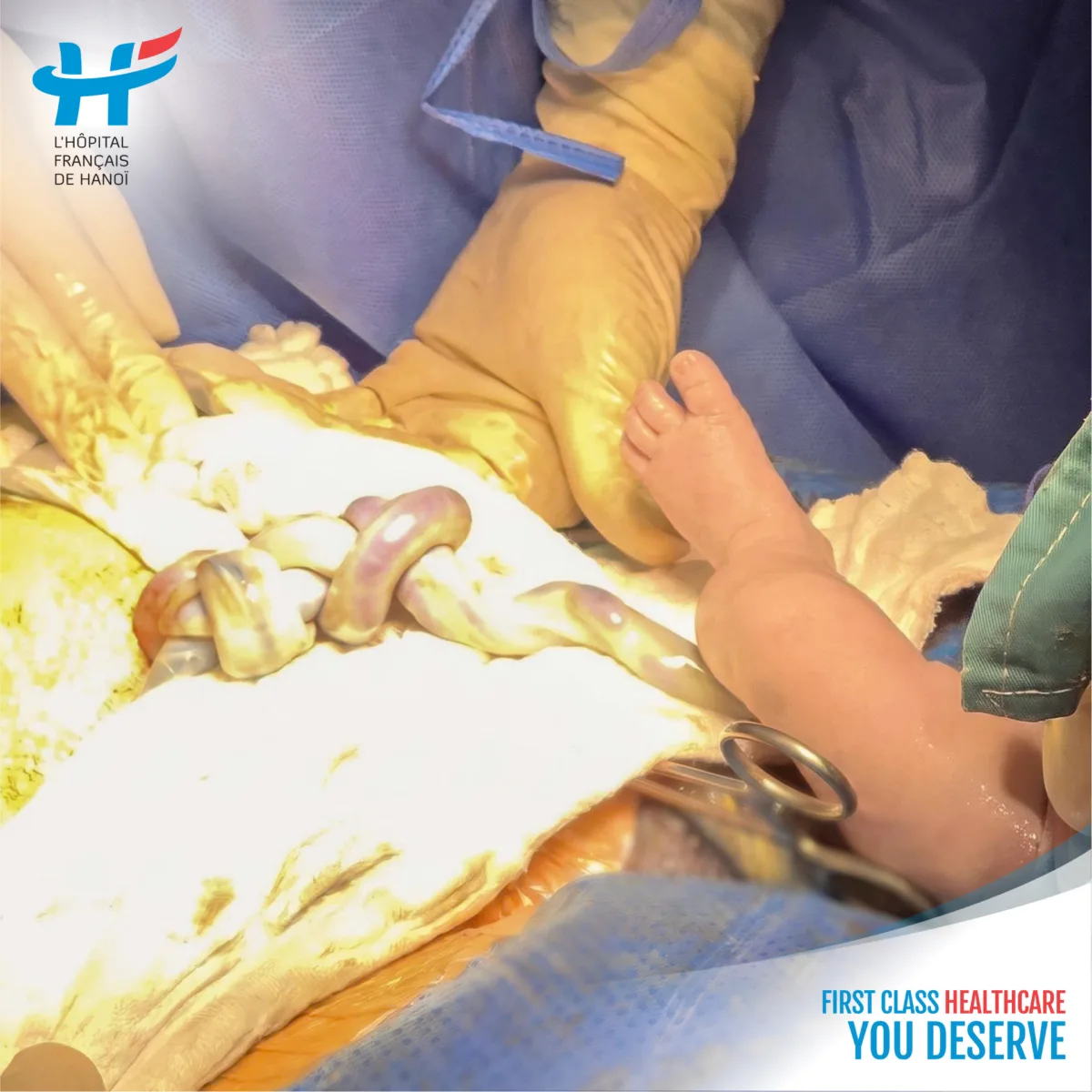
Notably, during the operation, the surgical team found that the two babies’ umbilical cords were tightly intertwined. This is one of the characteristic and potentially serious complications of monoamniotic-monochorionic twin pregnancies, as cord entanglement can restrict blood circulation and put both babies at risk.
Dr. Vu Quang Hieu advises expectant mothers to attend regular antenatal appointments and follow their recommended pregnancy monitoring schedules, particularly those carrying twins. Pregnancies involving additional risk factors or detected abnormalities require thorough assessment and close coordination between relevant medical specialties.
Regular monitoring of fetal growth and well-being allows doctors to identify potential complications early, proactively manage obstetric risks and develop an appropriate care and delivery plan at each stage of pregnancy, helping ensure the best possible outcomes for both mother and babies.