 Tiếng Việt
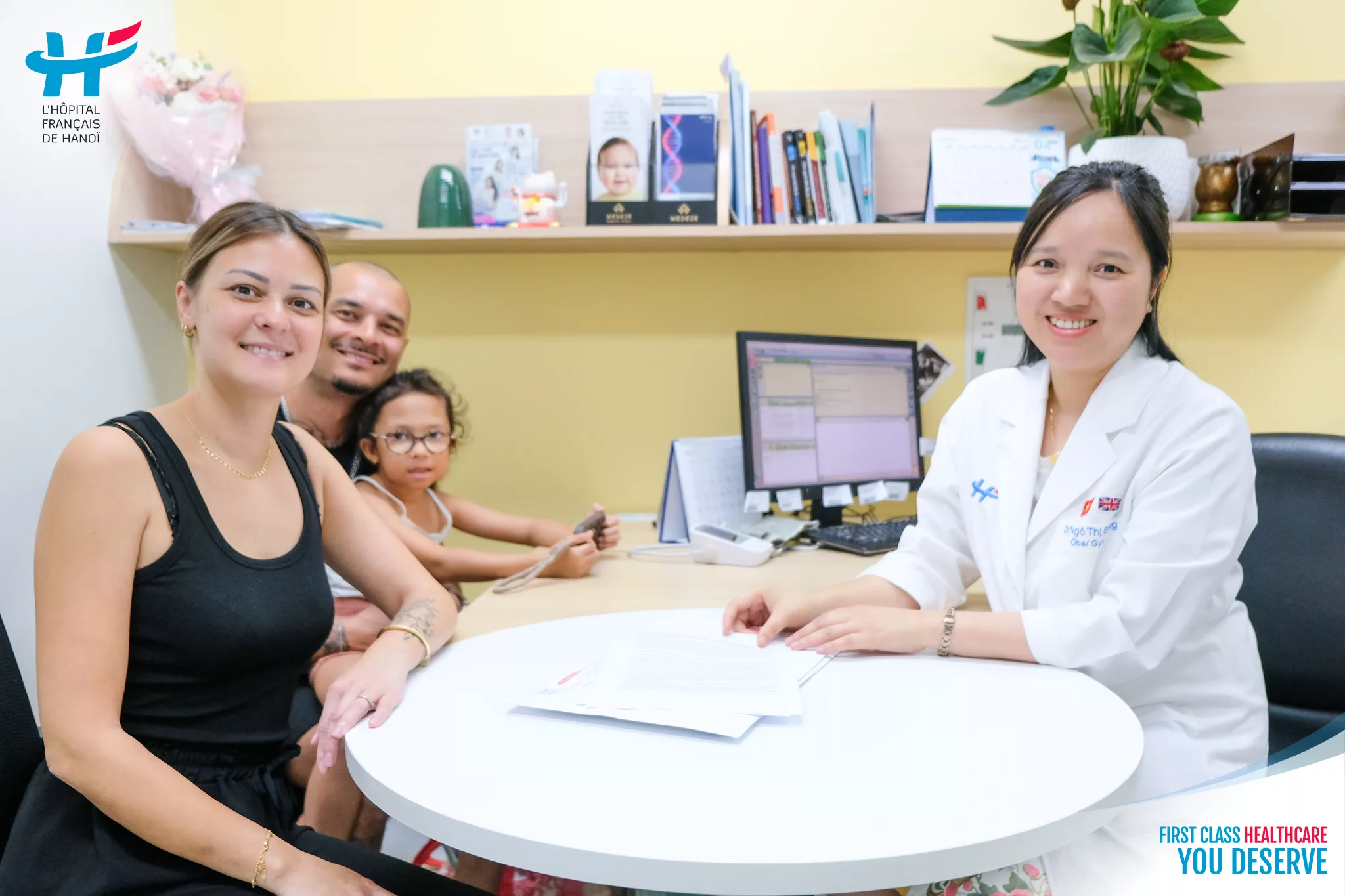
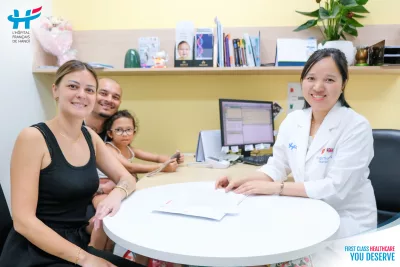
The patient, a French woman in her 30s, was traveling in Vietnam with her family when she was admitted with severe abdominal pain accompanied by heavy vaginal bleeding.
Nearly one month prior, she had been examined twice at a hospital in France and diagnosed with a miscarriage. However, her symptoms did not improve; instead, the pain progressively worsened and was associated with persistent bleeding.
A challenging differential diagnosis
Based on clinical examination, laboratory tests, and transvaginal ultrasound, doctors identified a right adnexal mass measuring approximately 7 cm, along with signs suggestive of intra-abdominal fluid. These findings raised two critical differential diagnoses: a ruptured ectopic pregnancy and a ruptured or torsed ovarian cyst, both emergency conditions that can lead to rapid intra-abdominal bleeding if not promptly treated. Given the high risk, the medical team immediately indicated emergency laparoscopic surgery.
Dr. Ngo Thi Bang, Obstetrics & Gynecology Department at Hanoi French Hospital, who directly managed and operated on the patient, explained:
“Ectopic pregnancy can be easily missed, especially in cases where symptoms are masked. Some patients may present with a pseudo gestational sac, followed by abdominal pain and bleeding resembling a miscarriage, while the ectopic pregnancy continues to develop silently. In this case, the presence of an ovarian mass adjacent to the ectopic pregnancy made the diagnosis even more challenging and increased the risk of being overlooked.”
Laparoscopic surgery ensured effective treatment and fertility preservation
During surgery, Dr. Ngo Thi Bang confirmed both a ruptured ectopic pregnancy and a hemorrhagic ovarian cyst. The procedure was performed laparoscopically, including removal of the ectopic pregnancy and cystectomy while preserving the ovary to maintain hormonal function in this relatively young patient.
Minimally invasive laparoscopic surgery helped reduce tissue trauma, limit blood loss, shorten recovery time, and ensure better cosmetic outcomes. Importantly, the approach also allowed for preservation of the patient’s reproductive potential.
After surgery, the patient recovered well, with no abdominal pain, stable vital signs, and no recorded complications. She was discharged after just two days in stable condition.
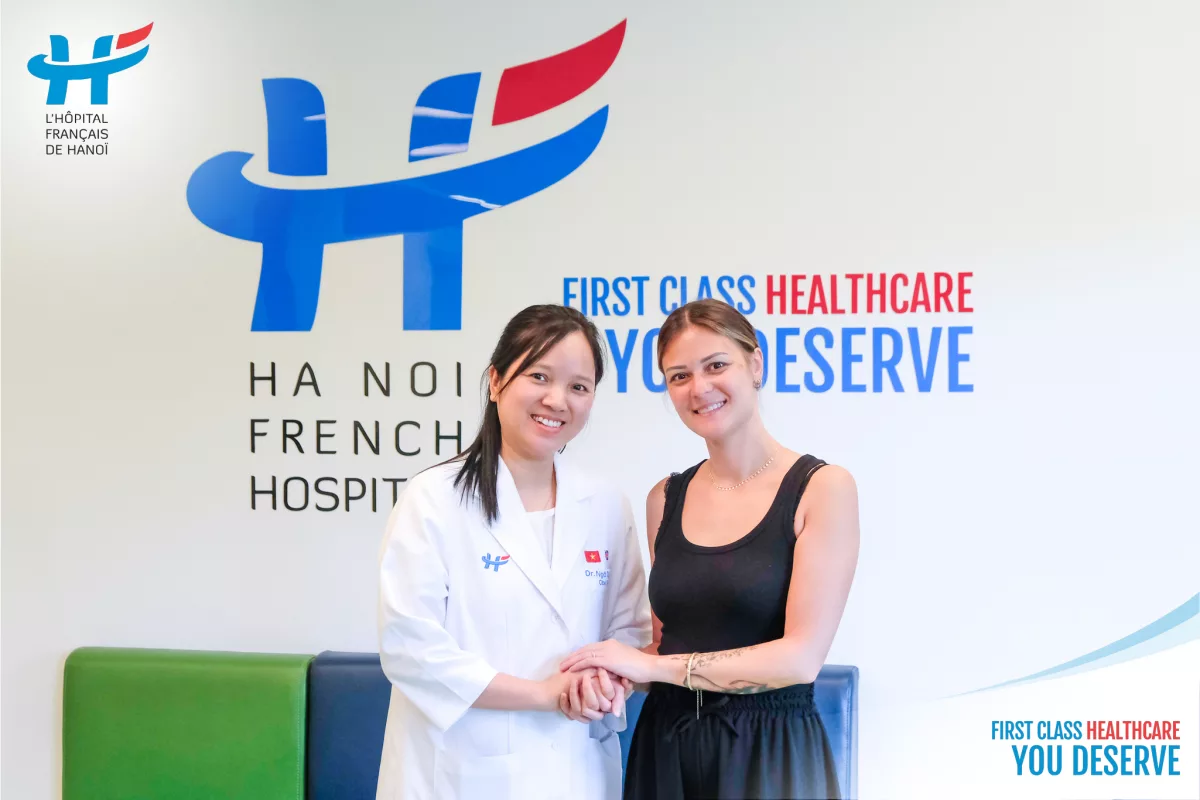
Dr. Ngo Thi Bang emphasized that women with suspected pregnancy should undergo early examination to confirm whether the pregnancy is located within the uterus. In more complex cases, close follow-up is essential to avoid missed diagnoses. Early detection and timely intervention are critical, not only to ensure patient safety but also to preserve long-term fertility.
Women of reproductive age are also encouraged to have regular gynecological check-ups, even in the absence of symptoms, to detect conditions such as ovarian cysts, uterine fibroids, or cervical abnormalities at an early stage and prevent potential complications.
At Hanoi French Hospital, alongside its strengths in obstetrics, the hospital offers a highly experienced team in the diagnosis and treatment of gynecological conditions. Modern medical equipment supports rapid diagnosis and timely intervention, contributing to improved treatment outcomes, especially in emergency situations requiring fast and precise decision-making.