 Tiếng Việt
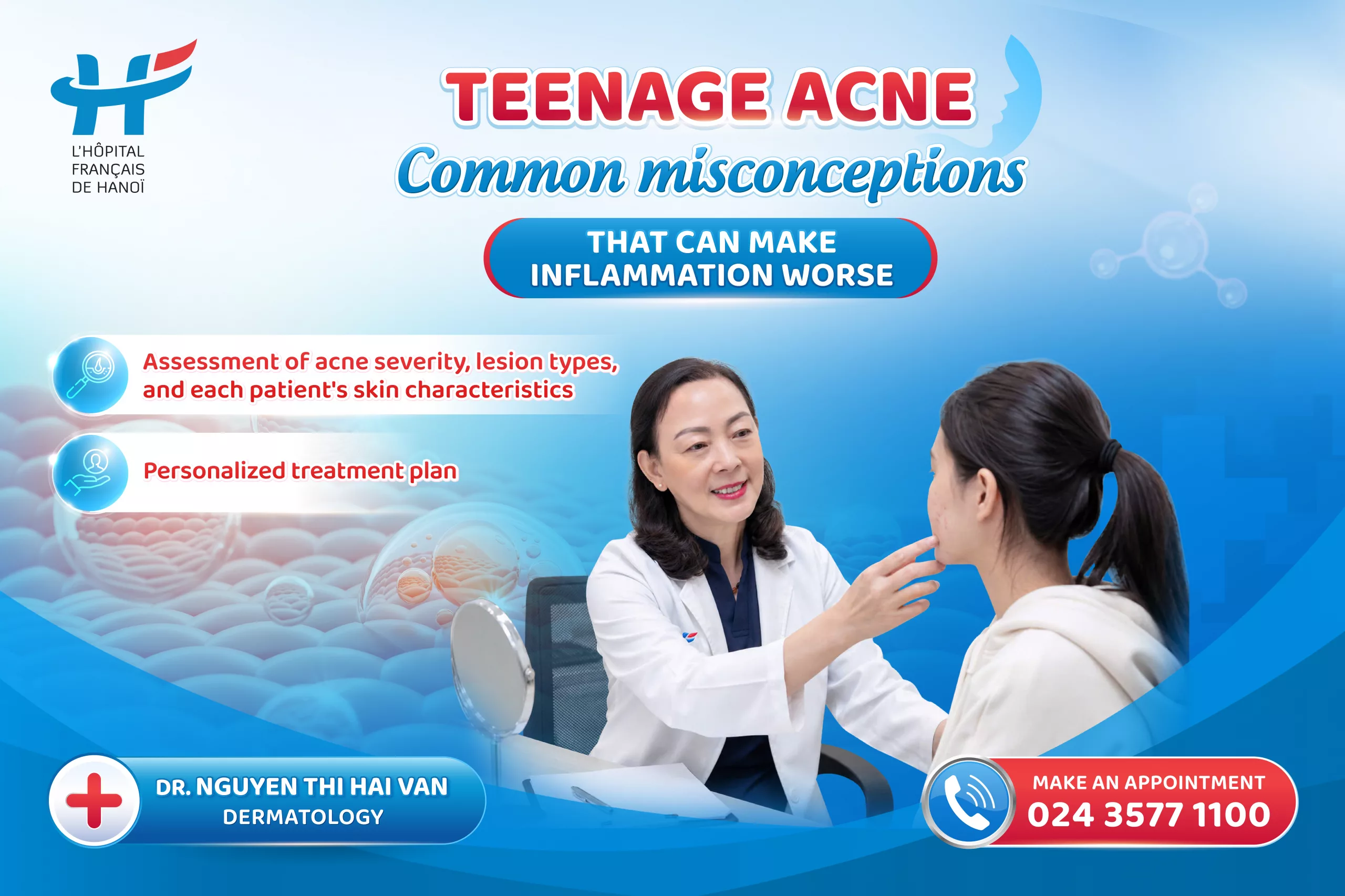
However, according to Dr. Nguyen Thi Hai Van, Department of Dermatology, Hanoi French Hospital, many cases of worsening acne are not only caused by internal factors but also by misconceptions about skincare and treatment.
1. “The more often I wash my face, the better my acne will get.”
Washing your face too often can strip away the skin’s natural protective barrier. In response, the skin may produce even more oil.
Instead of improving acne, over-cleansing can clog pores more easily and make breakouts worse.
2. “Teenage acne will go away on its own, so treatment isn’t necessary.”
Although acne often improves as hormone levels stabilize, persistent inflammation can lead to:
- Breaking down of Collagen
- Scarring
- Darkening of the skin (PIH)
These skin changes can be difficult to reverse completely, even after the acne has cleared.
3. “Popping pimples helps them heal faster.”
Improperly squeezing or popping pimples can damage the surrounding tissue and spread inflammation deeper into the skin.
This not only worsens the lesion but also increases the risk of permanent scarring. In addition, introducing bacteria from the hands or environment may further complicate the infection.
4. “Using multiple acne treatments at the same time works better.”
Using several acne treatments together, such as retinoids, benzoyl peroxide, or exfoliating acids, without professional advice can irritate the skin and damage its protective barrier.
When the skin barrier is weakened, inflammation may last longer and acne becomes harder to control.
5. “Acne is only a surface skin problem.”
Acne is more than a skin surface problem. It develops inside the hair follicles and oil glands and is influenced by hormones, bacteria, and the body’s immune response.
For this reason, effective treatment often requires more than just skincare. Moderate to severe acne may need prescription medications from a dermatologist.
When should your child see a dermatologist?
Parents are advised to seek medical evaluation if their child:
- Has severe acne with numerous inflamed pimples, pustules, or nodules, or acne that persists for a long time.
- Shows little or no improvement after several months of using over-the-counter treatments.
- Develops acne as a side effect of certain medications, such as antidepressants, anti-anxiety medications, or corticosteroids.
- Begins to develop acne scars.
- Experiences significant emotional distress, low self-esteem, or excessive anxiety due to acne.
At Hanoi French Hospital, teenage acne is assessed based on the severity of the condition, the type of lesions (non-inflammatory or inflammatory), and each patient’s individual skin characteristics.
Treatment plans are personalized and may include:
- Topical medications to normalize skin cell turnover and control inflammation
- Oral medications when clinically indicated
- Adjunctive treatments using advanced dermatological technologies
The goal is to effectively control inflammation, minimize the risk of scarring, and promote long-term skin health.
For more information or to schedule an appointment with our Dermatology specialists, you can contact our specialist medical teams in the following ways:
Hanoi French Hospital (HFH)
Address: No. 1 Phuong Mai Street, Kim Lien Ward, Hanoi
Consultation hotline: 024.35771100 – 0903497078
WhatsApp: +84 903 497 078
