
 Tiếng Việt
In most cases, these changes are a normal part of puberty, an important stage of development that brings significant physical, emotional, and psychological changes.
According to HFH pediatricians, what children need most during this period is not anxious parents, but informed parents who can understand these changes and provide the right support.
Puberty is more than a growth spurt, it is a whole-body transformation
Puberty is the stage during which hormonal changes trigger the body’s transition from childhood to adulthood.
The typical age range for puberty is:
- Girls: 8–13 years
- Boys: 9–14 years
As hormone levels rise, children experience a range of physical changes, including:
- Rapid growth in height. With proper nutrition and care, some children may grow 10–15 cm within a year.
- Voice changes.
- Breast development in girls or increased muscle development in boys.
- Acne and changes in skin and hair.
- Emotional and behavioral changes.
Emotions go through puberty too
Many parents notice that their child becomes:
- More irritable than before.
- More emotionally sensitive.
- More eager to have personal space.
- Less willing to talk openly with parents.
These behaviors are not necessarily signs of defiance or poor behaviors. In many cases, they are closely linked to hormonal changes and the normal psychological development of adolescence.
During this stage, what children often need most is to feel heard, respected and given accurate, age-appropriate information about the changes happening in their bodies. A calm, supportive conversation is often far more effective than criticism or excessive control.
Puberty is also the “golden window” for height growth
Many parents only become concerned about their child’s height as adolescence draws to a close. However, once the growth plates have fused, the potential for further height gain becomes significantly limited.
To help children reach their full growth potential during puberty, parents should encourage:
- A balanced diet rich in protein, calcium, vitamin D and zinc.
- Adequate sleep.
- Regular physical activity and sports.
These lifestyle factors play an important role in supporting the production of growth hormone and healthy development.
When should parents seek medical advice?
Not every change during puberty is a cause for concern. However, parents should consider consulting a pediatrician if their child has any of the following:
- Signs of puberty occurring significantly earlier or later than expected.
- Height increasing much faster or much slower than peers.
- Rapid weight gain, obesity, or possible hormonal disorders such as severe acne, excessive hair growth or irregular menstruation.
- Persistent fatigue, poor sleep or difficulty concentrating at school.
- Ongoing emotional changes, including frequent irritability, anxiety, social withdrawal or reduced communication with family.
- Any concerns about their child’s physical growth or emotional development.
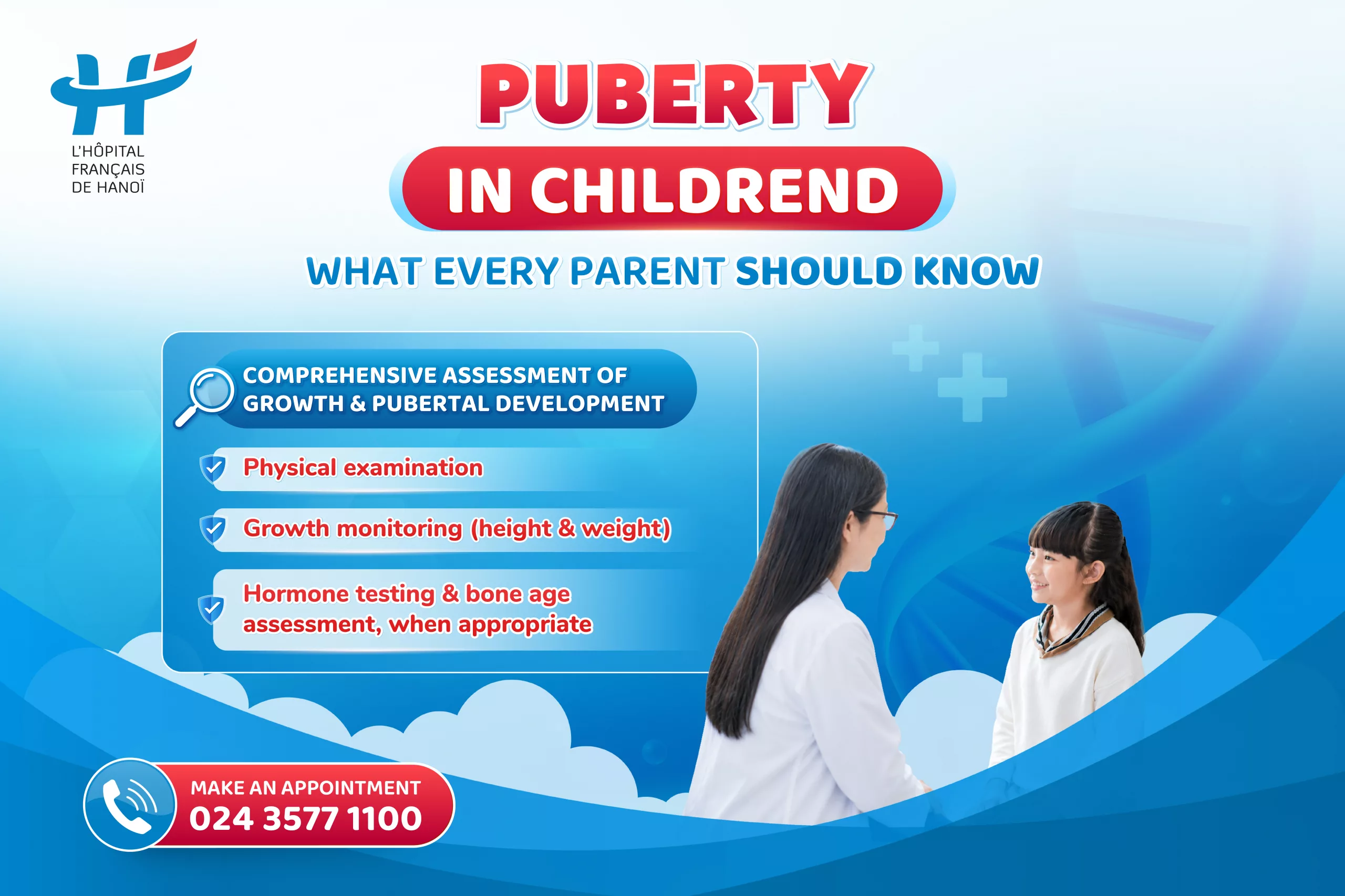
An early assessment by a pediatrician allows your child’s growth and pubertal development to be monitored comprehensively. Depending on the individual case, this may include physical examination, growth monitoring, and additional investigations such as hormone testing or bone age assessment when clinically indicated.
For more information or to schedule an appointment with the pediatric specialists at Hanoi French Hospital (HFH), please call our Hotline: (+84) 24 3577 1100, send us a message via the Hanoi French Hospital Facebook Page, or via WhatsApp: +84 903 497 078
