
 Tiếng Việt
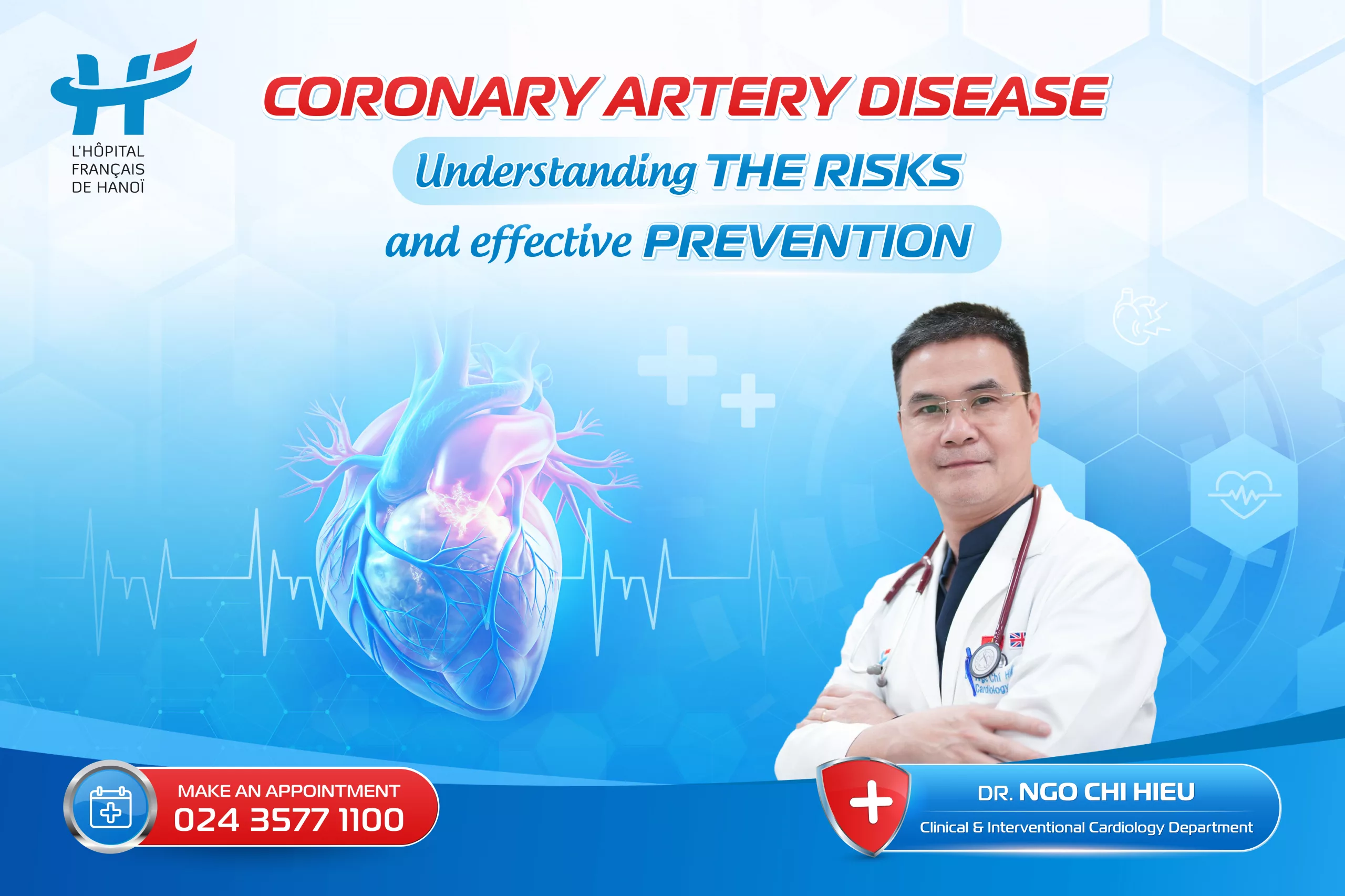
Dr. Ngo Chi Hieu, Clinical & Interventional Cardiology Department at Hanoi French Hospital, explains that coronary artery disease can progress silently over many years. Understanding its risk factors and taking early preventive action are therefore particularly important in managing the condition.
Non-modifiable risk factors include:
- Age: As people get older, blood vessel walls tend to become stiffer, more vulnerable to damage and more prone to the accumulation of atherosclerotic plaques.
- Sex: Men generally have a higher risk of coronary artery disease, while the risk in women increases significantly after menopause.
- Family history of cardiovascular disease: People whose parents or siblings have developed cardiovascular disease, particularly at a young age, should proactively assess their risk of coronary artery disease, even when they have no obvious symptoms.
Dr Hieu advises patients to understand modifiable risk factors so that they can take effective preventive measures:
- Smoking and regular exposure to second-hand smoke can damage the inner lining of blood vessels, accelerate the formation of atherosclerotic plaques and increase the risk of blood clots within the coronary arteries.
- Persistent high blood pressure places increased pressure on blood vessel walls, causing the arteries to become thicker, stiffer and less elastic.
- Dyslipidemia, particularly elevated LDL cholesterol, can contribute to the formation of plaques within the arterial walls, gradually narrowing the coronary arteries.
- Diabetes can increase the risk of blood vessel damage, accelerate coronary atherosclerosis and raise the risk of myocardial ischemia and myocardial infarction.
- Being overweight or obese, particularly with excess abdominal fat, increases the risk of coronary artery disease because it is often associated with high blood pressure, dyslipidemia, insulin resistance and type 2 diabetes.
- A sedentary lifestyle, a diet high in saturated fat, trans fat, salt and sugar, prolonged stress, excessive alcohol consumption and sleep disorders can adversely affect metabolism and vascular health.
In addition, certain conditions, including chronic kidney disease, sleep apnea, pre-eclampsia, hypertension or diabetes during pregnancy, as well as autoimmune diseases, may be associated with inflammation, metabolic disturbances and an increased risk of coronary atherosclerosis.
In practice, the risk of coronary artery disease usually results from a combination of several factors. Over time, these factors can contribute to damage to the arterial walls, plaque formation and progressive narrowing of the coronary arteries.
A cardiology assessment should therefore be considered early rather than waiting until symptoms such as chest pain, shortness of breath, palpitations or fatigue on exertion have already developed.
At the Clinical & Interventional Cardiology Department of Hanoi French Hospital, patients are assessed by highly qualified specialists with extensive experience in the management and treatment of coronary artery disease. Based on the clinical examination and a comprehensive cardiovascular risk assessment, the doctor will recommend an individualized plan for monitoring and risk-factor management.
To receive advice or make an appointment with an HFH cardiologist, please contact our HOTLINE at 024.35771100 or send us a message via the “Hanoi French Hospital” Facebook page or WhatsApp: +84 903 497 078
