 Tiếng Việt
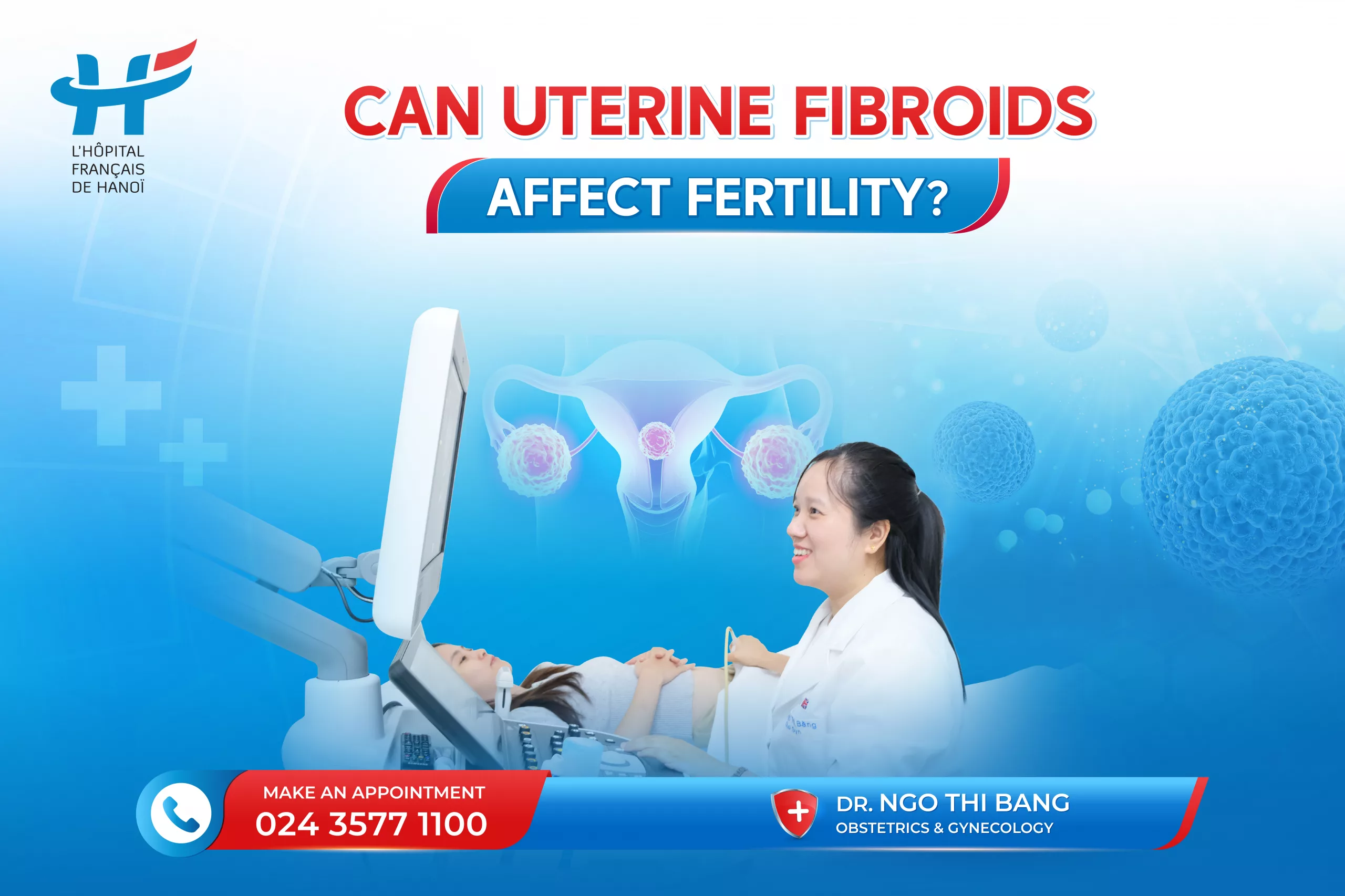
According to Dr. Ngo Thi Bang, Obstetrics & Gynecology Department, Hanoi French Hospital (HFH), this is not always the case. Not all uterine fibroids affect fertility. However, in some women, fibroids can reduce the chances of conception or increase the risk of pregnancy complications. This is why it is important to have fibroids assessed by a specialist. The size, location and type of the fibroid all help determine whether treatment is needed and which option is most suitable.
How can uterine fibroids affect fertility?
Uterine fibroids are benign (non-cancerous) tumors that develop from the muscular wall of the uterus. Location has the biggest impact on fertility, with size contributing too.
Fibroids that grow beneath the uterine lining (submucosal fibroids) or distort the uterine cavity may:
- Make it harder for a fertilized egg to implant in the uterus.
- Alter the shape of the uterine cavity, making it less suitable for pregnancy.
- Block the openings of the fallopian tubes or put pressure on the cervix, making conception more difficult.
- Increase the risk of miscarriage or preterm birth.
On the other hand, small fibroids or those growing on the outer surface of the uterus often have little or no effect on fertility and usually only require regular monitoring.
Do fibroids always need to be removed before pregnancy?
One common misconception is that all uterine fibroids must be removed before trying to conceive.
In reality, the decision to treat surgically depends on several factors, including:
- The woman’s age.
- Her future pregnancy plans.
- The size, location and number of fibroids.
- The symptoms she is experiencing.
- Her obstetric history and any previous treatments.
Women with small, symptom-free fibroids that do not distort the uterine cavity may simply need regular follow-up.
However, if fibroids are believed to be the cause of infertility, recurrent miscarriage, heavy menstrual bleeding, or pressure on surrounding organs, treatment may be recommended. Depending on the individual case, options may include medication, minimally invasive procedures, or myomectomy (fibroid removal surgery) to improve fertility while preserving the uterus.
The most important principle is that treatment should always be individualized. There is no single approach that is suitable for every patient.
When should you see a gynecologist?
If you are planning a pregnancy or experiencing difficulty conceiving, it is advisable to consult an obstetrician-gynecologist if you:
- Have been diagnosed with uterine fibroids and wish to have children.
- Have been trying to conceive without success despite regular unprotected intercourse.
- Experience heavy or prolonged menstrual bleeding.
- Have pelvic pain or persistent pressure in the lower abdomen.
- Have a history of recurrent miscarriage or pregnancy complications related to uterine fibroids.
Early assessment allows your doctor to evaluate the uterus comprehensively, determine whether fibroids are affecting fertility, and develop the most appropriate treatment plan based on your individual needs.
At Hanoi French Hospital, our Obstetrics & Gynecology specialists provide personalized care by considering each patient’s symptoms, fibroid characteristics and reproductive goals before recommending the most suitable treatment approach.
Not every uterine fibroid requires treatment, but if you are planning to become pregnant, it is important not to ignore the condition. Early evaluation helps identify women who may benefit from timely treatment, improving fertility while supporting a safer and healthier pregnancy.
For more information or to schedule an appointment with our Gynecologists, you can contact our specialist medical teams in the following ways:
Hanoi French Hospital (HFH)
Address: No. 1 Phuong Mai Street, Kim Lien Ward, Hanoi
Consultation hotline: 024.35771100
WhatsApp: +84 903 497 078
