 Tiếng Việt
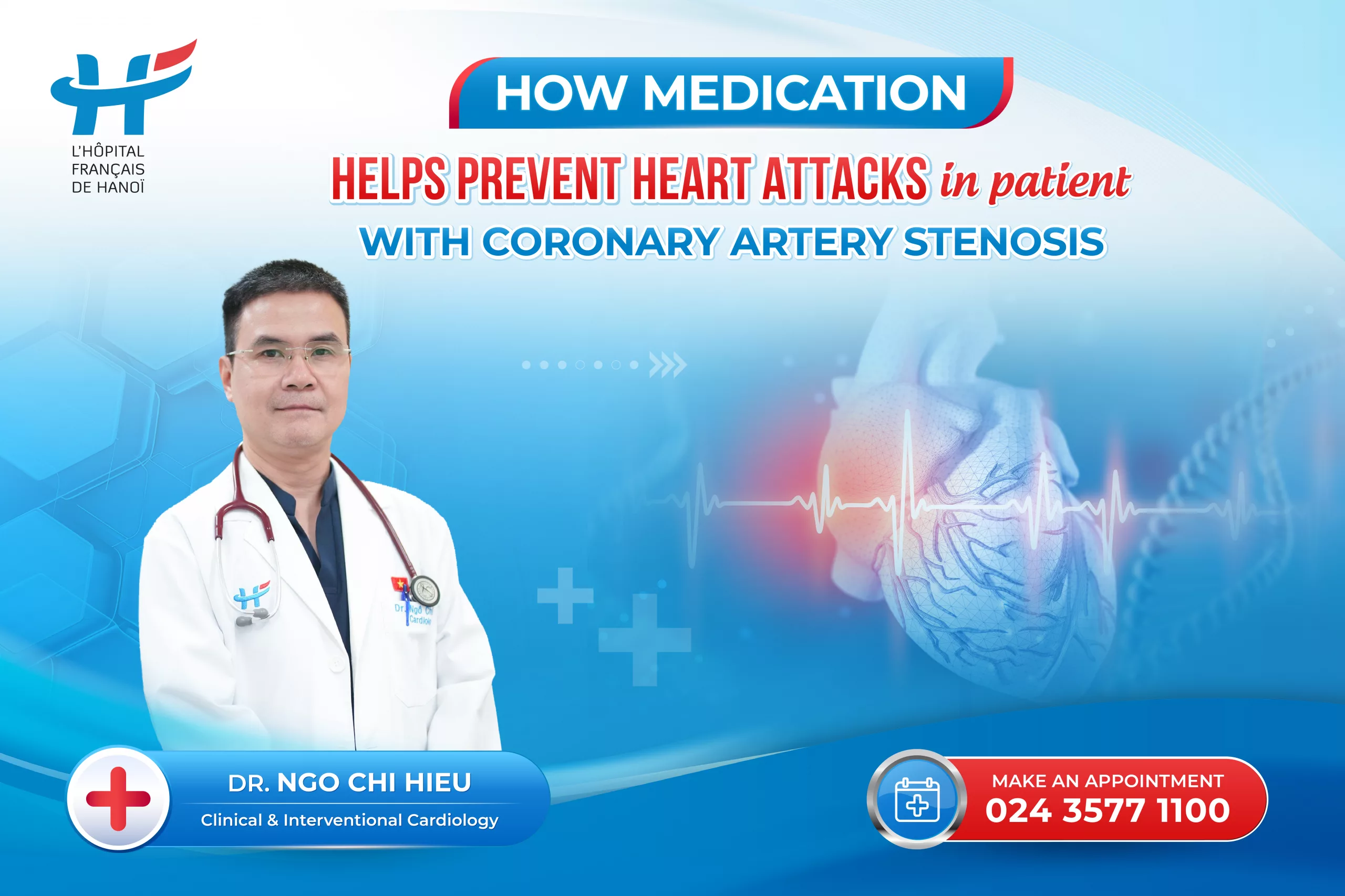
Discussing this issue, Dr. Ngo Chi Hieu, Clinical & Interventional Cardiology Department, Hanoi French Hospital, emphasizes that patients need to clearly understand the relationship between coronary artery stenosis and heart attack (myocardial infarction), as well as the treatment goals for each individual case.
In patients with coronary artery stenosis, atherosclerotic plaques form within the arterial wall and gradually grow, narrowing the vessel lumen. This condition affects the heart muscle in two main ways:
- When the vessel becomes significantly narrowed, blood flow may be insufficient to meet the heart muscle’s oxygen demand, particularly during physical activity or exertion, resulting in myocardial ischemia and angina.
- When an atherosclerotic plaque ruptures or erodes, platelets are activated and a blood clot forms at the site of injury. The clot may suddenly block a coronary artery, leading to acute coronary syndrome, including myocardial infarction.
Importantly, myocardial infarction does not always occur at the site of the most severe coronary artery narrowing. A plaque that causes only moderate stenosis but is unstable can still rupture, trigger blood clot formation and result in acute arterial occlusion. Treatment therefore focuses not only on a single narrowed segment but also on controlling atherosclerosis throughout the entire coronary arterial system.
Depending on the patient’s specific condition, the doctor will develop a treatment plan aimed at:
- Lowering LDL-C cholesterol levels, slowing disease progression and improving plaque stability
- Reducing the formation of blood clots in the coronary arteries
- Controlling blood pressure, blood glucose and other associated risk factors
- Reducing the heart muscle’s oxygen demand and improving myocardial ischemia and angina symptoms
- Reducing the risk of myocardial infarction and other cardiovascular events.
Medications may include statins and other lipid-lowering therapies to control LDL-C levels, antiplatelet agents to reduce blood clot formation, and medicines to control blood pressure, heart rate or angina. Not every patient needs to take all of these medication groups.
The choice and dosage of medication must be individualized according to the patient’s symptoms, disease severity, comorbidities, history of myocardial infarction or stent placement, liver and kidney function, ischemic risk and bleeding risk. Patients should not purchase medication on their own, alter the dosage or stop treatment without their doctor’s advice.
Dr Hieu notes that effective prevention depends on more than medication alone. Patients should stop smoking, follow a heart-healthy diet, engage in appropriate physical activity, maintain a healthy weight and attend scheduled follow-up appointments even when they do not notice any unusual symptoms.
Medical therapy is the cornerstone of treatment, but it does not replace coronary revascularization in every case. Patients should be reassessed by their doctor if:
- Angina persists or worsens despite appropriate treatment
- Symptoms significantly affect daily activities and physical capacity
- There is evidence of significant myocardial ischemia
- The lesion is located in an important segment or has high-risk anatomical features
- The heart’s pumping function is impaired
- Symptoms suggestive of acute coronary syndrome occur
Based on the patient’s symptoms, the extent of myocardial ischemia and the characteristics of the coronary lesion, the doctor may recommend further investigations and consider coronary angiography, stent placement or coronary artery bypass surgery, as appropriate.
In particular, if patients experience prolonged chest pain, pressure or heaviness that may spread to the neck, jaw, shoulder or arm, accompanied by shortness of breath, sweating, nausea or dizziness, they should call emergency medical services immediately.
To receive advice or make an appointment with an HFH cardiologist, please contact our HOTLINE at 024.35771100 or send us a message via the “Hanoi French Hospital” Facebook page or WhatsApp: +84 903 497 078.
