 Tiếng Việt
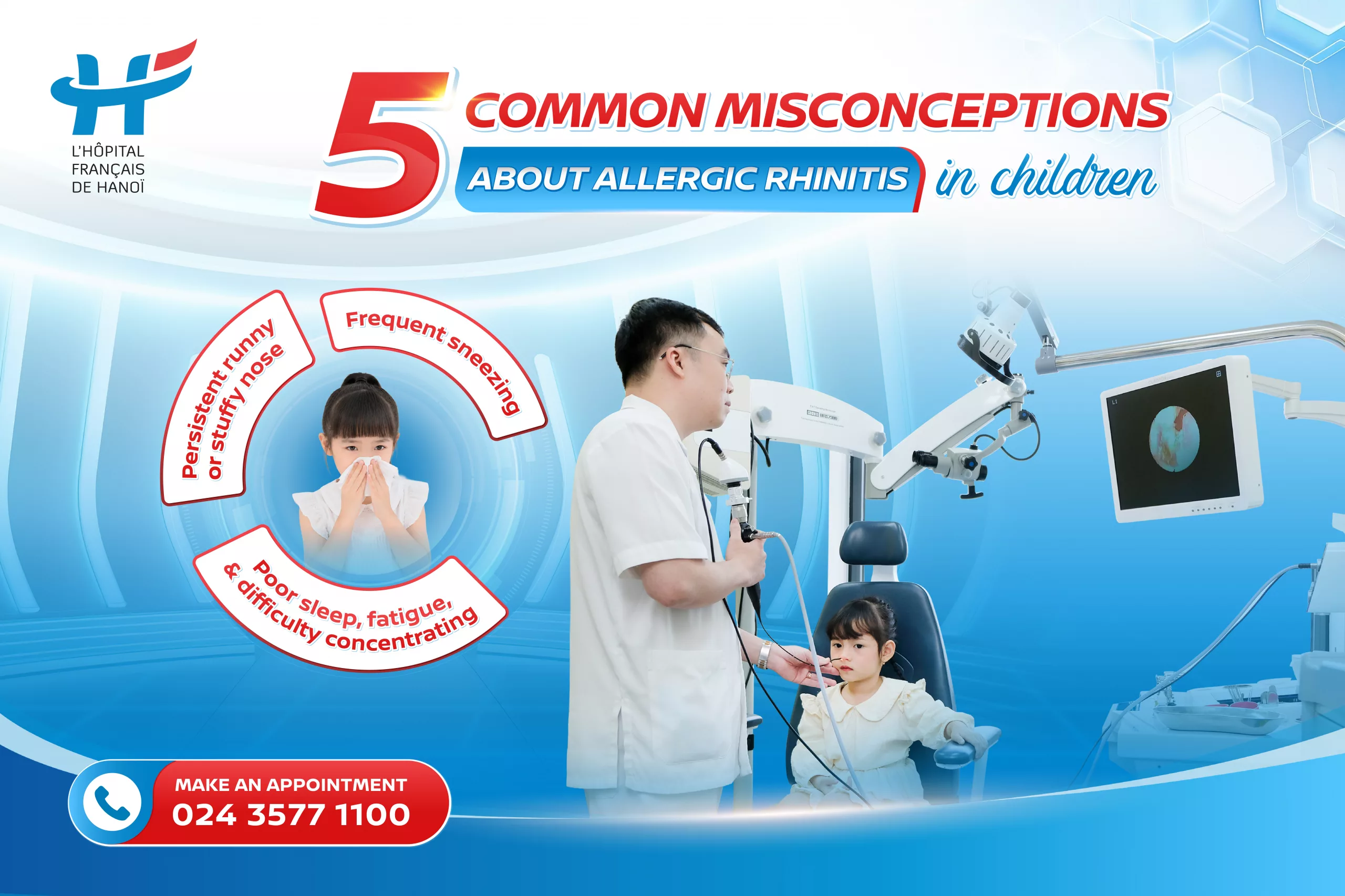
Here are five common misconceptions that pediatricians often encounter in clinical practice.
Myth 1: Sneezing and a runny nose are just a cold
This is one of the most common misconceptions among parents.
Both the common cold and allergic rhinitis can cause sneezing, a runny nose, or nasal congestion. However, allergic rhinitis often has some characteristic features, such as clear, watery nasal discharge, repeated bouts of sneezing, an itchy nose or eyes, and recurring symptoms without a fever.
If your child has persistent or recurring nasal symptoms, especially when they are otherwise eating, sleeping, and going about their daily activities normally, it is worth considering causes other than a common cold.
Myth 2: Allergic rhinitis only occurs when the seasons change
Many children develop symptoms when the weather changes, leading parents to assume that seasonal changes are the main cause.
In fact, changes in weather may simply make the nasal passages more sensitive. The main triggers are allergens in the environment, such as dust mites, mold, pollen, pet dander, or air pollution.
Some children experience symptoms only at certain times of the year, when pollen or mold levels are higher. Others may have year-round allergic rhinitis because they are regularly exposed to indoor allergens such as dust mites.
Myth 3: Allergic rhinitis is not a concern because it only causes sneezing
Sneezing and a runny nose may be the most noticeable symptoms, but they are not the only effects of allergic rhinitis.
Persistent nasal congestion can cause children to breathe through their mouths, sleep poorly, wake frequently during the night, or feel tired during the day. Some children may also have difficulty concentrating at school or feel less comfortable participating in play and other activities.
Treatment is not simply about relieving symptoms. The goal is also to help children sleep better, concentrate at school, play comfortably, and enjoy their daily lives.
Myth 4: Medication is only needed when symptoms appear
Medication can help control symptoms, but it is only one part of managing allergic rhinitis.
It is also important to identify the triggers that cause or worsen a child’s symptoms and take steps to reduce exposure. Allergens can vary from child to child, including dust mites, mold, pet dander, and pollen.
Alongside treatment prescribed by a doctor, parents can help by keeping the child’s bedroom clean, washing bedding regularly, controlling indoor humidity, and minimizing exposure to tobacco smoke and other sources of air pollution.
Myth 5: Every child with allergic rhinitis needs allergy testing
Not necessarily.
The doctor will consider the child’s personal and family history of allergies, symptoms, and clinical examination findings. Allergy tests, such as skin prick testing or blood tests, may be recommended when it is important to identify specific allergens or to help develop a long-term treatment plan.
Whether testing is needed depends on each child’s individual condition.
When should parents take their child to see a doctor?
If your child frequently sneezes, has a runny or blocked nose that persists, or experiences recurring symptoms that interfere with sleep, daily activities, or schoolwork, it is advisable to consult a pediatric specialist for a comprehensive assessment.
Allergic rhinitis can usually be effectively managed when it is recognized early and treated appropriately. Understanding the condition correctly can help reduce everyday discomfort and allow children to breathe more easily, sleep better, and fully enjoy their childhood.
For more information or to schedule an appointment with a specialist at Hanoi French Hospital (HFH), please call HOTLINE: 024 3577 1100, send us a message via the Hanoi French Hospital Facebook page, or contact us through our WhatsApp account: +84 903 497 078.