
 Tiếng Việt
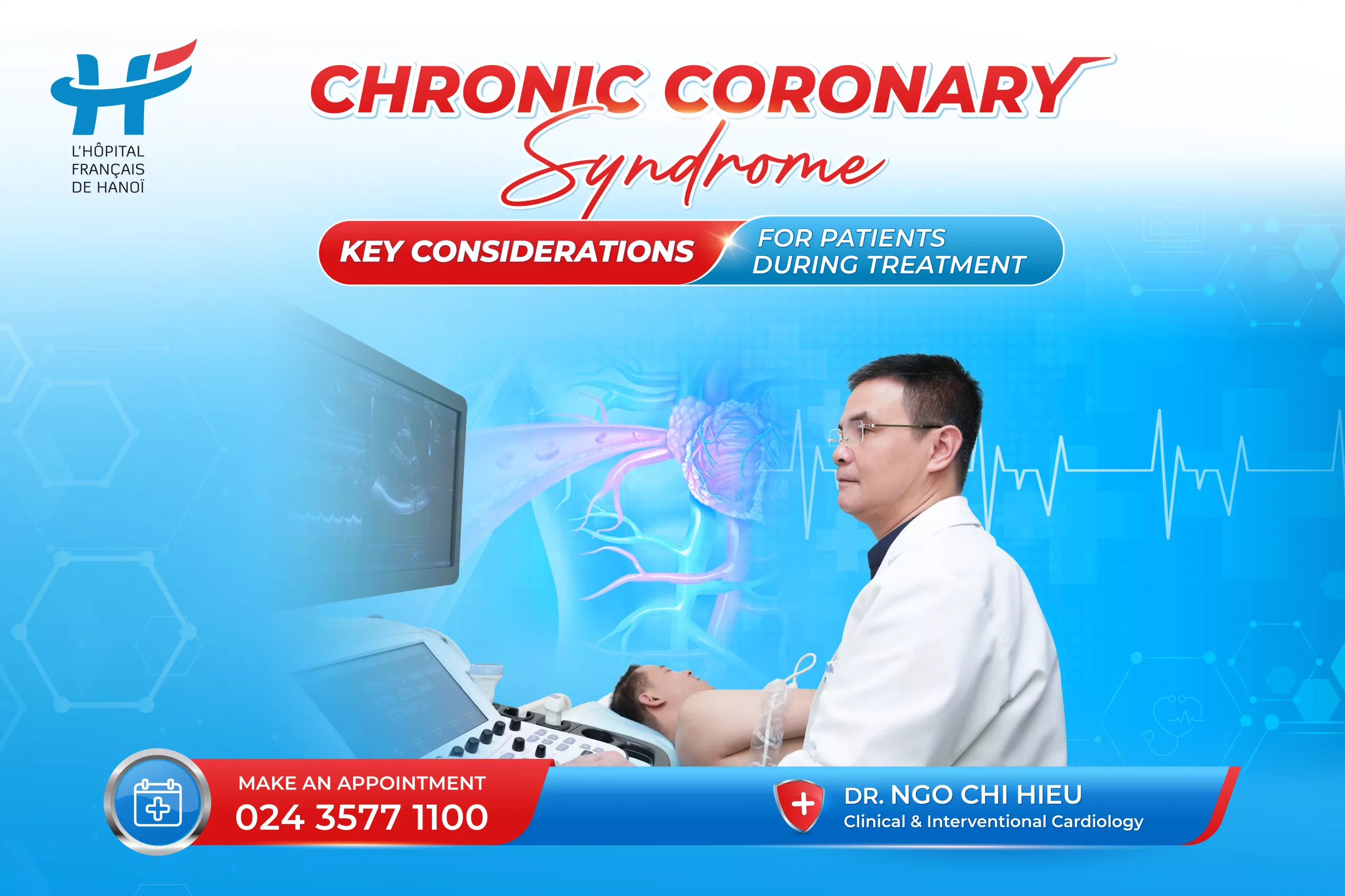
In his clinical practice, Dr Ngo Chi Hieu, Clinical & Interventional Cardiology Department at Hanoi French Hospital, has observed that some patients become less vigilant once their symptoms stabilize and no longer seem immediately concerning.
However, atherosclerosis and the risk of cardiovascular events may continue to progress without consistent control. Chronic coronary syndrome therefore requires long-term management combining medication, risk-factor control, lifestyle modification and regular follow-up.
According to Dr Hieu, patients should pay attention to the following:
Monitor changes in symptoms
Patients should seek early medical assessment if chest pain begins to occur with less exertion, lasts longer, develops at rest or responds poorly to prescribed medication.
Emergency medical care is required if chest pain is severe, prolonged or does not improve with rest, or if it is accompanied by shortness of breath, sweating, nausea, dizziness, fainting, or pain spreading to the shoulder, jaw, back or arm. These may be signs of an acute coronary syndrome.
Take medication as prescribed
Patients may be prescribed medication to control angina symptoms, prevent blood clots, lower cholesterol, manage blood pressure or address other individual clinical needs. Any change in dosage, discontinuation of treatment or use of additional medication should only be made after consultation with the treating doctor.
Control cardiovascular risk factors
Patients should regularly monitor their blood pressure, LDL cholesterol, blood glucose and body weight to help slow the progression of atherosclerosis and reduce the risk of future cardiovascular events.
Adopt a healthier lifestyle
Patients should maintain a healthy diet, remain physically active within their exercise capacity, stop smoking, limit alcohol consumption, manage their weight and reduce stress.
The type and intensity of physical activity should be individualized according to the patient’s cardiovascular condition, symptoms and medical advice. Patients should not increase exercise intensity on their own if they continue to experience chest pain, shortness of breath or marked fatigue during exertion.
Attend regular follow-up appointments
Regular follow-up enables the doctor to assess the response to medication, changes in symptoms, control of cardiovascular risk factors and the risk of future events. Further cardiac investigations are generally considered when there are clinical changes, worsening symptoms or a need for additional information to guide treatment decisions.
At Hanoi French Hospital, our internationally trained cardiologists work closely with patients to monitor disease progression over time. Clinical recommendations and treatment adjustments are made according to each patient’s overall cardiovascular risk, test results, lifestyle and daily routine.
To receive advice or make an appointment with an HFH cardiologist, please contact our HOTLINE at 024.35771100 or send us a message via the “Hanoi French Hospital” Facebook page or WhatsApp: +84 903 497 078
