
 Tiếng Việt
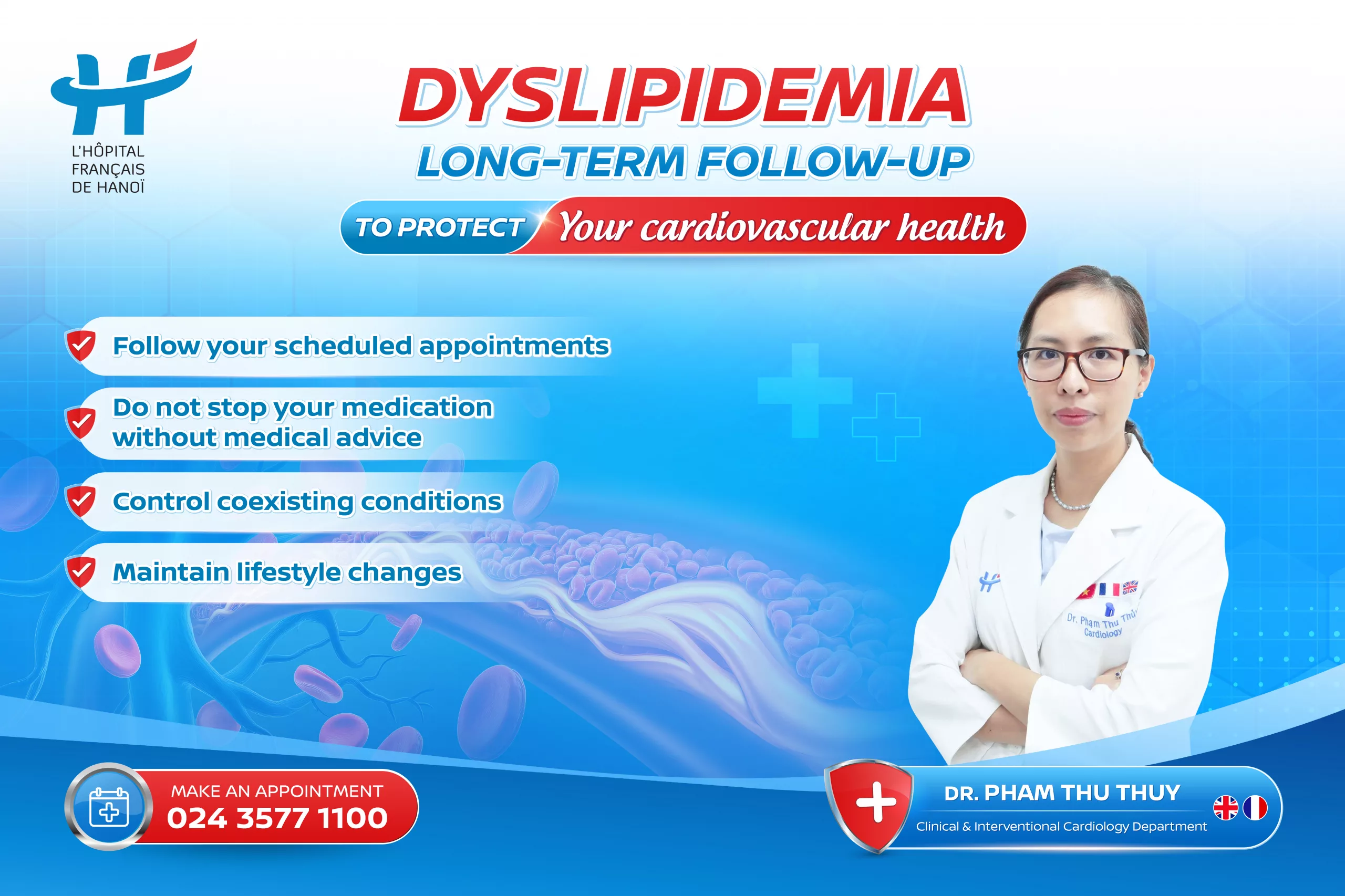
Dr Pham Thu Thuy, Clinical & Interventional Cardiology Department, Hanoi French Hospital, said: “Dyslipidemia is often persistent and can easily return after medication is stopped. Most patients have no symptoms, while atherosclerotic plaques continue to build up in the arteries.”
When monitoring dyslipidemia, you should keep the following points in mind.
Follow your scheduled appointments
If you have just started medication or your lipid-lowering treatment has been intensified, you will usually need a follow-up appointment after around 4–6 weeks to assess your response to treatment.
After that, the follow-up schedule is not the same for everyone. If you only have mild dyslipidemia, are at low cardiovascular risk, and respond well to lifestyle changes, your follow-up appointments may be less frequent. If you have just started treatment, have not yet reached your treatment target, have multiple coexisting conditions, or have previously had a cardiovascular event, you will need closer follow-up.
Do not stop your medication without medical advice
Improved test results usually mean that your medication and lifestyle changes are working. If you stop taking medication or return to old habits, your lipid levels may rise again without you noticing immediately.
If you have previously had a cardiovascular event or have familial hypercholesterolemia, lipid-lowering medication is often needed almost lifelong. This is because, in addition to lowering lipid levels, statins also play an important role in suppressing inflammation and helping prevent atherosclerotic plaques from rupturing. Regular follow-up helps your doctor determine the most appropriate medication dose and minimize side effects as much as possible.
Control coexisting conditions
Dyslipidemia rarely occurs as an isolated problem. It is often associated with hypertension, diabetes or prediabetes, overweight, abdominal obesity, fatty liver disease, chronic kidney disease, and other conditions.
At each follow-up visit, your doctor will not only review your lipid profile, but also assess other accompanying risk factors. Multidisciplinary consultation may be arranged when needed to adjust your treatment plan appropriately.
Maintain lifestyle changes
Lifestyle changes are a long-term foundation of dyslipidemia management and may help you work towards controlling lipid levels without medication where appropriate. You should limit animal fat, saturated fat, fried foods, organ meats, and processed foods.
If your triglyceride level is high, you should pay particular attention to reducing alcohol, sugary foods, soft drinks, refined carbohydrates, and controlling your weight. Regular physical activity, smoking cessation, and adequate rest also contribute to improving dyslipidemia and reducing cardiovascular risk.
At Hanoi French Hospital, you can be assured of long-term dyslipidemia management with:
- Highly qualified and experienced cardiologists who continuously update their practice according to the latest guidelines and recommendations in dyslipidemia treatment
- Multidisciplinary coordination and connection with central-level medical institutions, helping ensure that you can access comprehensive treatment options when needed, while maintaining long-term follow-up within a consistent healthcare system
- An optimized consultation process, with remote follow-up support for patients living far away, helping maintain communication and reduce interruptions in treatment
- A one-year dyslipidemia management package that helps you follow your appointment schedule more easily and optimize costs
For more information or to schedule an appointment with a cardiologist at Hanoi French Hospital, please contact Hotline: 024 3577 1100, inbox the Fanpage “Hanoi French Hospital”, or via WhatsApp: +84 903 497 078
