
 Tiếng Việt
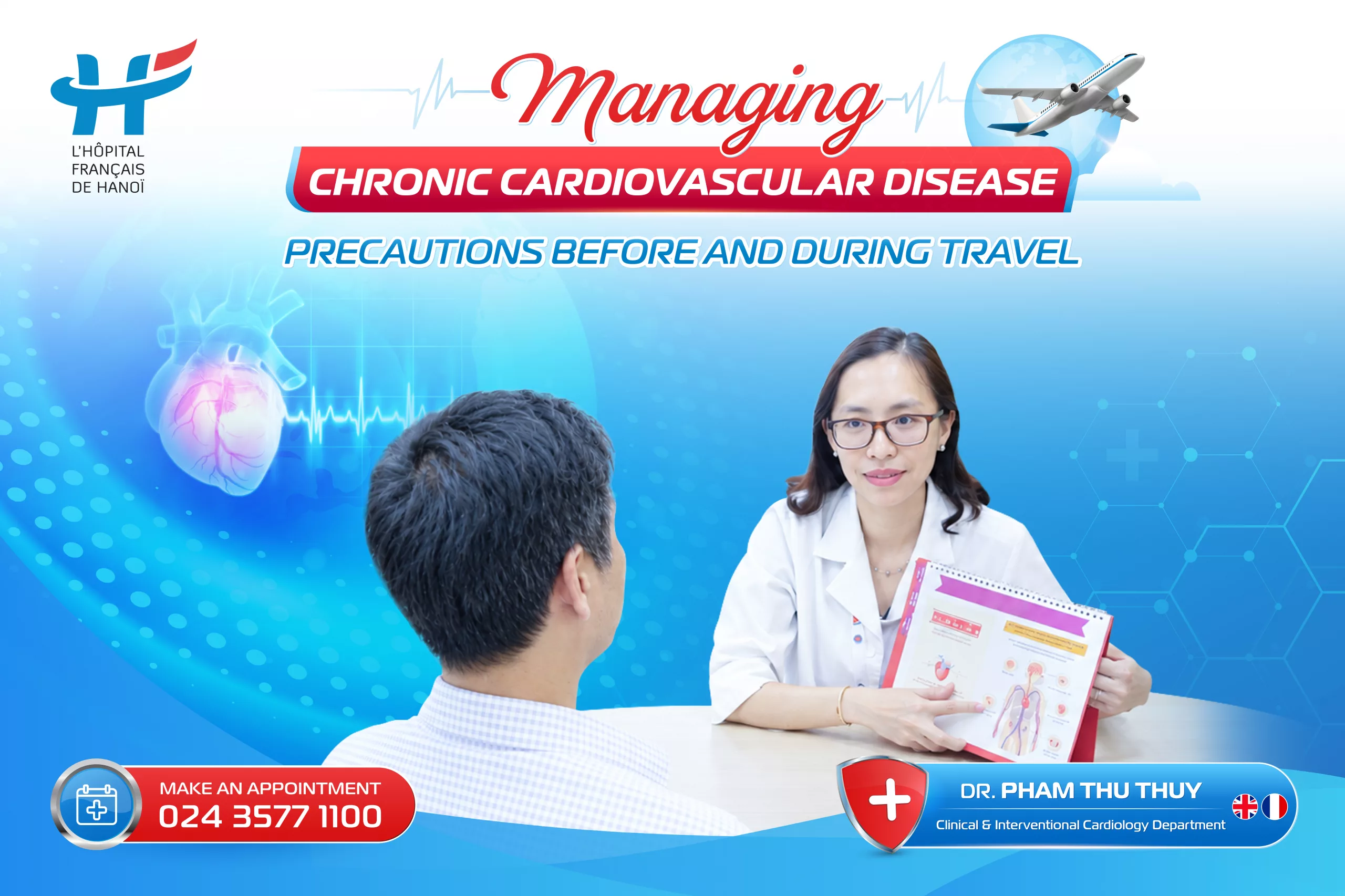

Dr. Pham Thu Thuy, Clinical & Interventional Cardiology Department at Hanoi French Hospital, highlights several important considerations:
- Have your condition assessed before travelling: Consult a cardiologist at least 4–6 weeks before your trip to assess how well your condition is under control, obtain prescriptions and receive specific guidance on preparing for travel. Sharing your planned itinerary with your doctor can also help them provide advice tailored to your trip.
- Considerations for air travel: Cabin pressure on commercial aircraft may affect some people with underlying cardiovascular or pulmonary conditions, potentially worsening their symptoms. According to the Heart Failure Association of the European Society of Cardiology (HFA/ESC), people with well-controlled heart failure and stable symptoms can tolerate the cabin environment. Patients with unstable angina, decompensated heart failure, uncontrolled hypertension or uncontrolled arrhythmias must not travel on commercial flights.
- Consider altitude, humidity and weather conditions: People with cardiovascular disease should consider the climate, altitude and access to medical care when choosing a destination. The American Heart Association recommends that people with coronary artery disease consult their doctor before travelling to high-altitude mountain destinations and consider the need for acclimatization. Avoid excessive physical exertion, particularly in hot weather.
- Continue taking your medication throughout the trip: Bring enough medication for the entire trip, plus an additional supply in case your itinerary is extended. If you will be travelling across multiple time zones, discuss your medication schedule with your doctor beforehand. Keep your medication in your carry-on luggage, in its original labelled packaging, together with a copy of your prescription. Your medication list should clearly include the active ingredient, brand name and dosage to help healthcare professionals at your destination determine the appropriate treatment if you need medical assistance.
- Reduce the risk of blood clots during prolonged sitting: Regularly move your ankles, exercise your calf muscles and walk around whenever possible. People with a history of blood clots, recent surgery or other risk factors require an individual assessment to determine whether compression stockings or preventive anticoagulation are appropriate.
- Recognize symptoms that require medical attention: Seek prompt medical attention if you experience chest pain, shortness of breath, dizziness, palpitations, fainting, or swelling and pain in one leg. You should also identify reputable medical facilities at your destination in advance so you are prepared if medical care becomes necessary.
At Hanoi French Hospital, our cardiologists encourage patients to discuss their travel plans or other activities that may affect their condition.
For international visitors staying in Vietnam, the Hospital is a trusted provider of emergency cardiac care as well as long-term monitoring and treatment. Our internationally-trained doctors, multilingual communication and prompt, convenient support with insurance guarantees of payment help patients feel confident throughout their care.
For more information or to schedule an appointment with a cardiology specialist at Hanoi French Hospital, please contact Hotline: 024 3577 1100, inbox the Fanpage “Hanoi French Hospital”, or via Zalo OA: WhatsApp: +84 903 497 078.
