 Tiếng Việt
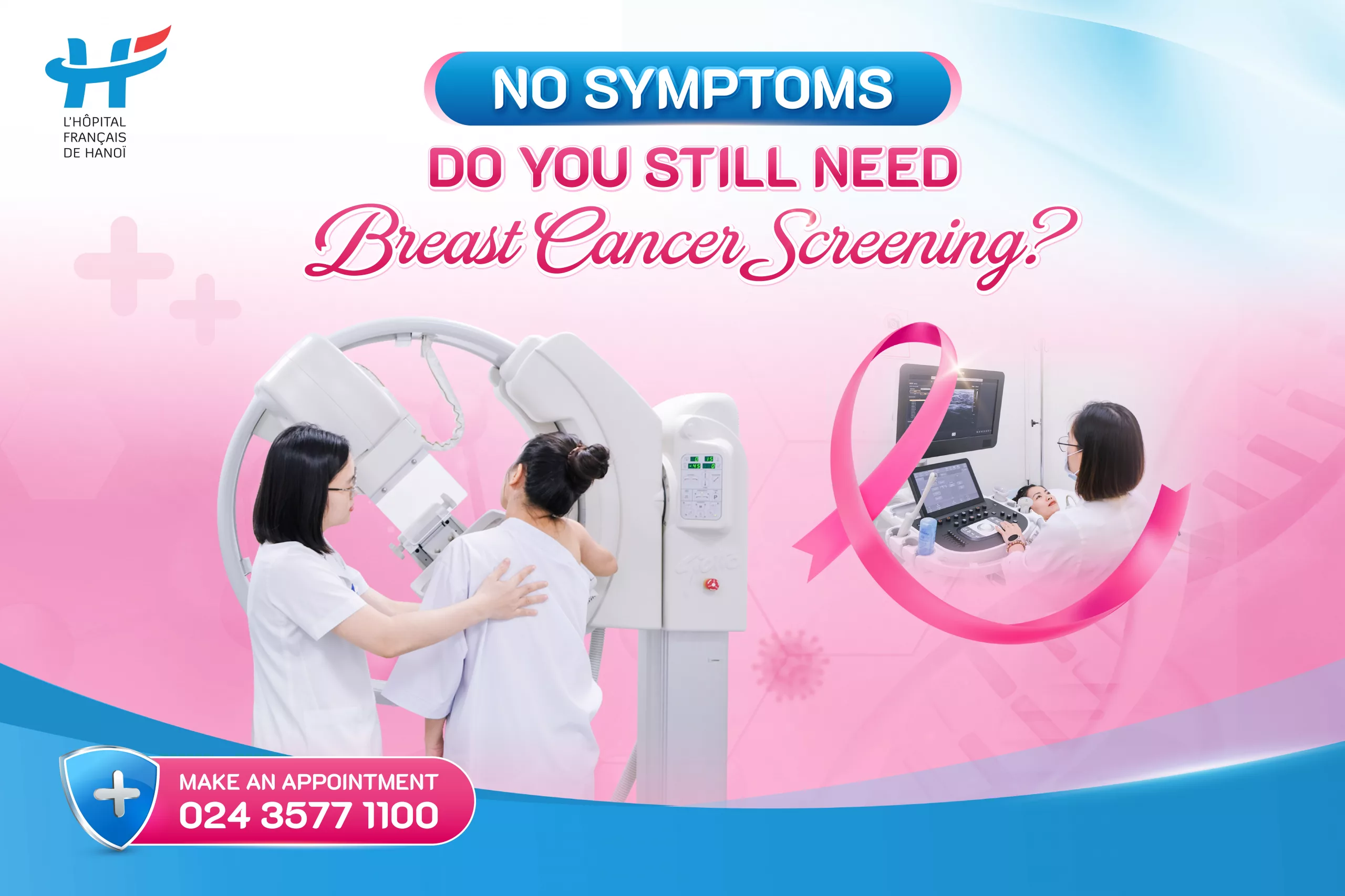
This is a common question among women. The reason is that early-stage breast cancer may not cause any noticeable symptoms or signs. Screening plays an important role in detecting abnormalities that may not yet be noticeable to the individual, providing an opportunity to identify breast cancer at an earlier stage.
According to Dr. Cao Thi Thuy Ha, Deputy Head of the Department of Obstetrics and Gynecology at Hanoi French Hospital, breast cancer screening can help:
- Detect breast abnormalities at an early stage, when the chances of successful treatment are highest.
- Identify abnormalities before symptoms appear.
- Increase the likelihood of effective treatment and less invasive treatment options.
- Contribute to reducing breast cancer mortality.
Early detection is key. The 5-year relative survival rate can exceed 90% for breast cancer diagnosed at Stage I, while it is significantly lower for metastatic disease. This is why regular screening based on age and individual risk factors is important.
However, once a woman develops a new breast lump, changes in breast shape or skin, a newly inverted nipple, unusual nipple discharge, or other concerning signs, the goal is no longer simply screening. She should undergo a clinical evaluation and appropriate diagnostic tests to determine the underlying cause.
How should breast cancer screening be done?
According to Dr. Thuy Ha, for women at average risk, meaning those without a family history of breast cancer, BRCA gene mutations, or a history of chest radiation:
- From age 25: Begin regular clinical breast examinations every 1-3 years.
- From age 40: Mammography is considered the standard screening method. Screening may be performed every 1-2 years, depending on the recommendations followed, such as those from the U.S. Preventive Services Task Force (USPSTF), American Cancer Society (ACS), or European Society for Medical Oncology (ESMO).
- After age 55: Screening may continue every 2 years, although annual screening may still be considered for women in good health with a life expectancy of more than 10 years.
When is the best time to have breast screening?
Dr. Thuy Ha also notes that:
- Screening is generally best avoided immediately before or during menstruation, as hormonal changes may cause breast tenderness and affect the quality of imaging.
- The optimal timing is generally between days 7 and 14 of the menstrual cycle, counting from the first day of menstruation.
Hanoi French Hospital is equipped with modern diagnostic imaging technologies, allowing physicians to select and combine appropriate screening and diagnostic methods based on each patient’s individual needs and risk factors, including:
- Breast ultrasound: Can provide additional evaluation of breast tissue and areas that may be difficult to assess on mammography. It can be particularly useful in younger women and women with dense breast tissue.
- Giotto IMS mammography system: Uses low-dose X-rays to produce detailed images of the breast and plays an important role in breast cancer screening.
- Siemens breast MRI: Provides detailed breast imaging and can help detect abnormalities that may not be visible on mammography or ultrasound. It is particularly useful for women at high risk of breast cancer and in selected clinical situations.
- BRCA1 and BRCA2 genetic testing: May help identify inherited genetic risk for breast and ovarian cancers in women with appropriate indications based on their personal and family history.
- Vacuum-assisted breast biopsy (VABB): A minimally invasive technique used to obtain tissue samples from suspicious breast lesions under imaging guidance. In selected cases, VABB may provide a diagnostic alternative to surgical biopsy and help avoid unnecessary surgery.
Following the clinical assessment and necessary investigations, an individualized care plan can be developed through multidisciplinary collaboration among Obstetrics and Gynecology, Diagnostic Imaging, and Oncology specialists, based on each patient’s condition and diagnostic results.
To consult with our specialists or schedule a breast cancer screening appointment at HFH, please contact HOTLINE: 024 3577 1100, send us a message via the “Hanoi French Hospital” Fanpage, or via WhatsApp: +84 903 497 078
