
 Tiếng Việt

That changed when she began experiencing lower abdominal pain and difficulty urinating—symptoms that caused significant discomfort in her daily life.
She initially sought care at the Department of Urology. Further evaluation, however, revealed another abnormality: a large cystic mass in the ovarian region, located above the bladder. Ms. L.A. was subsequently referred to the Department of Obstetrics & Gynecology for further evaluation and treatment.
TWO TUMORS IN A COMPLEX LOCATION, CLOSE TO THE BLADDER
Dr. Cao Thi Thuy Ha, Deputy Head of the Department of Obstetrics & Gynecology, who examined and operated on Ms. L.A., said:
“Further evaluation showed an ovarian tumor measuring approximately 6 × 7 cm, located directly above the bladder. Its location could explain the patient’s symptoms: the tumor was pressing on the bladder, making urination difficult and causing lower abdominal pain and discomfort.”
Surgery was therefore recommended.
However, the procedure was particularly complex. The patient had a history of placenta accreta during a previous pregnancy and had undergone a hysterectomy.
During surgery, the findings were more extensive than initially anticipated. Instead of a single tumor, the surgical team identified two tumors located close together and firmly adherent to the bladder.
This challenging location required precise dissection to remove the tumors while minimizing the risk of injury to the bladder and surrounding structures.
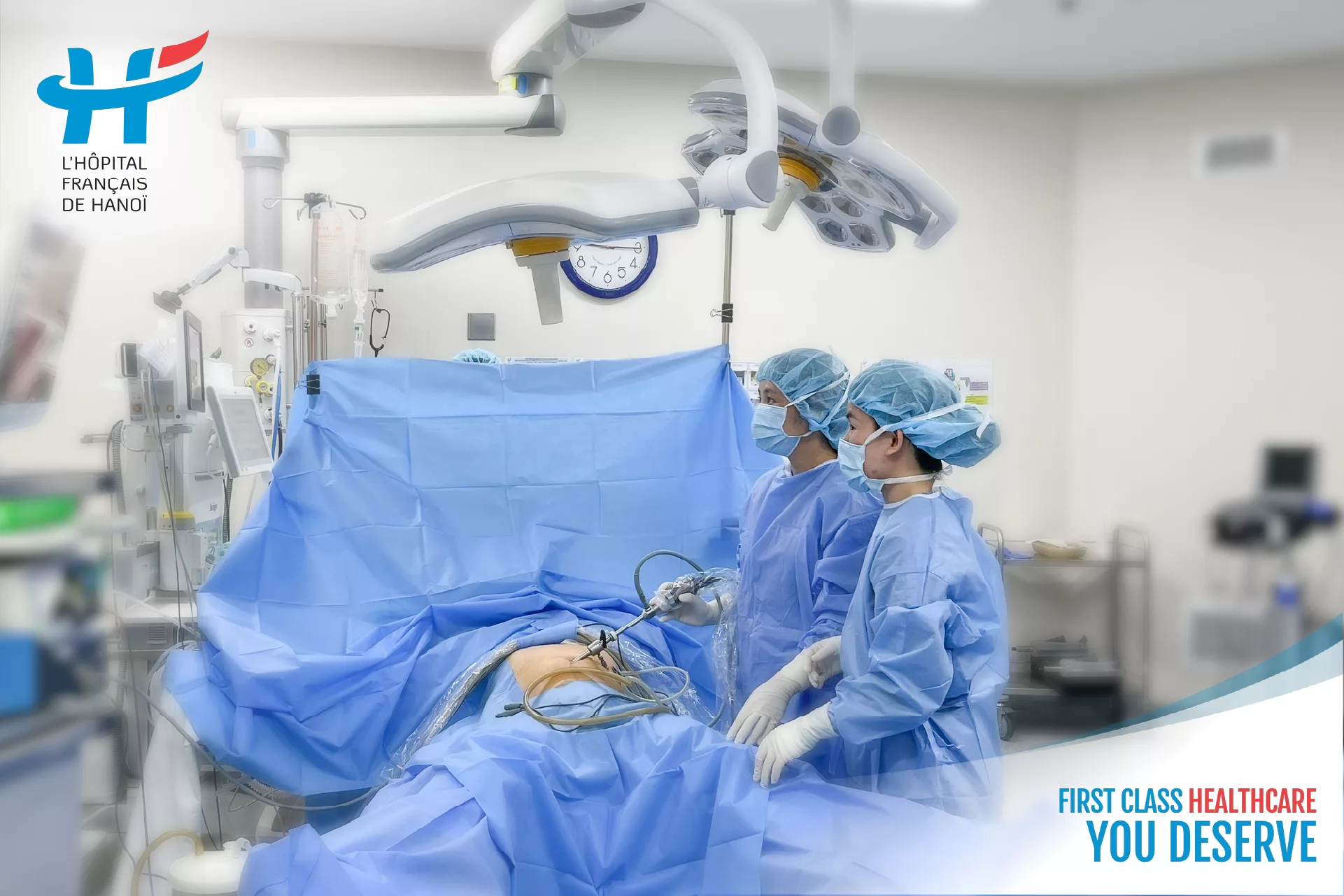
To effectively treat the condition while supporting a faster recovery, the surgical team opted for minimally invasive laparoscopic surgery.
Both tumors were successfully removed. Following surgery, the patient remained stable, with relief from both difficulty urinating and lower abdominal pain.
The laparoscopic approach also helped reduce postoperative pain, promote faster recovery, and shorten the patient’s hospital stay.
BEHIND ONE SYMPTOM MAY LIE A CONDITION FROM ANOTHER SPECIALTY
According to Dr. Cao Thi Thuy Ha, this case highlights that difficulty urinating or lower abdominal pain does not always originate from the urinary tract.
In some cases, conditions or tumors involving the pelvic organs can compress the bladder and cause similar symptoms.
Therefore, a comprehensive evaluation is important, particularly when symptoms persist or do not improve. Collaboration between specialties allows physicians to look beyond the organ where symptoms appear and identify the underlying cause.
At Hanoi French Hospital, patients can receive coordinated multidisciplinary care when necessary, allowing their condition to be assessed comprehensively and an appropriate treatment approach to be selected for each individual case.
If you experience persistent difficulty urinating, lower abdominal pain, or other unusual pelvic symptoms, do not ignore them. Seeking medical attention early can help identify the underlying cause and enable timely treatment.
Hanoi French Hospital (HFH)
Address: No. 1 Phuong Mai Street, Kim Lien Ward, Hanoi
Consultation hotline: 024.35771100 – 0903497078
WhatsApp: +84 903 497 078
