 Tiếng Việt
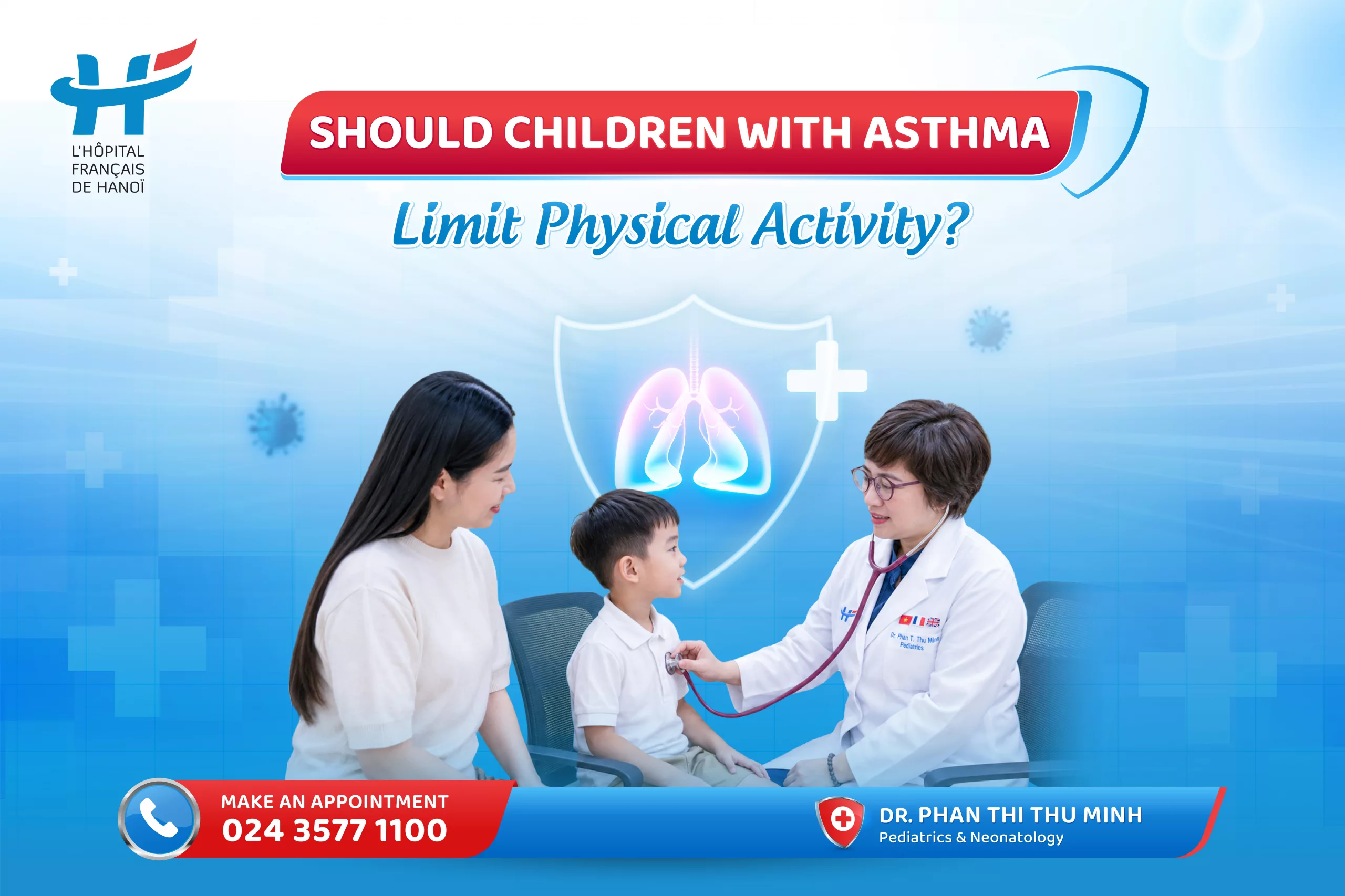
However, if asthma is well controlled, children with asthma do not need to avoid physical activity. Most children can take part in sports and lead active, healthy lives.
Asthma is a condition in which the airways in the lungs become inflamed and narrowed, making it more difficult for air to move in and out. During an asthma attack, a child may experience wheezing, coughing, chest tightness, or shortness of breath. Wheezing is relatively common in infants and young children, but not every child who wheezes has asthma.
Signs and symptoms of asthma
Common symptoms of a mild asthma episode include:
- Breathing difficulties, such as shortness of breath at rest, chest tightness, labored breathing, or being unable to speak in full sentences because of breathlessness.
- Children may tire more easily or find it difficult to keep up with other children during physical activities.
- Wheezing.
- Coughing, which often occurs at night or in the early morning, in cool weather, or during exercise. (However, coughing alone does not necessarily mean that a child has asthma.)
These symptoms usually last two to three days, although they may sometimes persist for longer.
Signs of a severe asthma attack: Call emergency services immediately if your child is having a severe asthma attack.
- Severe difficulty breathing, extreme fatigue, exhaustion, or unusual drowsiness.
- Deep indrawing of the skin around the neck or chest as the child struggles to breathe.
- A bluish discoloration around the lips.
- Loud or noisy breathing.
Call emergency services immediately if your child is having a severe asthma attack.
What causes asthma?
It is not always possible to identify the exact cause of asthma. The condition may run in families and is more common in children who have other allergic conditions, such as eczema, hay fever, or allergies.
Several factors can trigger asthma symptoms or make them worse, including:
- Viral respiratory infections, which are the most common trigger.
- Exercise.
- Changes in the weather, windy conditions, or cold air.
- House dust mites, pollen, or pet dander.
Tobacco smoke is also a significant asthma trigger, even when smoke particles remain on clothing or furniture. Smoking should therefore be avoided inside the home or near children.
Identifying the factors that tend to trigger a child’s symptoms can help families manage asthma more effectively.
How is asthma diagnosed?
To diagnose asthma, the doctor will ask about the child’s medical history and family history, the nature of the episodes, when symptoms occur, what makes them better or worse, and how the child responds to bronchodilator medication.
The doctor will also perform a physical examination. In some cases, additional tests may be needed, such as lung function testing. The type of testing recommended depends on the child’s age and individual circumstances.
How is asthma treated?
Asthma treatment usually includes a combination of quick-relief medications and controller (preventive) medications, depending on the child’s condition.
- Quick-relief medications relax the airways, making it easier to breathe and providing rapid symptom relief. One commonly used medication is salbutamol.
- Controller or preventive medications help reduce airway inflammation and lower the risk of symptoms. If a child is prescribed a preventive medication, it should be taken at the correct dose and for the full duration recommended by the doctor, even when the child is feeling well.
Some asthma attacks may require corticosteroids if prescribed by a doctor. Not every asthma episode requires steroids, and parents should not give these medications without medical advice.
At Hanoi French Hospital (HFH), children with symptoms suggestive of asthma receive a comprehensive assessment by pediatric specialists to identify the cause of persistent cough and recurrent respiratory symptoms. Using age-appropriate diagnostic methods together with an individualized treatment and follow-up plan, HFH works alongside families to help children achieve effective asthma control, breathe more easily, reduce the risk of asthma flare-ups, and confidently participate in school, play, and healthy development.
For more information or to schedule an appointment with a pediatric specialist at Hanoi French Hospital, please call our Hotline: (+84) 24 3577 1100, send us a message via the Hanoi French Hospital Facebook page, or contact us through our WhatsApp.
