 Tiếng Việt
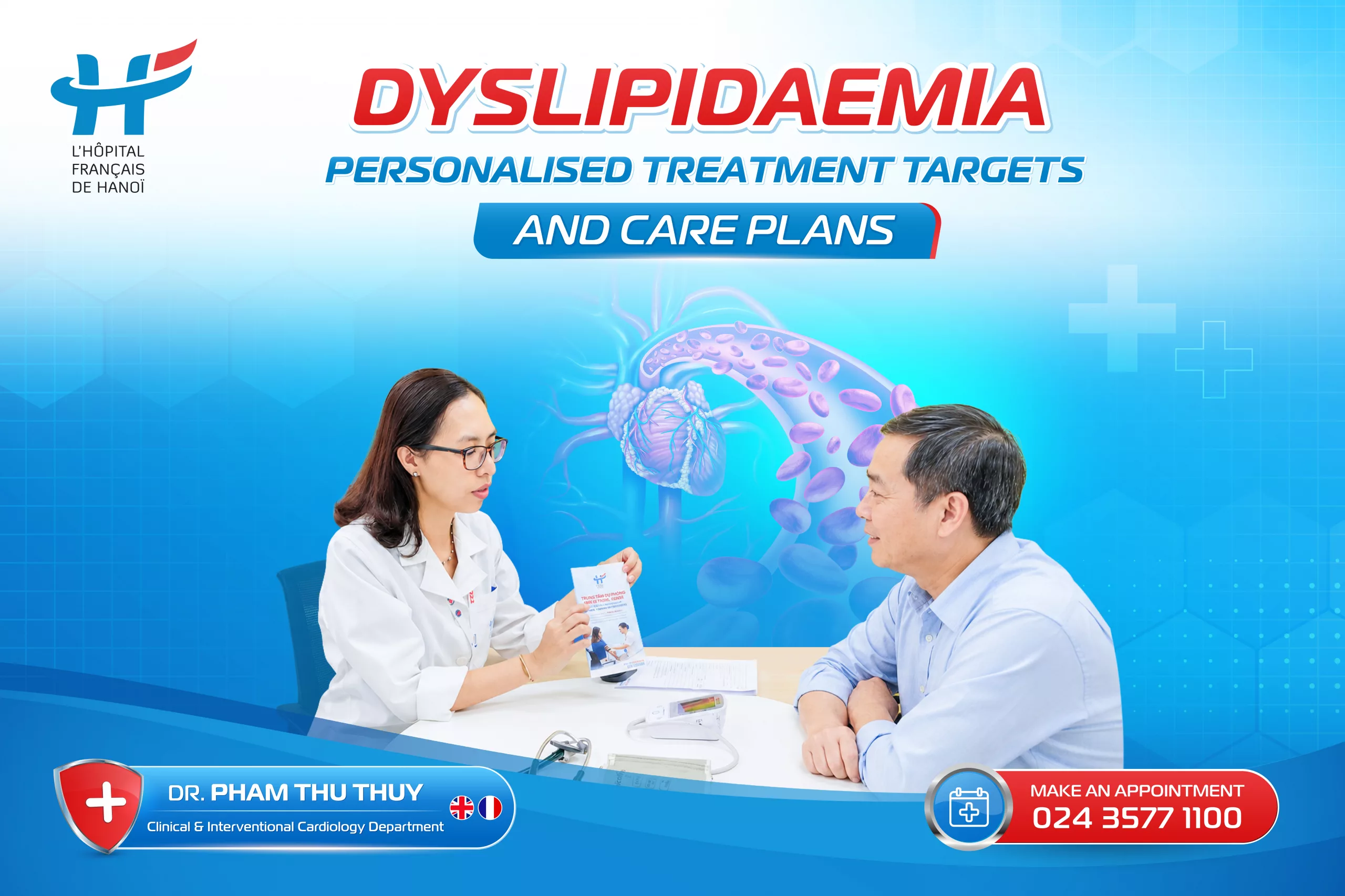

Explaining this issue, Dr. Pham Thu Thuy, Clinical & Interventional Cardiology Department, Hanoi French Hospital, said: “With the same lipid level, the higher your overall cardiovascular risk, the lower your target lipid level should be. For example, patients who have had a stroke have a much lower target LDL level than those with the same degree of lipid elevation but without any cardiovascular events.”
Dyslipidemia does not present in just one form. You may mainly have elevated cholesterol, elevated triglycerides, both elevated cholesterol and triglycerides, or increased levels of less common lipid markers such as Lipoprotein(a), or Lp(a). Low HDL-C is also a form of dyslipidemia.
The goal of dyslipidemia treatment is to define your target lipid level, reduce blood lipid levels through lifestyle changes and medication when needed, and control coexisting conditions. This helps slow the progression of atherosclerosis and reduce the risk of myocardial infarction, stroke, peripheral artery disease, and recurrent cardiovascular events if you have previously had cardiovascular disease.
Discussing the prevention of atherosclerosis in more detail, Dr Thuy said that LDL-C, or low-density lipoprotein cholesterol, commonly known as “bad” cholesterol, is the key marker that needs to be assessed and controlled. In addition, non-HDL-C, which represents the total amount of atherogenic cholesterol, and Lp(a) should also be considered in selected cases.
According to recommendations from the European Society of Cardiology and the European Atherosclerosis Society (ESC/EAS), LDL-C is considered the primary treatment target in the management of atherosclerotic cardiovascular risk. However, the LDL-C level you need to achieve is not the same for everyone, but is guided by your cardiovascular risk category.
Specifically:
- If you are at low cardiovascular risk: the LDL-C target is below 3.0 mmol/L, equivalent to below 116 mg/dL.
- If you are at moderate cardiovascular risk: the LDL-C target is below 2.6 mmol/L, equivalent to below 100 mg/dL.
- If you are at high cardiovascular risk: the LDL-C target is below 1.8 mmol/L, equivalent to below 70 mg/dL, and usually requires at least a 50% reduction from baseline.
- If you are at very high cardiovascular risk: the LDL-C target is below 1.4 mmol/L, equivalent to below 55 mg/dL, and usually requires at least a 50% reduction from baseline.
- If you are at extremely high cardiovascular risk: the LDL-C target is below 1.0 mmol/L, equivalent to below 40 mg/dL. This applies to patients with recurrent cardiovascular events despite treatment with the maximum tolerated dose of statin therapy.
These thresholds help doctors define your treatment goals after assessing your cardiovascular risk based on multiple factors, including:
- Age and sex
- Blood pressure
- Smoking status
- Blood glucose/diabetes
- Chronic kidney disease
- History of atherosclerotic cardiovascular disease
- Family history of premature cardiovascular disease
- Lifestyle-related factors such as overweight, abdominal obesity, alcohol consumption, and physical inactivity
In particular, if you have had a myocardial infarction, coronary stent placement, stroke, or peripheral artery disease, you are usually classified as being at very high cardiovascular risk. Therefore, you need a much stricter LDL-C target to comprehensively address residual cardiovascular risk.
At Hanoi French Hospital, you will be comprehensively assessed by a highly qualified and experienced team of cardiologists. A personalized treatment plan will be developed and closely monitored throughout your treatment journey. For more information or to schedule an appointment with a cardiologist at Hanoi French Hospital, please contact Hotline: 024 3577 1100, inbox the Fanpage “Hanoi French Hospital”, or via WhatsApp: +84 903 497 078.
