
 Tiếng Việt
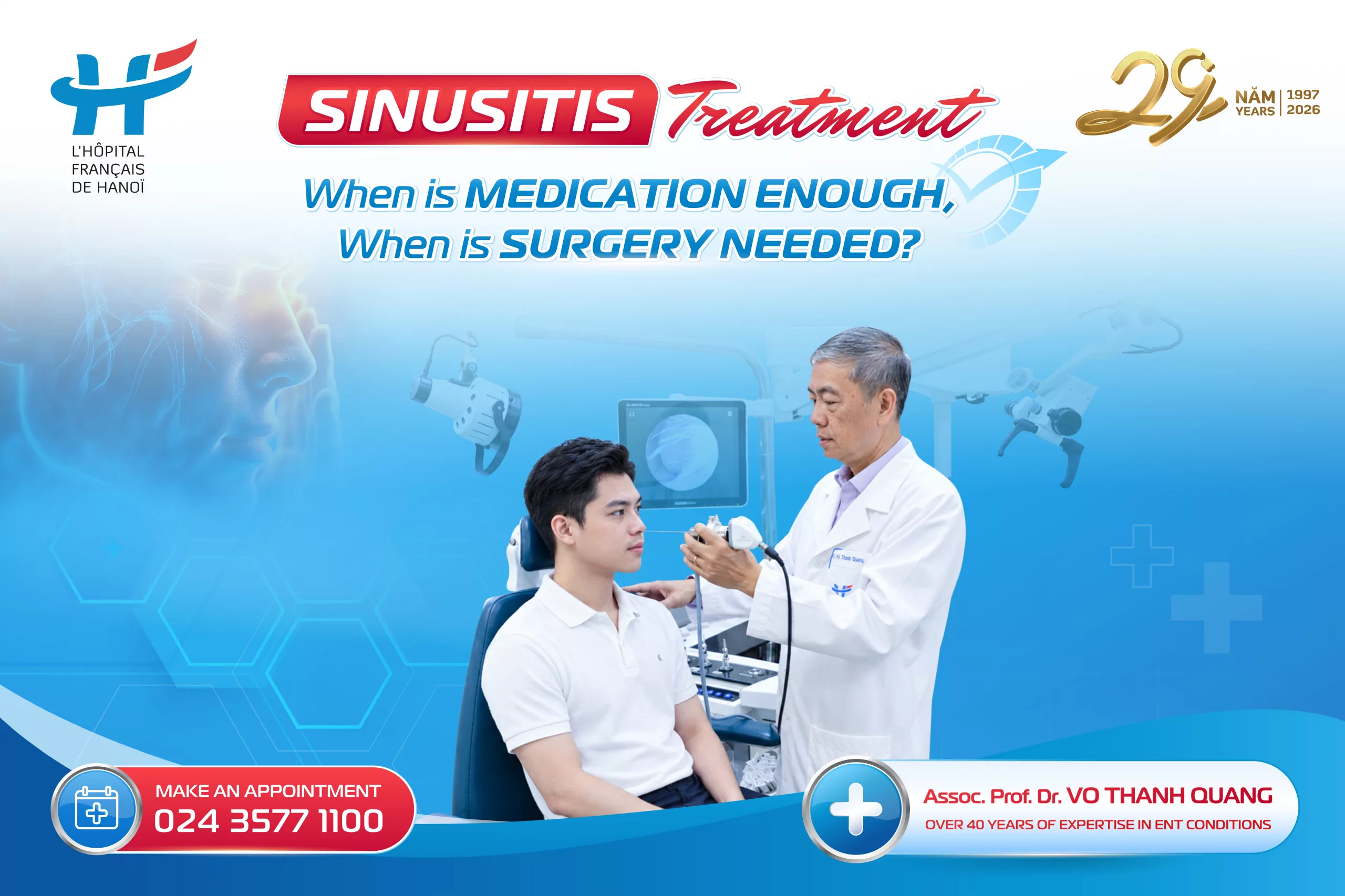

According to Dr. Vo Thanh Quang, an ENT specialist at Hanoi French Hospital and former President of the ASEAN Rhinologic Society:
“Chronic sinusitis can be associated with a number of factors, including allergic rhinitis, infection, nasal polyps, or anatomical abnormalities that obstruct sinus drainage pathways.
In addition to assessing symptoms and medical history, nasal and sinus endoscopy allows doctors to directly examine the nasal lining, secretions, polyps, and sinus drainage pathways. When necessary, a sinus CT scan can provide a detailed assessment of the anatomy and extent of disease. These findings help determine the appropriate treatment approach, rather than relying solely on the symptoms the patient is experiencing.”
Medical treatment: controlling inflammation and underlying factors
When surgery is not indicated, medical treatment is generally used to control inflammation and improve nasal and sinus function.
Depending on the underlying cause, doctors may prescribe appropriate medications, along with nasal irrigation and treatment of any related conditions. For people with allergic rhinitis, controlling the allergy is particularly important, as persistent inflammation of the nasal lining can contribute to ongoing sinonasal problems.
Antibiotics are not always necessary and should only be used based on a doctor’s assessment. Patients should not use medications on their own for prolonged periods, particularly topical decongestants.
When is surgery needed?
For patients with chronic sinusitis who do not respond adequately to medical treatment, sinus surgery may be considered.
Sinus surgery may be indicated in a number of situations, including:
- Chronic sinusitis with nasal polyps: Polyps obstruct the nasal cavity and sinus openings, causing persistent loss or reduction of smell and do not respond adequately to corticosteroids, whether topical or systemic.
- Significant obstruction of sinus drainage: Imaging shows clear obstruction, with persistent retained secretions that may increase the risk of secondary infection.
- Recurrent sinusitis: Four or more acute episodes per year despite appropriate treatment, significantly affecting daily activities and work.
- Complications or a risk of orbital complications: Such as eye swelling or pain, reduced vision, intracranial complications, or sinus abscesses.
- Anatomical abnormalities affecting drainage: Such as severe deviation of the nasal septum, enlarged turbinates, or other structural abnormalities causing obstruction.
Surgical options for sinus and nasal conditions
Depending on the underlying cause and the patient’s condition, doctors may consider several surgical approaches:
- Functional Endoscopic Sinus Surgery (FESS): Uses an endoscope and specialized instruments to treat polyps, diseased tissue, or other factors obstructing sinus ventilation and drainage.
- Septoplasty: Corrects a deviated nasal septum to improve airflow through the nose and support sinus drainage.
- Inferior turbinate reduction: Reduces the size of enlarged turbinates to improve nasal congestion and airflow.
- Balloon sinuplasty: Uses a specialized balloon to widen narrowed or blocked sinus openings, helping improve sinus ventilation and drainage.
At Hanoi French Hospital, patients receive comprehensive evaluation by an internationally trained ENT team, supported by advanced diagnostic imaging and endoscopy. Depending on the underlying cause and severity of the condition, doctors develop an individualized treatment plan, ranging from medical management to endoscopic sinus surgery when indicated.
For patients requiring surgery, a detailed preoperative assessment of the nasal and sinus anatomy and the extent of disease helps doctors precisely identify the areas requiring treatment. The aim is to restore sinus ventilation and drainage while avoiding unnecessary intervention.
For more information or to schedule an appointment with the ENT specialists at HFH, please contact HOTLINE 024.35771100, send us a message via the Hanoi French Hospital Fanpage, or via WhatsApp: +84 903 497 078.
