
 Tiếng Việt
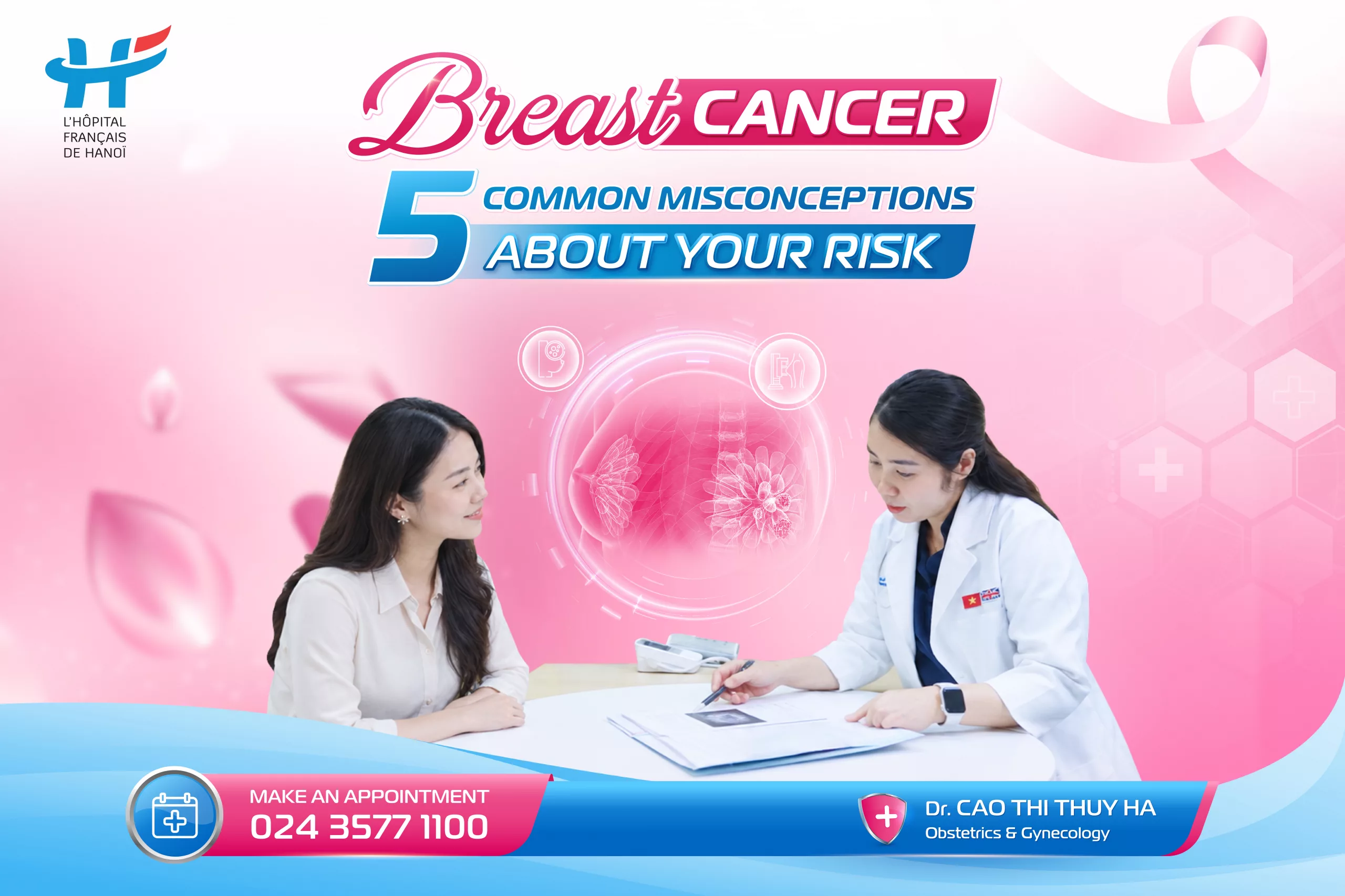
Breast cancer is associated with various risk factors and can present in different ways. However, some common misconceptions may lead people to underestimate their risk or overlook potential signs of the disease.
1. “If there is no family history of breast cancer, my risk is very low.”
Fact: A family history of breast cancer, particularly among close relatives, or ovarian cancer, as well as genetic mutations such as BRCA1 and BRCA2, can increase the risk of developing breast cancer.
However, having no family history does not mean there is no risk. Many women diagnosed with breast cancer have no known family history of the disease.
A comprehensive risk assessment should consider multiple factors, including age, personal and family medical history, reproductive history, and genetic factors.
2. “Young women do not need to worry about breast cancer yet.”
Fact: The risk of breast cancer generally increases with age, but the disease can also occur in younger women.
In particular, women with certain high-risk factors, such as inherited genetic mutations associated with breast cancer, a significant family history of the disease, or a history of radiation therapy to the chest at a young age, may need earlier risk assessment and closer monitoring.
Therefore, decisions about breast cancer screening should not be based on age alone. They should also take each individual’s level of risk into account.
3. “Finding a breast lump means it is cancer.”
Fact: Not all breast lumps are cancerous. Many are benign, such as breast cysts and fibroadenomas.
However, any newly detected lump or unusual change in the breast should be evaluated. Warning signs to look out for include:
- A new lump in the breast or underarm
- Dimpling, thickening, or other unusual changes in the breast skin
- New nipple inversion
- Unusual nipple discharge
- Changes in the shape or size of the breast
Depending on the individual case, a doctor may recommend ultrasound, mammography, MRI, or a biopsy to determine the cause.
4. “Breast augmentation increases the risk of breast cancer.”
Fact: Current evidence does not show that breast augmentation surgery or breast implants increase the risk of breast cancer.
However, certain types of breast implants have been associated with a very rare risk of BIA-ALCL (breast implant-associated anaplastic large cell lymphoma). This is a type of lymphoma associated with breast implants, not breast cancer. The risk has been found to be higher with certain types of textured implants.
Women with breast implants should continue to undergo breast cancer screening as recommended for their individual circumstances. When having a mammogram, they should inform the healthcare team that they have breast implants so that appropriate imaging techniques can be used.
If persistent swelling, pain, an unusual lump around an implant, or other abnormal breast changes occur, medical evaluation is recommended to determine the cause.
5. “Men cannot develop breast cancer.”
Fact: Men can develop breast cancer, although it is rare and accounts for less than 1% of all breast cancer cases.
Men have breast tissue, and certain factors, including a family history of breast cancer, BRCA1 or BRCA2 mutations, and some hormone-related conditions, can increase their risk.
Routine breast cancer screening is generally not recommended for men who are not at high risk. However, any unusual lump in the chest or breast area, nipple changes, or abnormal nipple discharge should be evaluated by a healthcare professional to determine the cause.
At Hanoi French Hospital (HFH), breast conditions are assessed through an individualized approach based on each patient’s symptoms, risk factors, and clinical findings. Depending on the case, doctors may recommend diagnostic imaging, such as breast ultrasound, mammography, or breast MRI, to assess breast tissue and identify any abnormalities.
When imaging reveals a lesion that requires further investigation, a biopsy or other appropriate tissue sampling procedure may be recommended to establish a definitive diagnosis. For patients requiring specialized assessment or treatment, relevant medical specialties may work together to develop an appropriate management plan tailored to the individual.
Understanding breast cancer risk and recognizing unusual changes early are important steps in maintaining breast health. If you notice any concerning changes or have known risk factors, seek medical advice to identify the cause and determine the most appropriate assessment.
